Dog Not Eating but Drinking Water? Causes, Home Fixes and When to Call the Vet
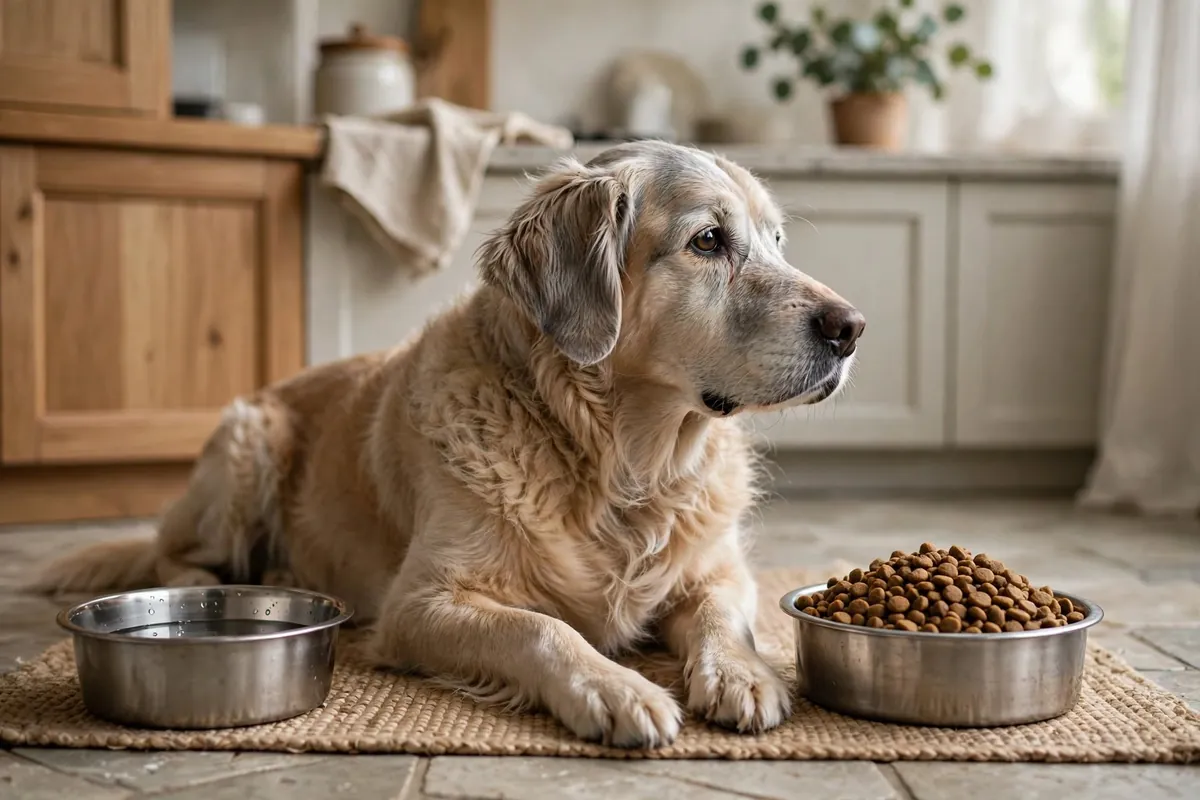
A dog not eating but drinking water is enough to worry any owner, and that’s fair. A dog skipping meals is always worth noticing, and in an older dog it matters even more.
The good news is that the cause is sometimes something simple, like an upset stomach or a sore tooth. The not-so-good news is that it can also point to kidney disease, diabetes or pancreatitis, especially in seniors. This guide will help you work out what’s likely going on, what you can safely try at home, and when to stop waiting and call your vet.
Why is my dog not eating but drinking water?
Here are the most common reasons, from mild to serious:
- Upset stomach or nausea. If your dog ate something they shouldn’t have, or their stomach is just off, they may refuse food and only sip water.
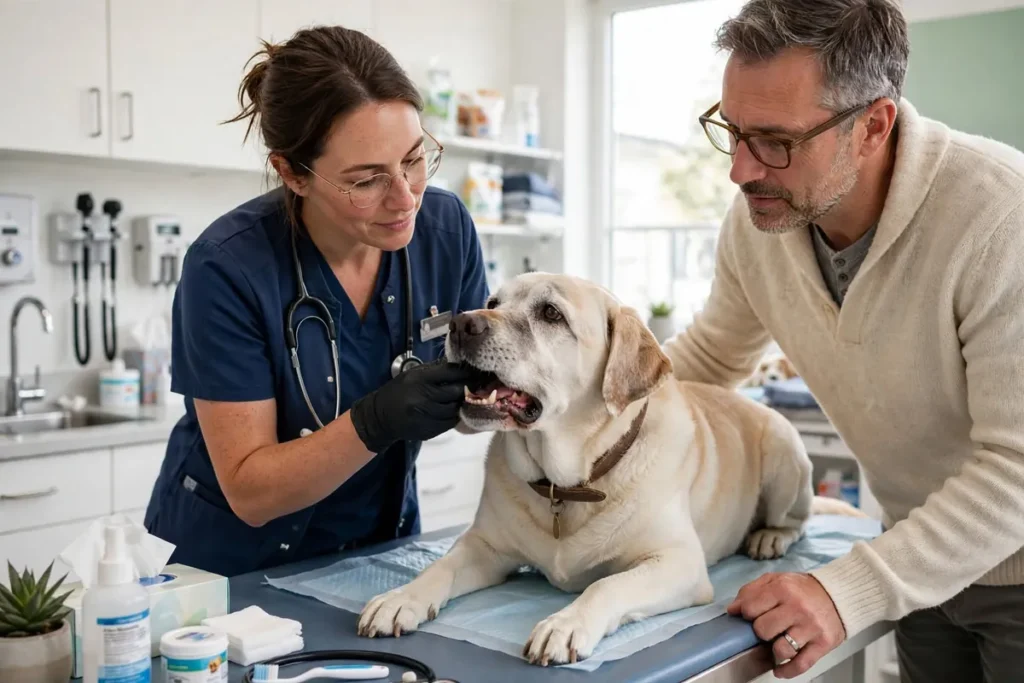
- Dental disease or mouth pain. Very common in older dogs. A sore tooth, gum infection or cracked tooth can make chewing painful, so they avoid food and still drink.
- Stress or a change in routine. A new home, a visitor, a new pet, boarding or a changed schedule can put a dog off their food for a day or two.
- Pain somewhere else. Sore joints, back pain, ear trouble, a urinary problem or recovery after surgery can all reduce appetite.
- Fever or infection. A sick dog often doesn’t want to eat.
- Tick-borne disease. Illnesses like Lyme disease can cause low appetite, fever and tiredness.
- Pancreatitis. Often triggered by fatty food or table scraps. It’s painful and needs a vet.
- Kidney, liver or hormonal disease. These often cause increased drinking along with poor appetite, and they’re more common in older dogs. Our guide on an old dog drinking a lot of water explains this more.
- Blockage in the gut. If your dog swallowed a toy, sock or bone, they might refuse food and then vomit after drinking.
- Medication side effects. Some medicines upset the stomach, and a mild dip in appetite can also follow a vaccine.
- Diabetes complications. A diabetic dog that isn’t eating and is drinking heavily needs care the same day.
Senior dog not eating but drinking water: why it’s more serious
An older dog skipping food deserves a lower threshold for worry than a young dog. In seniors, appetite loss is more likely to be a sign of something underlying, such as kidney disease, diabetes, dental disease or a growth. And older dogs, like small dogs, don’t have much in reserve, so a missed meal can add up quickly.
If your senior dog hasn’t eaten for about 24 hours, call your vet. Don’t wait a few days to see what happens. Also keep an eye on:
- Weight loss
- Drinking much more than usual
- Sleeping more than usual (see why old dogs sleep so much)
- Bad breath or drooling
A dog that is not eating but drinking water and sleeping a lot is a combination worth a same-day call, because low energy plus no appetite often points to illness, pain or infection.
When to see a vet right away
Don’t wait if you see any of these:
- Repeated vomiting or diarrhea
- A swollen, hard or painful belly
- Pale, white or gray gums
- Collapse or extreme weakness
- Retching with nothing coming up (possible bloat, an emergency)
- Vomiting right after drinking, with a painful belly or no stool
- Sweet-smelling breath along with heavy drinking
- Not able to keep water down
- A senior dog who has been off food for about 24 hours
When to call the vet within a day
- Not eating plus vomiting
- Any second symptom, such as lethargy, weight loss or sleeping more than usual
- A diabetic dog, a dog with an ongoing illness, or a pregnant or nursing dog
- Fever of 103°F (39.4°C) or higher
- Suspected pancreatitis, such as after a fatty meal
How long can a dog survive without eating?
People ask this a lot, but it’s the wrong question, because it’s not a target to aim for.
- A healthy adult dog can usually manage about 24 to 48 hours without food if they’re drinking water. Watch closely at 24 hours and call the vet by 48 hours, or sooner if there’s another symptom.
- Going without food for three to five days or longer risks real harm to the organs.
- Puppies, seniors, small breeds and dogs with health conditions have much less time. For these dogs, call sooner.
- If your dog is also refusing water, seek help right away.
What will the vet do?
Expect your vet to:
- Check your dog’s mouth, belly and temperature
- Ask about food, treats, medications and any recent changes
- Run bloodwork and a urine test to check for kidney disease, diabetes, liver problems and pancreatitis
- Do X-rays or an ultrasound if a blockage is possible
- Test for tick-borne disease if your dog could have been exposed
- Recommend treatment, which can include anti-nausea medicine, appetite stimulants, fluids or nutritional support
Dog not eating but drinking water: home remedies to try
Only try these if your dog is bright, alert and has none of the red flags above, and only for the first 12 to 24 hours.
- Check first. Look at the gums, feel the belly gently and notice their energy.
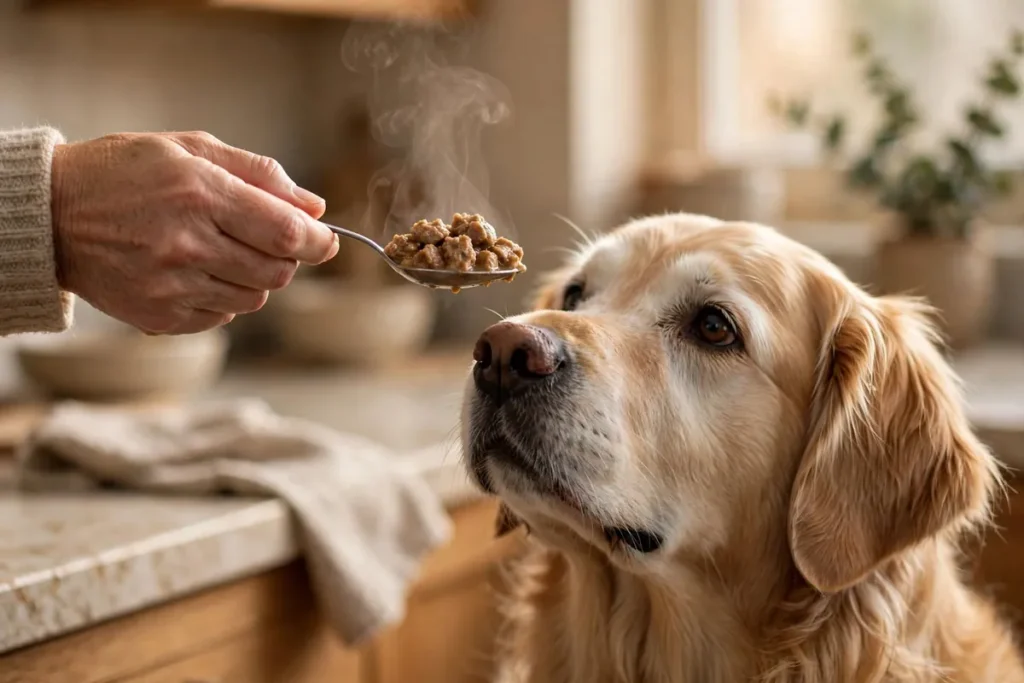
- Warm the food. Gently warm wet food to about body temperature. A stronger smell often helps.
- Offer something bland. Plain boiled skinless chicken with white rice, or a spoonful of plain canned pumpkin (not pie filling).
- Hand-feed quietly. A calm spot and a little encouragement can work wonders.
- Add a splash of low-sodium broth, with no onion or garlic.
- Give small, frequent meals instead of one big bowl.
- Keep fresh water available at all times.
- Keep a simple log of what they eat and drink, to show your vet.
What not to do
- Don’t force-feed.
- Never give human painkillers like ibuprofen, naproxen or acetaminophen.
- Don’t offer fatty or greasy scraps.
- Don’t use over-the-counter appetite stimulants or anti-nausea medicines without asking your vet.
If your dog doesn’t improve within 24 hours, or gets worse at any point, call your vet.
What about a dog that eats but won’t drink water?
The opposite problem matters too. If your dog is eating but refusing water, it can point to nausea, mouth pain, a urinary issue or a stomach problem. Dogs can become dehydrated quickly, so call your vet if it lasts more than a day, or sooner if they’re weak, vomiting or have dry gums.
FAQ
Why is my old dog not eating but drinking water?
Seniors are more likely to have dental disease, kidney disease, diabetes or other conditions. Call your vet if it lasts about 24 hours.
Should I worry if my dog won’t eat but drinks water?
A single skipped meal in an otherwise bright dog can be fine. But if it continues, or comes with lethargy, vomiting or weight loss, you should worry and call your vet.
How long can a dog go without eating but drinking water?
A healthy adult dog can usually manage 24 to 48 hours, but seniors, puppies and small dogs have much less time. Don’t wait it out.
What can I give my dog when they won’t eat?
Warm wet food, plain boiled chicken and rice or plain canned pumpkin, in small amounts. Don’t force-feed, and ask your vet before using any medicine.
Why is my dog not eating but drinking water and sleeping a lot?
Low energy with no appetite often points to illness, pain or infection. It’s worth a same-day call to your vet.
Can dental problems cause a dog to stop eating?
Yes. Dental pain is one of the most common reasons a dog avoids food while still drinking, especially in older dogs.
Why is my dog not drinking water but eating?
It can be nausea, mouth pain or a urinary problem. Call your vet if it lasts more than a day.
The bottom line
A dog that won’t eat but keeps drinking is telling you something. Sometimes it’s minor and fixes itself. In older dogs, though, appetite loss can be the first sign of something that needs treatment. Watch closely, try the simple home steps while your dog is bright, and don’t wait more than about a day to call your vet.
This article is for general information and isn’t a substitute for veterinary advice. If your dog is unwell, call your vet.