Old Dog Stroke Symptoms: Signs, Causes and What to Do Right Now
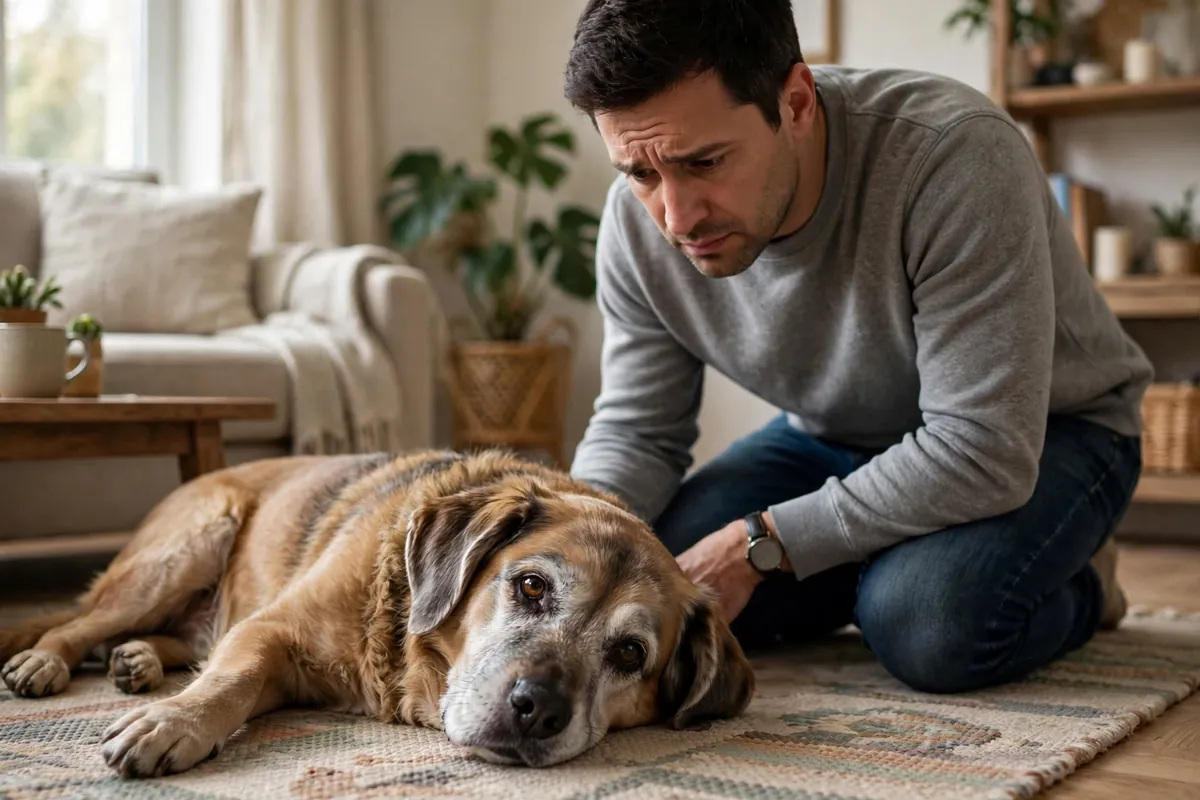
Old dog stroke symptoms can come on fast, and they’re frightening to see. If your old dog suddenly can’t stand straight, tilts their head or walks in circles, you want answers quickly. So let’s start with the most important thing.
If you think your dog is having a stroke, treat it as an emergency and call your vet or an emergency animal hospital right away. Don’t wait to see if it passes. The rest of this guide will help you recognize the signs, know what to do on the way to the vet, and understand what happens next.
Can dogs have strokes?
Yes. A stroke happens when blood flow to part of the brain is cut off, or when a blood vessel in the brain bursts. There are two main types:
- Ischemic stroke: a blood vessel is blocked. This is the more common type.
- Hemorrhagic stroke: a blood vessel ruptures and bleeds.
Strokes can happen at any age, but they’re a particular worry in older dogs, because the health problems that raise the risk become more common with age.
Old dog stroke symptoms
Stroke signs often appear suddenly. Watch for:
- Loss of balance. Stumbling, falling over or not being able to stand.
- Head tilt. Holding the head to one side.
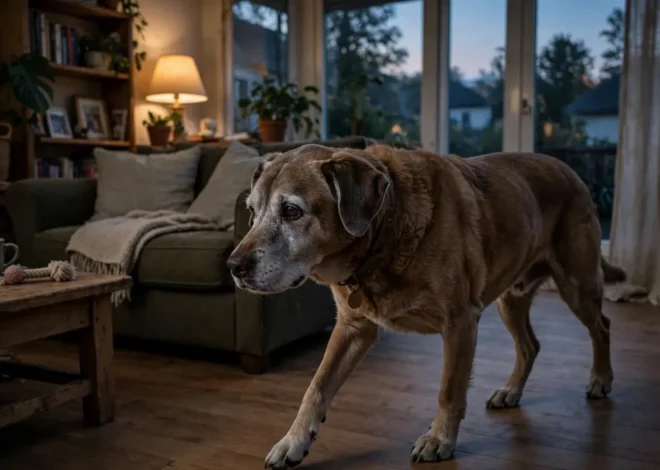
- Walking in circles or wandering.
- Weakness on one side of the body.
- Unusual eye movements. Eyes flicking back and forth, or a loss of normal blinking.
- Nausea or vomiting, often from the loss of balance.
- Misjudging steps or struggling with stairs.
- Seizures.
Not every dog shows every sign. Some show just one or two. And because other conditions can cause similar symptoms, a vet has to examine your dog.
Stroke or vestibular disease? Why you can’t tell at home
Strokes can look a lot like vestibular problems, which affect balance. Both can cause loss of balance, a head tilt and strange eye movements. At home, it’s very hard to tell them apart, and even vets can’t always tell from a quick look.
That’s why you shouldn’t try to self-diagnose. If your dog suddenly loses balance, the right move is the same either way: get a vet to see them. If you want to know more about other changes in older dogs, our guide to the signs of aging in dogs explains what’s normal and what isn’t.
What causes a stroke in dogs?
A stroke is often a sign of something else going on. Possible causes include:
- Blocked vessels, which can be linked to bacteria or parasites
- Bleeding, from trauma or blood clotting disorders
Health conditions that raise the risk include:
- Cushing’s disease
- High blood pressure
- Kidney disease
- Heartworm disease
- Blood clotting disorders
- Hypothyroidism
Some medicines may also raise the risk, so tell your vet about anything your dog takes. No particular breed is known to be especially prone to strokes.
What to do if your dog has a stroke: step by step
- Stay calm and call your vet or emergency clinic right now. Tell them you suspect a stroke, so they can prepare for your arrival.
- Move your dog gently. Small dogs can travel in a carrier. For bigger dogs, carry them carefully with help, and secure them with as little restraint as possible.
- Don’t over-handle them. Too much handling can add stress.
- Note what happened. What were they doing before the symptoms started? Which signs did you see? Did they get worse? This helps your vet.
- Bring a list of their medications.
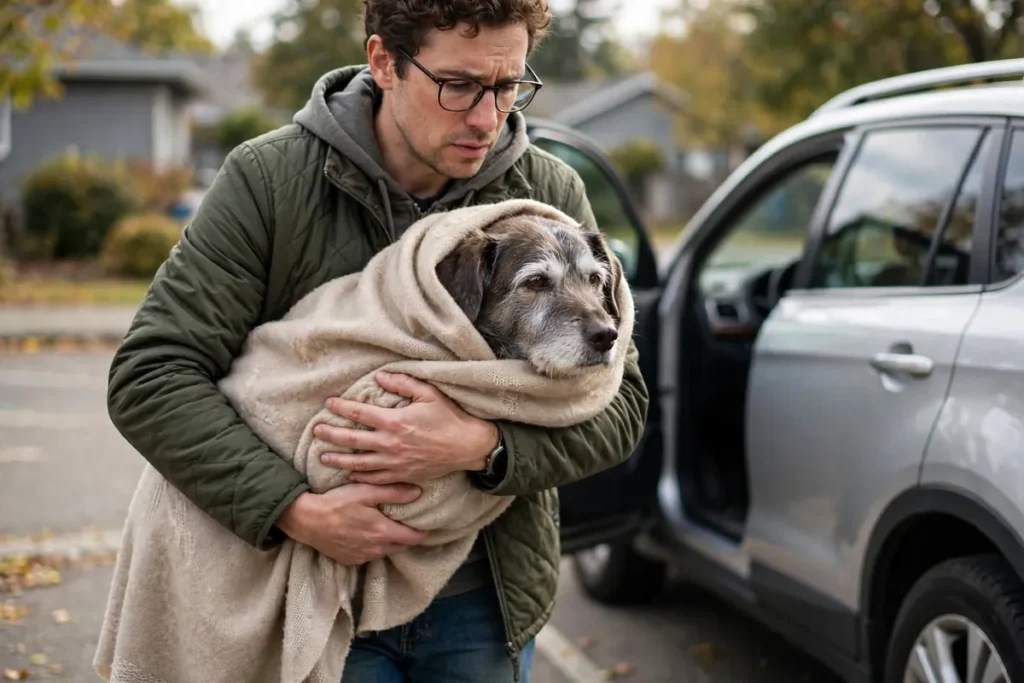
Don’t give human medicines, and don’t try to feed or give water if your dog is vomiting or very unsteady.
How vets diagnose a stroke
Your vet will likely:
- Do a physical and neurological exam
- Run blood and urine tests and check blood pressure to rule out other causes and look for an underlying problem
- Recommend an MRI of the brain to confirm a stroke
Finding the underlying cause matters, because treating it helps reduce the chance of another stroke.
Treatment for a dog stroke
There’s no one-size-fits-all fix. Treatment is mostly supportive care plus treating the underlying cause. Depending on your dog, that can include:
- Medicine to control blood pressure
- Medicine to help prevent or dissolve clots
- Treating thyroid problems if present
- IV fluids or oxygen therapy
- Physical therapy
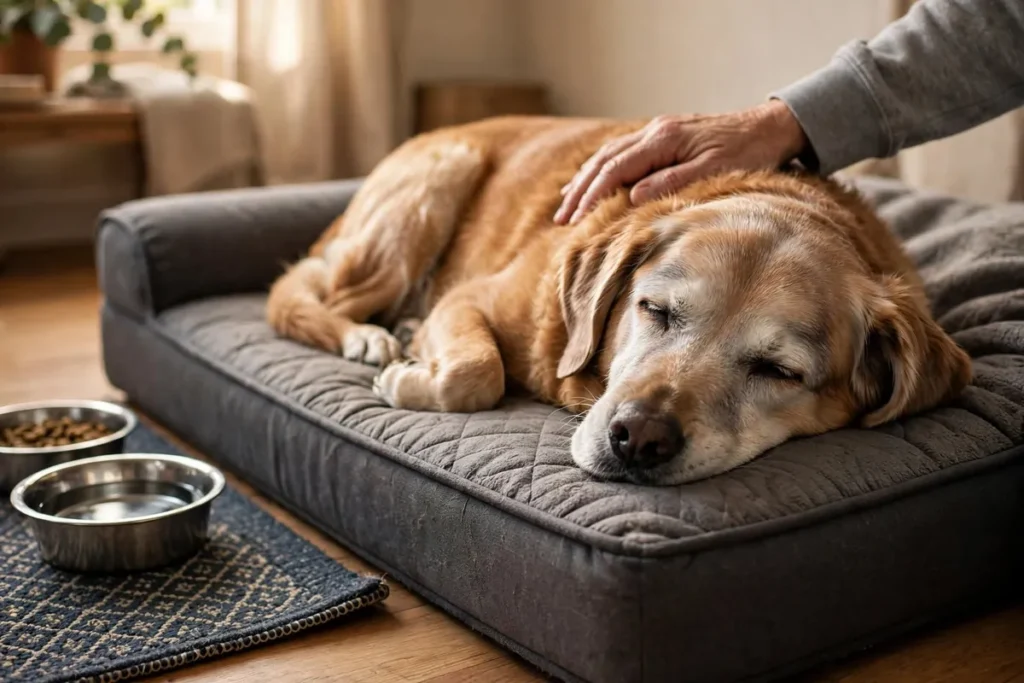
At home, care means good nutrition and help with going to the toilet if your dog can’t get up easily. Soft bedding, non-slip floors and keeping food and water close by also make life easier while they recover.
Dog stroke recovery: what to expect
Recovery varies a lot from dog to dog.
- Ischemic strokes usually don’t get worse after the first 24 hours.
- Hemorrhagic strokes can have longer-lasting symptoms if untreated.
- Signs often start to improve within 24 to 72 hours.
- Full recovery can take weeks or longer, and lost mobility may return over the first few months.
- If your dog recovers well in the first 30 days, the outlook is generally good.
- A stroke can happen again, so ongoing monitoring matters.
- Severe strokes can leave permanent damage.
Can a dog survive a stroke?
Yes, many dogs do. Survival depends on how severe the stroke is, how quickly your dog gets care and what’s causing it. In one small study, dogs that survived an ischemic stroke lived about 1.3 more years on average. That’s just one small study, so it’s no promise, but it shows that a stroke isn’t always the end. Many dogs go on to enjoy more good time with their families.
How to reduce the risk of another stroke
There’s no sure way to prevent a stroke, but you can lower the odds by:
- Treating underlying conditions, such as high blood pressure, kidney disease or thyroid problems
- Keeping up with vet visits, especially for senior dogs
- Telling your vet about every medication your dog takes
- Staying on top of parasite prevention
Regular checkups can catch problems early. See our post on an old dog drinking a lot of water, since increased thirst can be an early clue to kidney disease or other illness.
FAQ
What are the symptoms of a stroke in an old dog?
Sudden loss of balance, head tilt, walking in circles, weakness on one side, unusual eye movements, vomiting, misjudging steps and seizures.
What should I do if I think my dog is having a stroke?
Call your vet or an emergency animal hospital immediately. Move your dog gently, handle them as little as possible and note what you saw.
How long does it take a dog to recover from a stroke?
Signs often improve within 24 to 72 hours, but full recovery can take weeks or longer. Lost mobility may return over the first few months.
What’s the difference between a stroke and vestibular disease in dogs?
They can look very similar, with loss of balance and head tilt. Only a vet can tell which one your dog has.
How is a dog stroke diagnosed?
With an exam, blood and urine tests, blood pressure checks and usually an MRI of the brain.
Can a dog have another stroke?
Yes. Treating the underlying cause and keeping up with checkups can help lower the risk.
The bottom line
A sudden loss of balance, a tilted head or circling in an older dog is an emergency, even if it looks like it’s passing. Get your dog to a vet quickly. Strokes are scary, but many dogs improve over days to weeks, and the sooner they get care, the better their chances.
This article is for general information and isn’t a substitute for veterinary advice. If you think your dog is having a stroke, call your vet or an emergency animal hospital immediately.