Excessive Panting in Older Dogs: Causes and When to Worry
Every dog pants. It is how they cool down. But when your senior dog starts panting more than usual, in a cool room, at night, or while just lying there, it is natural to worry. Excessive panting in older dogs is one of those signs that is often harmless but sometimes points to something that needs a vet.
This guide will help you work out what is normal, what is not, and what to do next. It will not replace a vet visit, but it should help you know when to book one.
What Is Normal Panting?
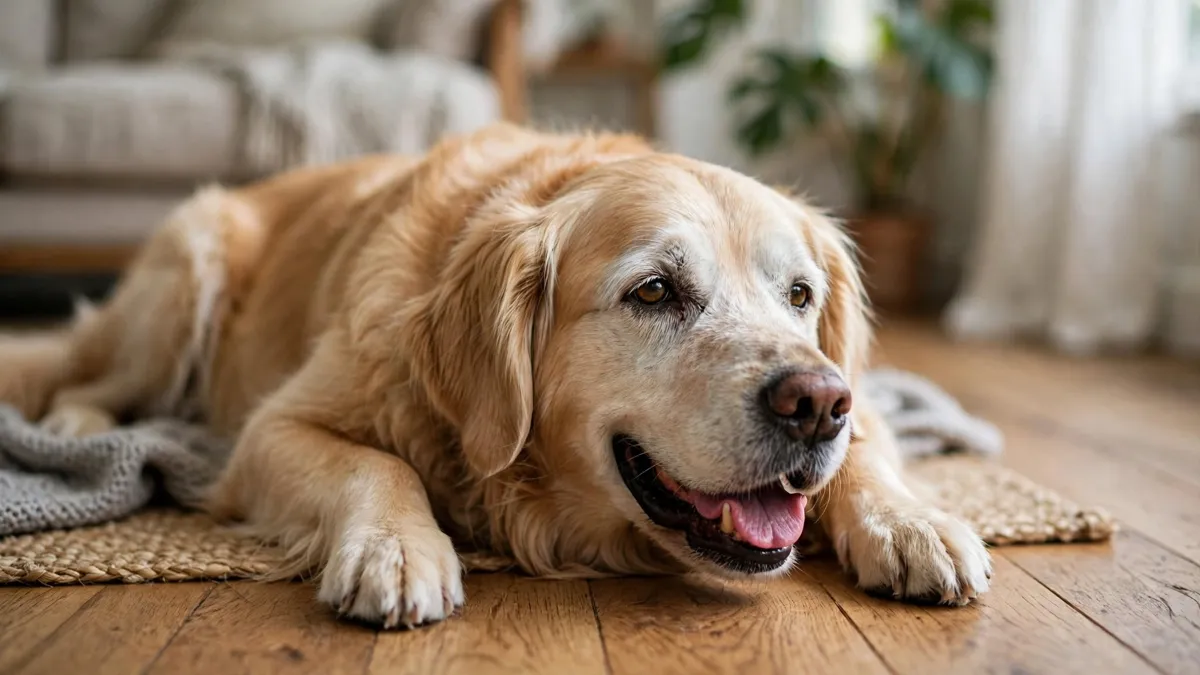
Panting is normal after a walk, after play, on a warm day, or when your dog is excited. It usually settles within a few minutes once your dog rests and cools down. A relaxed, open mouth with a loose tongue is what normal panting usually looks like.
Senior dogs also tend to overheat more easily. Older bodies do not cool down as well, so a warm room or a short walk can make an older dog pant harder than it used to.
When Panting Becomes a Problem
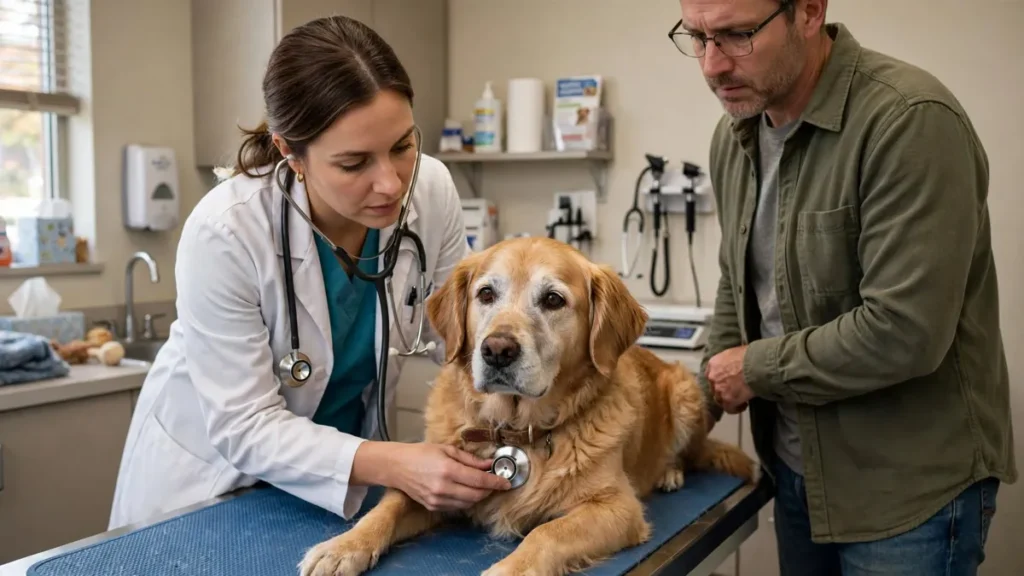
Pay closer attention if you notice any of these:
- Panting while resting in a cool room
- Panting that starts suddenly or keeps going for a long time
- Heavy, noisy, or raspy breathing
- Panting at night that stops your dog from sleeping
- Panting together with restlessness, shaking, or whining
- A new pattern that was not there a few weeks ago
A change from your dog’s own normal is what matters most. You know your dog better than anyone.
Common Causes of Excessive Panting in Older Dogs
Heat and Overheating
The simplest cause is also the easiest to fix. A warm room, a sunny spot, a thick coat, or a walk at the wrong time of day can all push a senior dog to pant hard. If your dog calms down once they are cool and rested, heat was likely the reason.
Pain
Many dogs pant when they hurt. Older dogs often live with sore joints, and they may pant, pace, or struggle to settle without ever crying out. If your dog also limps, moves slowly, or hesitates on stairs, pain could be part of the picture. Our guides on signs of arthritis in dogs and how to help a dog with arthritis explain more.
Anxiety and Stress
Loud noises, changes at home, or being alone can make a dog pant, even without heat or exercise. Older dogs can also become more anxious as their senses fade. If your dog seems confused or restless at night, read about the signs of dementia in dogs.
Weight
Extra weight makes the body work harder. Overweight senior dogs often pant more, even with light activity.
Heart and Breathing Problems
Heart disease and lung problems can make breathing harder. Dogs with these conditions may pant when resting, tire quickly, or cough. Some older large dogs also develop a throat problem that causes noisy breathing and heavy panting. A vet can tell these apart.
Hormone Problems
Some hormone conditions in older dogs, such as Cushing’s disease, can cause heavy panting along with a bigger appetite, more thirst, and a pot belly. If your dog is also drinking and peeing a lot, see why an old dog may drink a lot of water.
Medicine Side Effects
Some medicines can cause panting as a side effect. If your dog started a new medicine and began panting, tell your vet. Do not stop or change a medicine on your own.
Emergency Signs: Go to the Vet Now
Call a vet or an emergency clinic right away if panting comes with any of these:
- Gums that look pale, gray, bluish, or very red
- Struggling to breathe, with the belly heaving
- Collapse, weakness, or a wobbly walk
- A swollen, hard belly, or retching with nothing coming up
- Heavy drooling or vomiting on a hot day
- Panting that will not stop even after resting and cooling down
These can be signs of heatstroke, bloat, or another emergency. Do not wait to see if it passes.
What You Can Do at Home
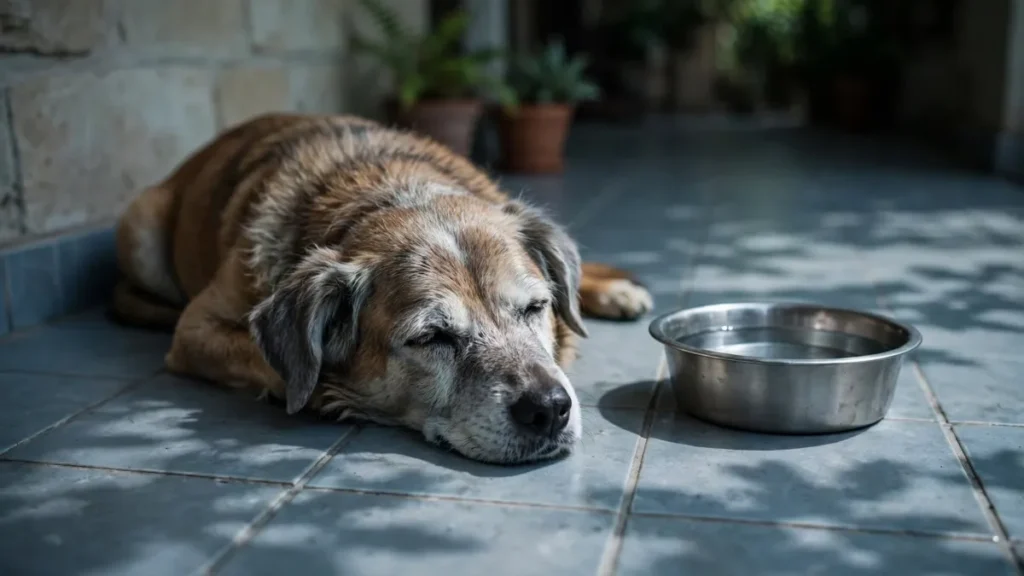
If your dog seems otherwise comfortable, these simple steps can help while you watch and decide whether to call the vet.
- Cool the room. Move your dog to a shaded, airy spot and offer fresh water.
- Let your dog rest. Stop play or walks until the panting settles.
- Walk early or late. Avoid the hottest hours of the day.
- Never leave your dog in a parked car. Even a short time can be dangerous.
- Offer a soft, supportive bed in a quiet, cool part of the house.
- Keep your dog at a healthy weight with your vet’s advice.
Please do not give your dog any human medicine to calm them or ease pain. Many common human painkillers are dangerous for dogs.
Track It Before You Call the Vet
A few notes can make the vet visit much more useful. Write down when the panting happens, how long it lasts, and what was going on at the time: weather, exercise, meals, loud noises, or a new medicine. Note any other changes in eating, drinking, sleep, or energy.
You can also count your dog’s breaths while they are asleep or fully relaxed. Count how many times the chest rises in one minute. Many vets use a figure of roughly 30 breaths a minute or less as a rough guide for a resting dog, but ask your own vet what is normal for yours. If the number keeps running high, mention it at your visit. A short phone video of the breathing is also helpful.
Frequently Asked Questions
Why is my old dog panting at night?
Night panting in older dogs can come from pain, anxiety, a warm bedroom, or confusion. If it happens often, it is worth a vet check, because it can disturb sleep for both of you.
Is panting a sign that my dog is dying?
Not by itself. Panting has many everyday causes. But heavy, constant panting with other changes should be checked by a vet, so you are not left guessing.
Can I give my dog something to stop the panting?
No. Panting is a symptom, not the problem itself. The right fix depends on the cause, and only a vet can find it safely.
Final Thoughts
Panting alone is not always a reason to panic, but excessive panting in older dogs deserves attention, especially when it is new, happens at rest, or comes with other changes. Keep your dog cool and comfortable, watch the pattern, and do not hesitate to call your vet. A quick check now is far better than waiting and wondering.
This article is for general information only and is not a substitute for veterinary advice. Always talk to your vet about your dog’s health and care.