

How to Help a Dog With Arthritis at Home: 12 Safe Ways to Ease Pain
How to help a dog with arthritis is one of the first questions owners ask after the diagnosis, and it’s a good one. Arthritis can’t be cured, but small changes at home can make a real difference to how your dog feels every day.
This guide covers 12 safe, practical ways to ease your dog’s pain and keep them moving. If you’re not sure your dog has arthritis yet, start with our guide to the signs of arthritis in dogs.
Before you start: talk to your vet
Home care works best alongside your vet’s advice, not instead of it. Other problems, like injuries, infections or even some cancers, can look like arthritis. A vet can confirm the cause, check how bad the joints are and tell you which of the steps below suit your dog.
How to help a dog with arthritis: 12 safe ways
1. Keep your dog at a healthy weight
This is the single biggest thing you can do. Every extra pound adds strain to sore joints. Even a small amount of weight loss can make your dog move more easily. Ask your vet what your dog’s ideal weight is and how much to feed.
2. Give them a thick, supportive bed
Joints hurt more on hard floors. Choose a thick orthopedic or memory-foam bed that’s big enough for your dog to stretch out. Put it away from drafts, and somewhere they can reach without stairs.
3. Make slippery floors safe
Hardwood, tile and laminate are hard on arthritic dogs, because they can’t grip. Lay down non-slip rugs or runners along the paths your dog uses most, such as from the bed to the door and to the water bowl.
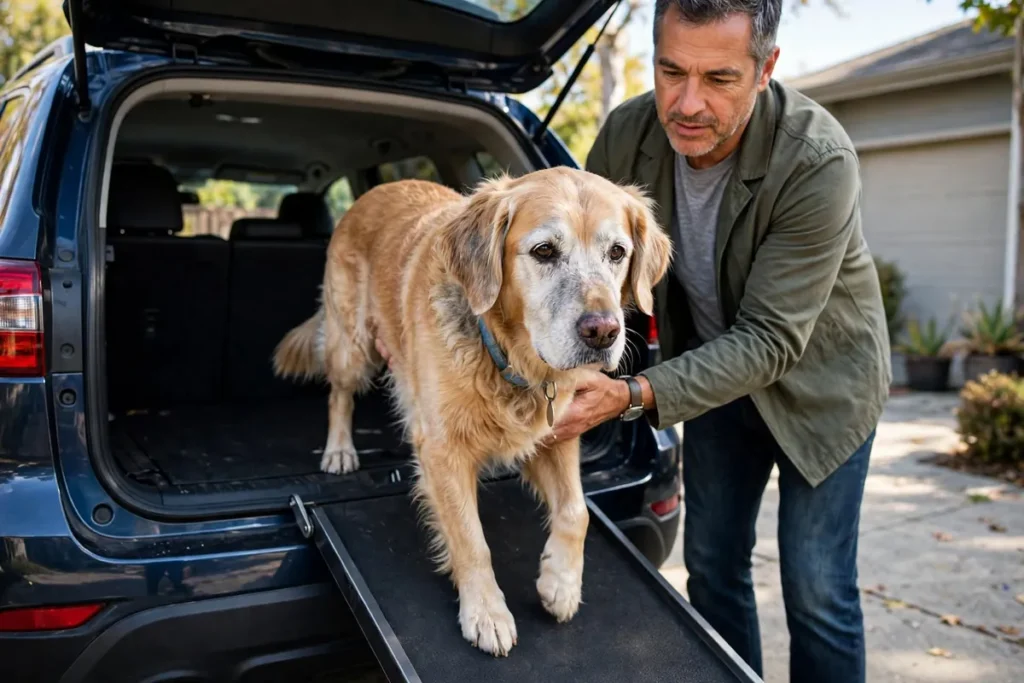
4. Use ramps and steps
Jumping onto the couch, into the car or up onto the bed is hard on sore joints. Pet ramps or small steps let your dog get up without the jolt. Introduce them slowly with treats, so your dog learns to trust them.
5. Keep exercise gentle and regular
Rest isn’t the answer. Dogs with arthritis need movement to keep their joints and muscles working. The key is steady and gentle:
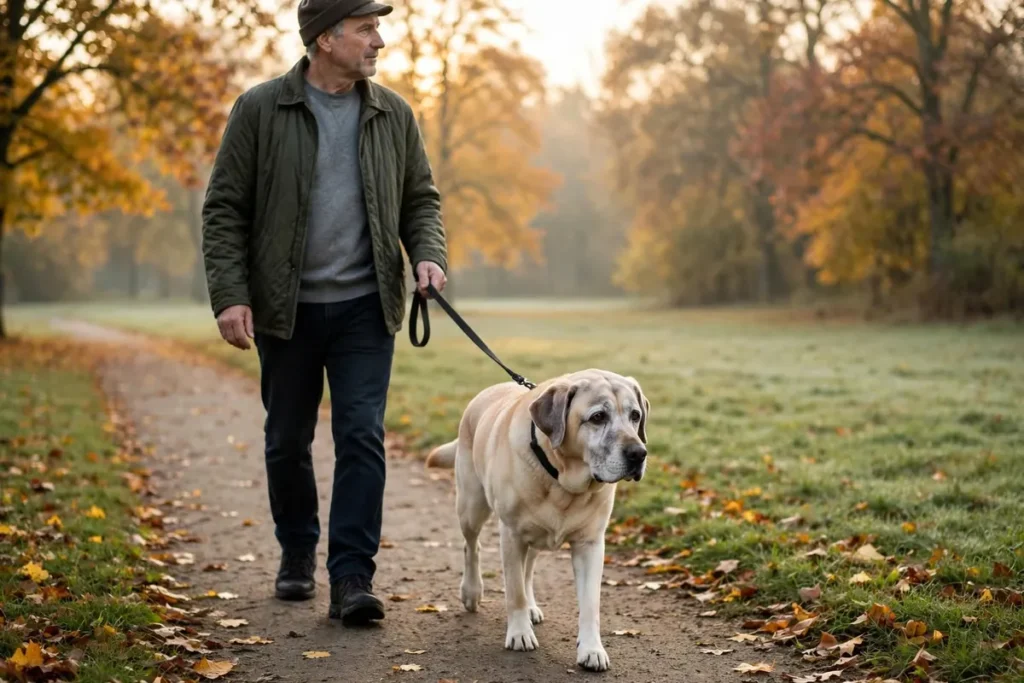
- Choose short walks, once or twice a day, instead of one long walk.
- Stick to flat, soft ground like grass.
- Avoid hard running, sharp turns and rough play.
- If your dog is sore or limping the next day, you did too much. Cut back next time.
6. Keep them warm
Cold and damp can make joints feel stiffer. Keep the bed in a warm spot, and think about a dog coat for winter walks. If you want to use a heated pad or a warm compress, ask your vet first. Never leave your dog on a heating pad unsupervised, and never use anything that gets hot enough to burn.
7. Try gentle massage
Slow, gentle massage can help relax tight muscles and keep your dog calm. Stroke along the muscles around the sore joint with light pressure. Stop right away if your dog pulls away, whines or seems uncomfortable. Your vet or a canine physiotherapist can show you the right technique.
8. Make food and water easy to reach
If bending down to the bowl is hard on your dog’s neck and front legs, you may try raising the bowls a little. Keep food, water and the bed close together, so your dog doesn’t have to walk far.
9. Keep nails short
Long nails change how your dog stands and walks, and that adds strain to the joints. Trim them regularly, or ask your vet or groomer to do it.
10. Ask your vet about joint supplements
Some vets suggest supplements for joint support, such as glucosamine or omega-3 fatty acids. The evidence is mixed, and not every product is good quality, so ask your vet which one suits your dog and how much to give. Don’t start anything on your own.
11. Consider physical therapy
A canine physiotherapist can design exercises to build strength and ease pain. Controlled exercises and hydrotherapy (walking or swimming in warm water) are easy on the joints. Some vets also offer treatments like laser therapy or acupuncture.
12. Keep their mind busy and their routine steady
Dogs with arthritis can get bored and frustrated when they can’t do what they used to. Puzzle toys, sniffing games and short training sessions keep the mind active without hurting the body. A regular daily routine helps them feel safe. If your dog seems restless at night, our guide on why old dogs sleep so much can help you tell normal sleep changes from pain.
What not to do
- Don’t give human painkillers like ibuprofen, naproxen or acetaminophen. They can seriously harm dogs.
- Don’t give any new medicine or supplement without checking with your vet.
- Don’t let your dog be a weekend athlete. Long, hard exercise after days of rest can cause a flare-up.
- Don’t force your dog to climb stairs or jump if they’re reluctant.
- Don’t ignore weight gain. It makes every other step harder.
- Don’t put off the vet. Arthritis usually gets worse without treatment.
When to call the vet
Call your vet if your dog:
- Seems to be in more pain, or stops eating
- Suddenly can’t put weight on a leg
- Has a hot or very swollen joint
- Can’t stand up, or collapses
- Cries out or snaps when touched
- Isn’t improving after you’ve made these changes
Your vet may be able to adjust the plan with prescription pain relief made for dogs. That can make a big difference to your dog’s comfort.
FAQ
What can I give my dog for arthritis pain at home?
Don’t give human painkillers. At home, focus on weight control, a supportive bed, gentle exercise and warmth, and ask your vet about dog-safe pain relief and supplements.
Is walking good for dogs with arthritis?
Yes, short, gentle, regular walks keep the joints moving and the muscles strong. Avoid long, hard exercise.
What is the best bed for a dog with arthritis?
A thick, supportive orthopedic or memory-foam bed, big enough for your dog to stretch out, placed in a warm spot away from drafts.
Does massage help dogs with arthritis?
Gentle massage can help ease muscle tension and keep your dog relaxed. Stop if your dog seems uncomfortable.
How can I help my dog with arthritis in the back legs?
Use non-slip floors, ramps, a supportive bed and short walks. If your dog’s back legs suddenly weaken or give out, see a vet right away.
Can dogs with arthritis climb stairs?
Some can, but stairs are hard on sore joints. Use ramps, gates and assistance where you can, and don’t force your dog.
The bottom line
You can’t cure arthritis, but you can make life much more comfortable for your dog. A healthy weight, a good bed, safe floors and gentle exercise do most of the work. Add your vet’s advice, and many dogs stay happy and active for years.
This article is for general information and isn’t a substitute for veterinary advice. If you think your dog is in pain, call your vet.