Old Dog Limping: Causes, What to Do and When to See a Vet
Old dog limping is one of those things that’s easy to put off. Maybe it comes and goes, or your dog still seems cheerful. But limping always means something hurts, and in an older dog the cause is worth finding.
Sometimes it’s a minor strain or a sore paw. Other times it’s arthritis, a torn ligament or something more serious. This guide will help you work out what’s likely going on, what you can check at home, and when it’s time to call your vet.
When an old dog limping is an emergency
Don’t wait if you see any of these:
- Your dog won’t put any weight on the leg
- The leg looks bent, dangling or at an odd angle
- A badly swollen or hot joint
- Sudden weakness or dragging of the back legs
- Crying out in pain, or snapping when the leg is touched
- Bleeding, or a wound you can see
- Limping along with fever, vomiting, collapse or refusing to eat
If any of these apply, call your vet or an emergency clinic right away.
Common causes of limping in older dogs
Here are the most common reasons:
- Arthritis. The most common cause in older dogs. Joints wear down over time, causing stiffness and limping that’s often worse after rest or exercise. Our guide on the signs of arthritis in dogs explains what to look for.
- Muscle strain or sprain. A slip on the floor, a jump off the couch or too much play can strain a muscle or ligament.
- Torn cruciate ligament. A common knee injury. It causes sudden or gradual limping in a back leg, and it often needs a vet’s treatment.
- Hip or elbow dysplasia. Joint problems that can become painful as dogs age.
- Paw problems. A cracked pad, a torn nail, a splinter, a burr or an insect sting can all make a dog limp.
- Tick-borne disease. Illnesses like Lyme disease can cause limping that seems to move from leg to leg, sometimes with fever and tiredness.
- Infection or abscess. A bite wound or infected spot can cause pain and swelling.
- Disc or nerve problems. A back or neck problem can make a dog limp, stumble or drag a paw.
- Bone cancer. Less common, but more likely in large and older dogs. A limp that keeps getting worse, with swelling over a bone, needs a vet visit soon.
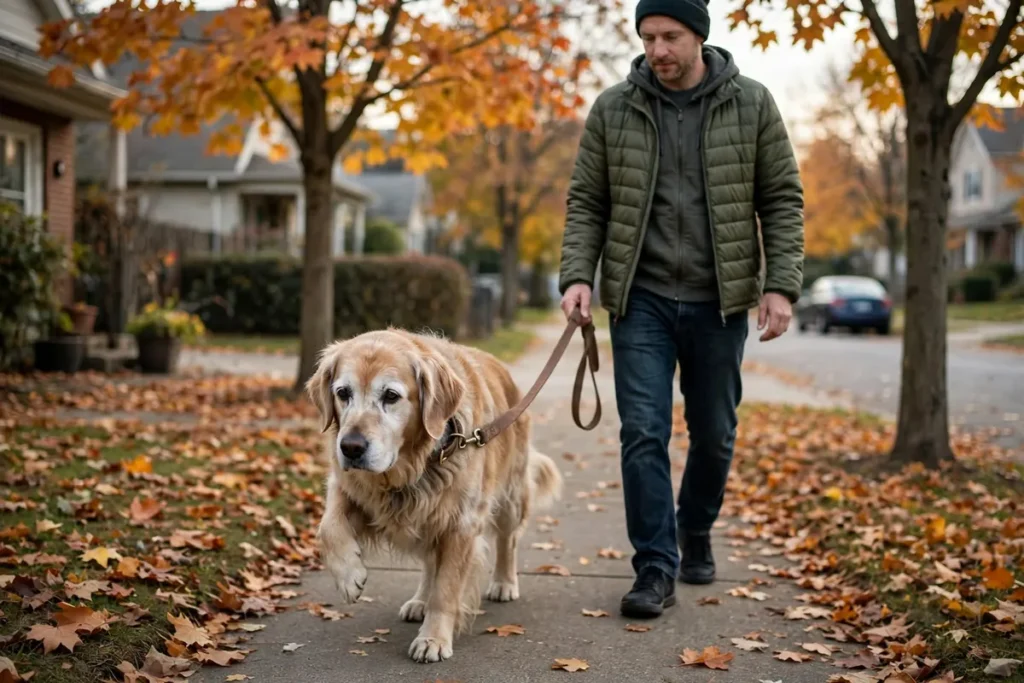
Old dog limping on the front leg
If your dog is limping on a front leg, think about the paw, the wrist, the elbow and the shoulder. Look for:
- A sore pad, torn nail or something stuck between the toes
- Swelling around the wrist or elbow
- Pain when the leg is gently stretched forward
- Lifting the leg when standing, or reluctance to put weight on it
Elbow arthritis is common in older dogs, and so are shoulder strains. If you’re wondering why your dog is limping on the front leg and you can’t find anything on the paw, a vet exam is the next step.
Old dog limping on the back leg
A back-leg limp points more often to the hip, knee or lower back. Common signs include:
- Stiffness getting up, especially after a rest
- “Bunny hopping,” or holding one back leg off the ground
- Trouble with stairs or jumping into the car
- A wobbly walk or weak back legs
Hip arthritis and cruciate ligament injuries are the usual suspects. If both back legs seem weak or give out, or if your dog is dragging a paw, see a vet quickly, because a nerve or spine problem is possible.
My dog is limping but still running around
This is a very common worry. A dog that limps but still plays and runs can have a mild strain, a sore pad or the early stages of arthritis. Dogs hide pain well, and excitement can make them forget it for a while.
Don’t read “still acting normal” as “fine.” Keep your dog calm and limit running and jumping for a day or two. If the limp doesn’t clear up, or it keeps coming back, book a vet visit.
When there’s no pain or swelling you can see
Sometimes you can find nothing wrong on the leg, and the limp still shows up. Many causes are invisible from the outside, like early arthritis, a ligament problem, a nerve issue or a growth inside a joint. A dog limping on a back leg with no pain or swelling you can see still needs a vet visit if the limp lasts more than a day or two.
What you can check at home
Stay calm, and go slowly:
- Watch your dog walk. Which leg is it? Is it better or worse on hard floors, stairs or after rest?
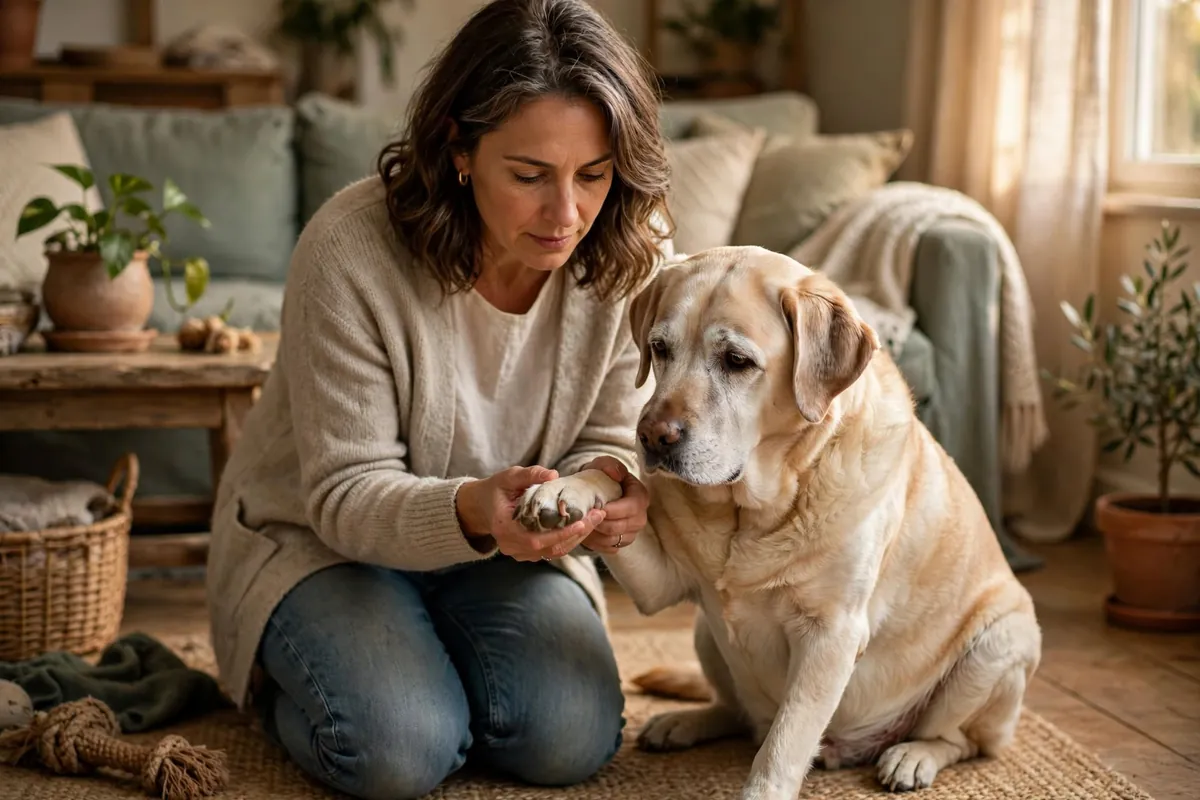
- Check the paw. Look between the toes and at the pads for cuts, splinters, burrs, redness or a torn nail.
- Feel the leg. Gently run your hands down the leg and compare it with the other side. Notice heat, swelling or a spot your dog pulls away from.
- Look for other signs. Is your dog eating, drinking and acting like themselves? Any fever, lethargy or weight loss?
- Write it down. Note when the limping started, which leg and what makes it better or worse. Your vet will want to know.
Stop right away if your dog yelps or tries to bite. Don’t force the leg to move.
When to see a vet
Book a visit soon if:
- The limp lasts more than a day or two
- It keeps coming back
- It’s getting worse, or it moves from one leg to another
- Your dog is stiff after rest or slowing down on walks
- You notice swelling, heat or muscle loss in a leg
Older dogs have less in reserve, so it’s better to be a little early than a little late.
What will the vet do?
Your vet will probably:
- Ask when the limp started and what makes it better or worse
- Watch your dog walk and trot
- Feel and gently move each joint to find the sore spot
- Recommend X-rays, and sometimes bloodwork or a tick-disease test
- Suggest treatment, which may include dog-safe pain relief, rest, weight control or physical therapy, and sometimes surgery
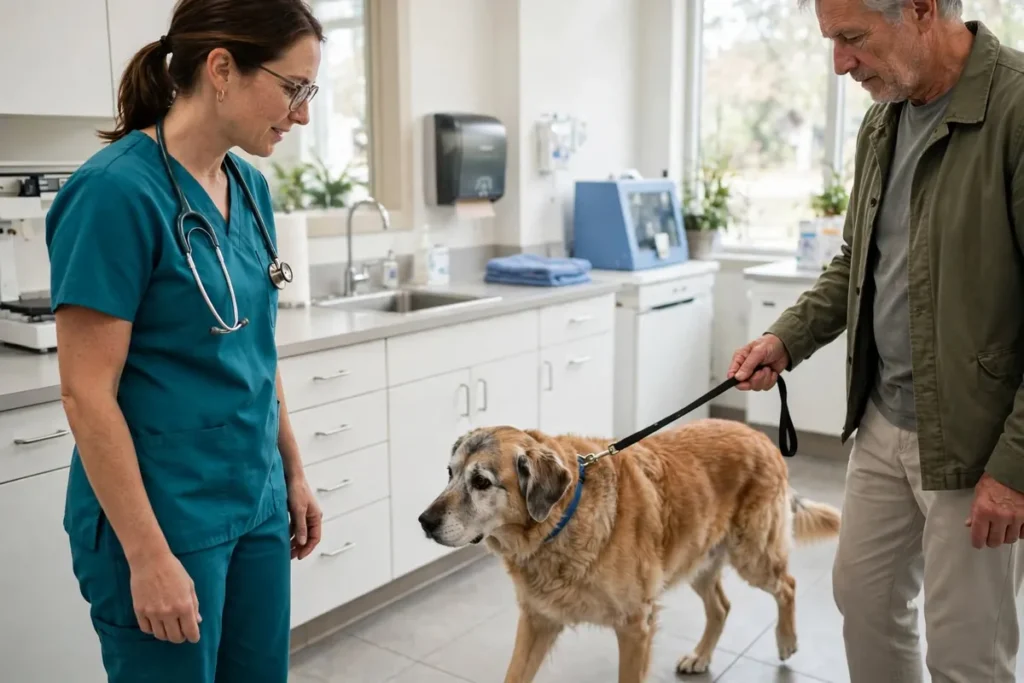
What to do (and not do) at home
- Do keep your dog calm and on a leash for outings. No running, jumping or stairs for a day or two.
- Do give a soft, supportive bed and non-slip floors. Our guide on how to help a dog with arthritis has more ideas.
- Don’t give human painkillers like ibuprofen, naproxen or acetaminophen. They can seriously harm dogs.
- Don’t let your dog run or play to “work it out.”
- Don’t keep waiting if the limp isn’t clearly improving.
If your dog limps and you’re also seeing other changes, like slowing down or sleeping more, our list of the signs of aging in dogs can help you see the bigger picture.
FAQ
Why is my old dog limping?
The most common cause is arthritis, followed by strains, ligament injuries and paw problems. A vet exam is the only way to know for sure.
Should I worry if my dog is limping but acting normal?
Yes, a little. Dogs hide pain. Rest your dog for a day or two, and call your vet if the limp doesn’t clear up or keeps returning.
How long should I wait before taking my dog to the vet for limping?
If it’s mild and your dog is otherwise well, rest for a day or two. If it lasts longer, gets worse or comes with other signs, call your vet. Go right away if your dog won’t use the leg at all.
Can I give my dog ibuprofen for limping?
No. Ibuprofen, naproxen and acetaminophen can be toxic to dogs. Only use pain relief your vet prescribes for your dog.
Why is my dog suddenly limping on a back leg?
Common causes are a sprain, a torn cruciate ligament, a hip problem or a back issue. If your dog can’t put weight on the leg, see a vet right away.
Can arthritis cause limping in dogs?
Yes. Arthritis is the leading cause of limping in older dogs. The limp is often worse after rest and may ease as your dog warms up.
The bottom line
A limp is your dog’s way of saying something hurts. Check the paw, watch which leg is affected and give your dog a day or two of rest. If the limp lasts, gets worse or comes with other signs, call your vet. Finding the cause early gives your dog the best chance of staying comfortable and active.
This article is for general information and isn’t a substitute for veterinary advice. If your dog is limping or in pain, call your vet.