Old Dog Pacing: Why Senior Dogs Pace and Restless Nights Explained
You are trying to sleep, and you can hear it: tap, tap, tap. Your dog’s nails are going back and forth across the floor again. Old dog pacing is one of the most common things senior dog owners ask about, and it is also one of the most tiring. You worry about your dog, and you are not getting much sleep either.
The good news is that pacing has a handful of common causes, and many of them can be helped. This guide walks through what could be behind it, what you can try at home, and when it is time to call your vet.
What Does Pacing Look Like in Older Dogs?
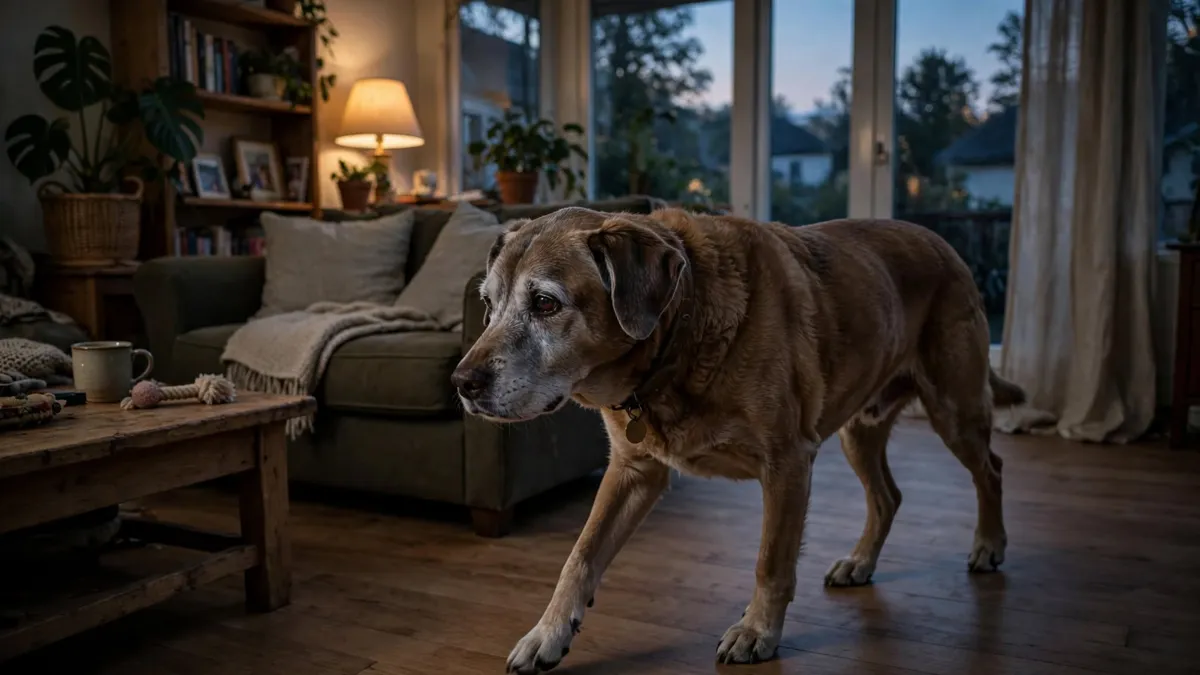
Pacing is walking back and forth, or around in circles, without any clear goal. Your dog may seem unable to settle. They might lie down for a minute, get up again, wander to the door, then come back. Some dogs pace all day. Many only do it in the evening or at night.
A dog who walks around the house sniffing, then relaxes, is just being a dog. Pacing that is new, constant, or hard to interrupt is the kind worth looking into.
Why Is My Old Dog Pacing?
There is rarely just one reason. Here are the most common ones.
Pain and Stiffness
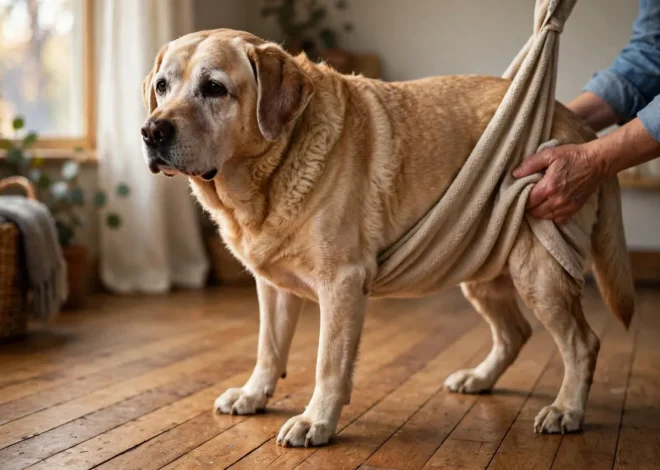
Dogs are good at hiding pain. An older dog with sore joints may find it hard to get comfortable, so they keep shifting and moving around. If your dog is also slow to get up, limps, or avoids stairs, pain is a strong possibility. Read our guide on the signs of arthritis in dogs to see what to look for.
Confusion and Dementia
Pacing, especially at night, is a well-known sign of cognitive decline in senior dogs. Dogs with dementia can seem lost in their own home, walk in circles, or stare at walls. If this sounds familiar, our article on the signs of dementia in dogs explains more.
Needing the Bathroom
Older dogs often need to go out more often. Kidney problems, urinary infections, diabetes, and some hormone conditions can all make a dog drink and pee more. If your dog paces at the door or by your bed at night, they may simply need to go out. See why an old dog drinks a lot of water if you have noticed that too.
Anxiety
Loud noises, a change in routine, a new person at home, or even a move can make a senior dog anxious. As eyesight and hearing fade, the world also becomes less predictable, and some dogs feel less secure when the lights go down.
Heart, Breathing, or Hormone Problems
Dogs who struggle to breathe comfortably, or who feel unwell inside, often cannot lie still. Pacing together with heavy breathing is worth taking seriously. Our guide to excessive panting in older dogs covers that side in more detail.
Tummy Trouble
Nausea, gas, or an upset stomach can make a dog restless. Occasional pacing after a heavy meal may pass. But pacing with a swollen belly, drooling, or unproductive retching is an emergency (see below).
Medicine Side Effects
Some medicines can make dogs restless. If the pacing began after a new medicine, tell your vet. Do not stop a prescribed medicine on your own.
Why Is My Old Dog Restless at Night?
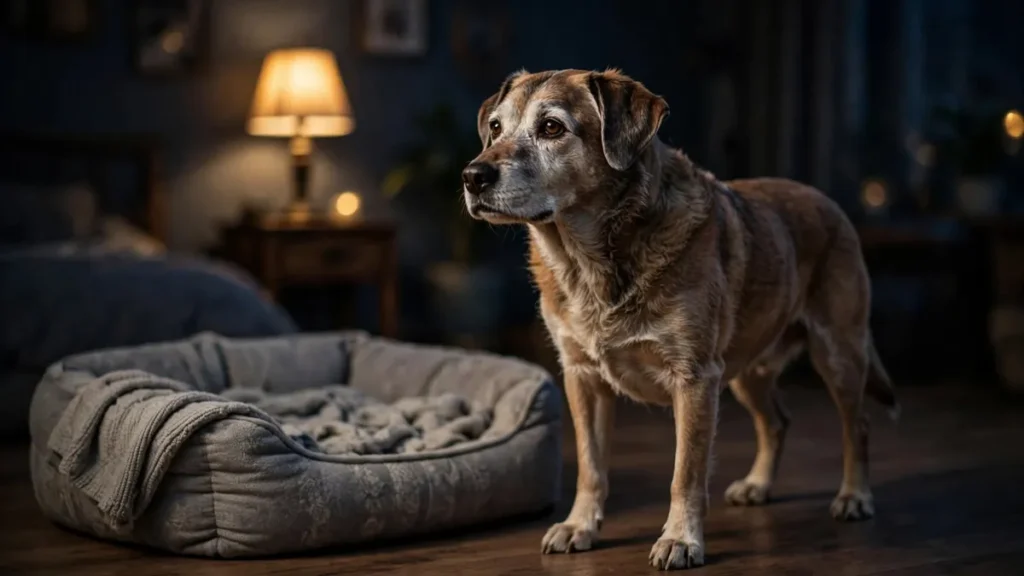
Night-time restlessness is very common in older dogs. Some reasons are simple: the room is too warm or too cold, the bed is not comfortable, or your dog needs a bathroom break. Others are linked to aging, such as pain that bothers them more when the house goes quiet, or a muddled sense of day and night.
If your dog sleeps a lot during the day and then paces at night, that mix-up can be a sign of cognitive changes. For a look at normal sleep in seniors, see why old dogs sleep so much.
When to Call the Vet
Book a vet visit soon if your dog’s pacing is new, keeps getting worse, or comes with other changes such as eating less, drinking more, accidents in the house, panting, or confusion. Go to an emergency vet right away if pacing comes with any of these:
- A swollen or hard belly
- Retching or trying to vomit with nothing coming up
- Heavy drooling
- Pale, gray, or bluish gums
- Collapse or severe weakness
- Struggling to breathe
These can point to serious problems such as bloat, which cannot wait until morning.
What You Can Try at Home
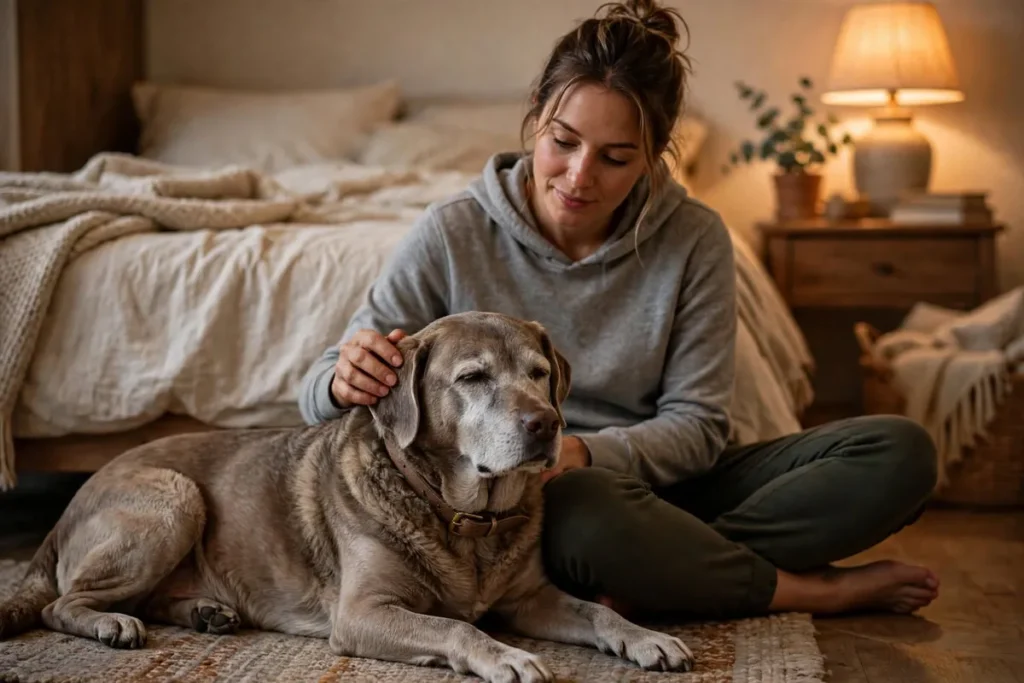
If your dog is otherwise acting normal, a few small changes can make evenings calmer. None of these replace a vet check, but they are safe to try.
- Take a late bathroom trip. Let your dog out right before bed, and again if they wake.
- Give a better bed. A thick, supportive bed helps sore joints. In cold weather, a warm bed can help too. See our guide to a heated dog bed for senior dogs.
- Use a night light. A soft light can help dogs with poor eyesight or confusion.
- Keep a steady routine. Meals, walks and bedtime at similar times each day help dogs feel secure.
- Add gentle activity in the day. A short walk and some sniffing time can help a dog settle at night.
- Keep the room comfortable. Not too hot, not too cold, and away from loud noise.
- Stay calm. Your dog picks up on your mood. A quiet voice and a gentle touch can go a long way.
Please do not give your dog any human sleep aid, painkiller, or calming pill. Many are unsafe for dogs. Ask your vet what is right for your dog.
What to Tell Your Vet
A little detail helps your vet find the cause faster. Before the visit, write down when the pacing started, what time of day it happens, how long it lasts, and what seems to make it better or worse. Mention changes in eating, drinking, peeing, sleep, and mood, plus any medicines or supplements your dog takes. A short phone video of the pacing is very helpful, because many dogs act normal in the clinic.
Frequently Asked Questions
Is pacing normal in older dogs?
It is common, but it is not something to ignore. Pacing is often a sign of pain, anxiety, or confusion, so it is worth a vet check, especially if it is new.
Does pacing always mean my dog has dementia?
No. Pain, bathroom needs, anxiety, and other illnesses can all cause pacing. Dementia is only one possibility, and a vet is the right person to tell them apart.
Should I let my dog keep pacing?
Gently offer comfort rather than forcing your dog to lie down. Check that they are not in pain or needing the bathroom, and call your vet if it keeps happening.
Final Thoughts
Old dog pacing is your dog’s way of telling you something feels off. It might be a sore hip, a full bladder, a foggy mind, or plain worry. Start with the simple things: a bathroom trip, a better bed, a calm routine. If the pacing continues, do not wait it out. A visit to the vet can bring real relief, for your dog and for your own sleep.
This article is for general information only and is not a substitute for veterinary advice. Always talk to your vet about your dog’s health and care.