Dog Not Drinking Water but Eating? Causes and When to Worry
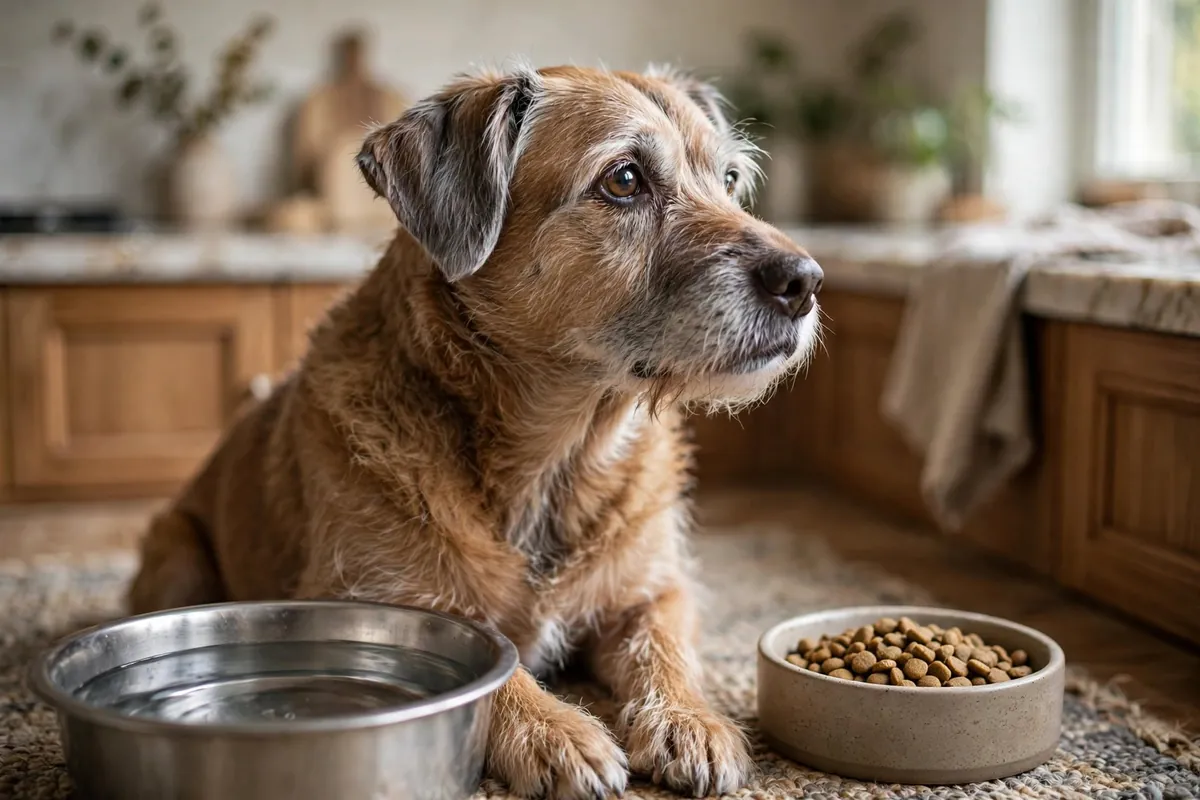
A dog not drinking water but eating can leave you unsure what to think. They seem okay, they’re eating, so is it really a problem? The honest answer is: sometimes it’s nothing, and sometimes it’s an early warning. Water matters a lot, especially for older dogs, so it’s worth paying attention.
In this guide, we’ll look at the most common reasons a dog stops drinking but keeps eating, how to check for dehydration, simple things you can try, and when to call your vet.
Why is my dog not drinking water but eating?
Here are the most common reasons, from simple to more serious:
- Getting water from food. A dog eating wet food, or food mixed with water or broth, takes in more water than you’d think, so they may drink less from the bowl. This is usually harmless.
- A problem with the bowl or its location. A dirty bowl, a new bowl, a bowl moved to a different spot, a smelly or stale water supply, or even a change in tap water can put a dog off. Some dogs dislike certain bowl materials, too.
- Mouth or dental pain. Cold water can hurt sensitive teeth, and a sore mouth can make drinking uncomfortable. Dental problems are common in older dogs.
- Nausea or an upset stomach. A dog that feels sick may keep eating small amounts but avoid water, or the other way around.
- Pain. Neck, back or joint pain can make bending down to the bowl uncomfortable, especially for a senior dog with stiff joints.
- Throat or swallowing problems. If swallowing is painful or difficult, a dog might avoid water.
- A urinary problem. Some dogs cut back on drinking if urinating is uncomfortable.
- Stress or a change in routine. New surroundings, travel or changes at home can affect drinking.
- An underlying illness. Sometimes a drop in drinking is the first sign that something is wrong. Only a vet can tell what’s behind it.
Why senior dogs need extra attention
Older dogs can become dehydrated more easily, and they may not show it until the problem has built up. Stiff joints, dental pain and slower movement can all make it harder for an old dog to reach their bowl. If your senior dog is drinking noticeably less than usual, don’t wait for it to fix itself. Mention it at your next vet visit, or call sooner if you notice any of the warning signs below.
It’s also worth comparing this with the opposite problem. Our guide on an old dog drinking a lot of water explains why too much drinking can be a warning sign as well.
How to check if your dog is dehydrated
Check these things at home:
- Gums. Healthy gums feel moist and slippery. Dry, sticky or pale gums are a warning.
- Skin. Gently lift the loose skin between the shoulder blades and let go. It should snap back quickly. If it goes back slowly, that can be a sign of dehydration.
- Energy. A dehydrated dog may seem unusually tired or weak.
- Eyes and nose. Sunken-looking eyes or a very dry nose can go along with dehydration.
- Urination. Very little urine, or none at all, is a concern.
If you see any of these signs, call your vet. Don’t wait.
When to see a vet right away
Call your vet or an emergency clinic right away if your dog:
- Has dry, sticky or pale gums
- Seems very weak, collapses or can’t stand
- Is vomiting or has diarrhea along with not drinking
- Has sunken eyes
- Is breathing heavily or panting a lot
- Isn’t urinating
- Seems to be in pain, or has a swollen or hard belly
- Refuses water in hot weather
When to call the vet within a day
- They have stopped drinking for more than a day
- They’re a senior dog, a puppy, a small dog, or have a health condition
- Their drinking has dropped noticeably, even though they’re eating
- You’ve noticed bad breath, drooling or trouble chewing
- You’ve noticed any other change, like extra sleepiness or weight loss
Don’t try to guess a safe number of hours. When in doubt, call your vet.
Things you can try at home
Try these only if your dog is bright and alert, and has none of the warning signs above:
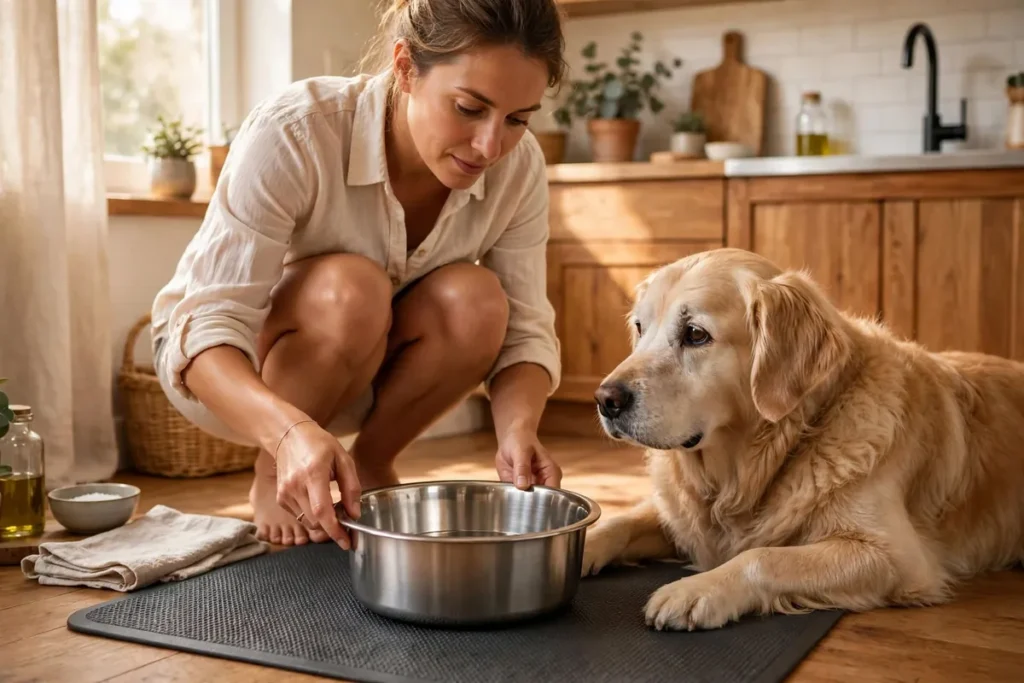
- Wash the bowl and give fresh water. Use clean, cool (not ice-cold) water.
- Try a different bowl. Some dogs prefer ceramic or stainless steel, or a wider, shallower one.
- Move the bowl. Put it in a quiet, easy-to-reach spot. For an old dog, a raised bowl or a spot on a non-slip mat can help.
- Add water to their food. Mix a little water or low-sodium, dog-safe broth into wet food. Check with your vet before adding anything new.
- Offer water in several places around the house.
- Offer water after a walk or play, when they’re naturally thirsty.
- Keep a simple log of how much they drink and eat, so you can tell your vet.
Don’t force water into your dog’s mouth, and don’t give any human medicine.
What will the vet do?
Your vet will probably:
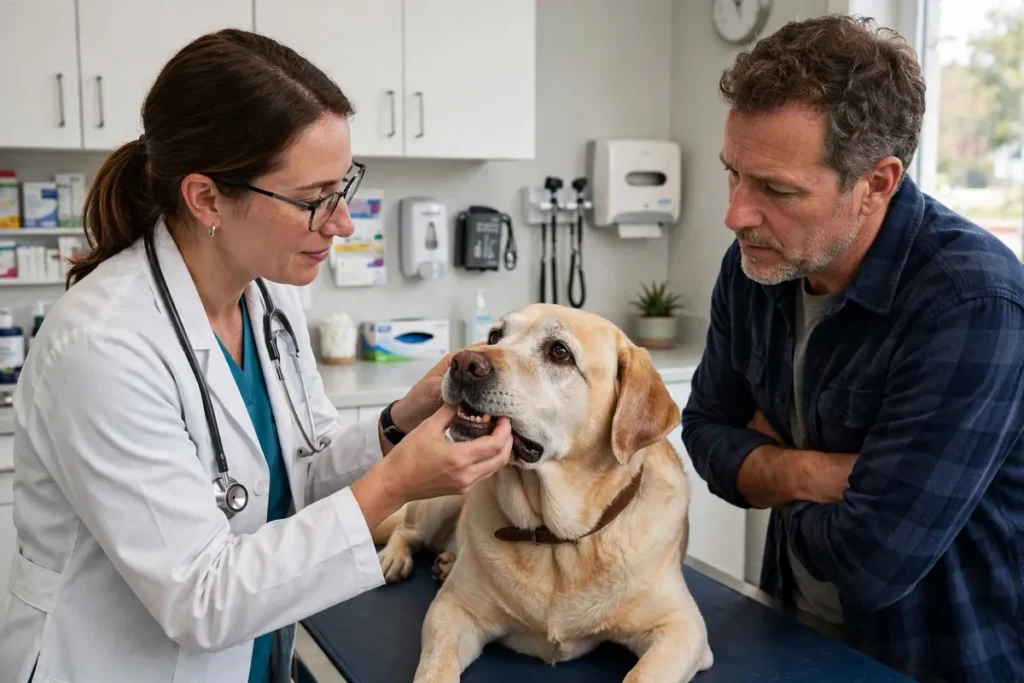
- Check your dog’s mouth, gums and hydration
- Feel their belly and check their joints and neck for pain
- Ask about food, water, urination and recent changes
- Run bloodwork or a urine test if needed to look for an underlying cause
- Recommend treatment, which may include fluids if your dog is dehydrated
FAQ
Why is my senior dog not drinking water but eating?
Older dogs are more likely to have dental problems, stiff joints or underlying illness. Mention it to your vet, and call sooner if there are other signs.
Is it okay if my dog eats but doesn’t drink?
Not for long. Dogs need water, and not drinking can lead to dehydration. If it lasts more than a day, call your vet.
How can I tell if my dog is dehydrated?
Check their gums (should be moist), skin elasticity and energy. Dry or sticky gums, slow skin recovery and weakness are warning signs.
How can I get my dog to drink more water?
Give fresh water, try a different bowl, move the bowl, add a little water or broth to their food and offer water after walks.
My dog won’t drink water but will eat. Should I worry?
Don’t ignore it. Try simple fixes, and call your vet if it continues or if they seem unwell.
Can dental problems stop a dog from drinking?
Yes. Sore teeth or gums can make drinking uncomfortable, especially with cold water.
The bottom line
A dog that eats but won’t drink is giving you a small clue. It might be as simple as a bowl they don’t like, or it might be pain or illness. Watch them closely, try the easy fixes and don’t wait too long. If they stop drinking for more than a day, or show any warning sign, call your vet.
This article is for general information and isn’t a substitute for veterinary advice. If your dog seems unwell, call your vet.