Dog Back Legs Not Working? Causes in Older Dogs and What to Do
Dog back legs not working is a frightening thing to see. One day your senior dog is walking fine, and the next they’re wobbly, dragging a paw or can’t stand up at all. It’s natural to panic, and it’s also natural to wonder if it’s just old age.
Weak back legs in an older dog can be something slow and manageable, like arthritis. They can also be a sign of a sudden problem with the spine or nerves. This guide will help you tell the difference, know what to do right now, and understand when to call your vet.
When it’s an emergency
Call your vet or an emergency clinic right away if your dog:
- Suddenly can’t stand or walk on the back legs
- Drags the back legs, or the paws knuckle over
- Cries out in pain or won’t let you touch their back
- Can’t pee or poop, or leaks urine without noticing
- Has pale gums, trouble breathing or collapses
- Lost use of the back legs after a fall, a hit or a rough play session
Sudden weakness in the back legs is not something to wait out. Some spinal problems are time-sensitive, and the sooner your dog is seen, the better the outlook can be.
Why a senior dog’s back legs get weak
Here are the most common reasons for a senior dog’s back legs to go weak:
- Arthritis. The most common cause. Sore hips, knees and spine make a dog reluctant to use the back legs, and they can seem to give way. Our guide on the signs of arthritis in dogs explains what to look for.
- Muscle loss. Older dogs lose muscle, especially in the hind end. Weaker muscles mean shakier, less stable legs.
- Degenerative myelopathy. A slow, progressive spinal cord disease. It starts with wobbly back legs, scuffing paws and difficulty standing. It isn’t usually painful, but it gets worse over time.
- Disc disease. A bulging or ruptured disc can press on the spinal cord, causing pain, weakness or sudden loss of use of the back legs.
- Spinal stroke. A blood clot can block blood flow to part of the spinal cord. It often comes on suddenly, and your dog may not seem to be in pain.
- Hip or knee problems. Hip dysplasia and torn cruciate ligaments can make the back legs weak or unstable.
- Spinal or nerve tumors. Less common, but possible in older dogs.
- General illness. Low energy from heart, kidney, hormone or blood problems can make a dog weak all over, including the back legs.
Only a vet can say which one it is, because many of these look alike at home.
Why are my dog’s back legs shaking?
Dogs’ back legs shaking is very common in older dogs, especially when standing. The usual reasons are:
- Weak muscles. Tired, wasted muscles tremble when they have to hold your dog’s weight.
- Pain. Arthritis in the hips, knees or spine can make the back legs shake, particularly when standing still.
- Nerve problems. Spinal or nerve disease can cause tremors and weakness.
- Cold or anxiety. Less serious, but worth ruling out.
If the shaking is new, getting worse or comes with weakness, dragging paws or pain, book a vet visit. An old dog whose back legs shake only when tired may simply need strength building, but get it checked first.
Dog hind legs giving out
If your dog’s hind legs give out, such as collapsing when getting up, sliding on slippery floors or suddenly sitting down mid-walk, think about pain, weakness and balance. Arthritis, a disc problem or a nerve issue are the usual suspects.
It’s worth a vet visit even if the problem comes and goes. Giving out is a sign that something isn’t working properly, and it also puts your dog at risk of falls and injury.
When a dog loses use of the back legs temporarily
Sometimes a dog loses use of the back legs for a short time and then seems to recover. Possible reasons include a spinal stroke, a disc problem, a seizure (dogs can be wobbly or weak right after one), very low energy or blood sugar, and a pinched nerve.
Don’t be reassured just because your dog got up again. Whatever caused it can come back, and sometimes it gets worse. Call your vet the same day, and if you can, film what happened to show them.
What to do right now
- Stay calm and keep your dog calm. Panic makes dogs more anxious and more likely to move around.
- Limit movement. Keep your dog on a soft, non-slip surface, and don’t let them run, jump or use stairs.
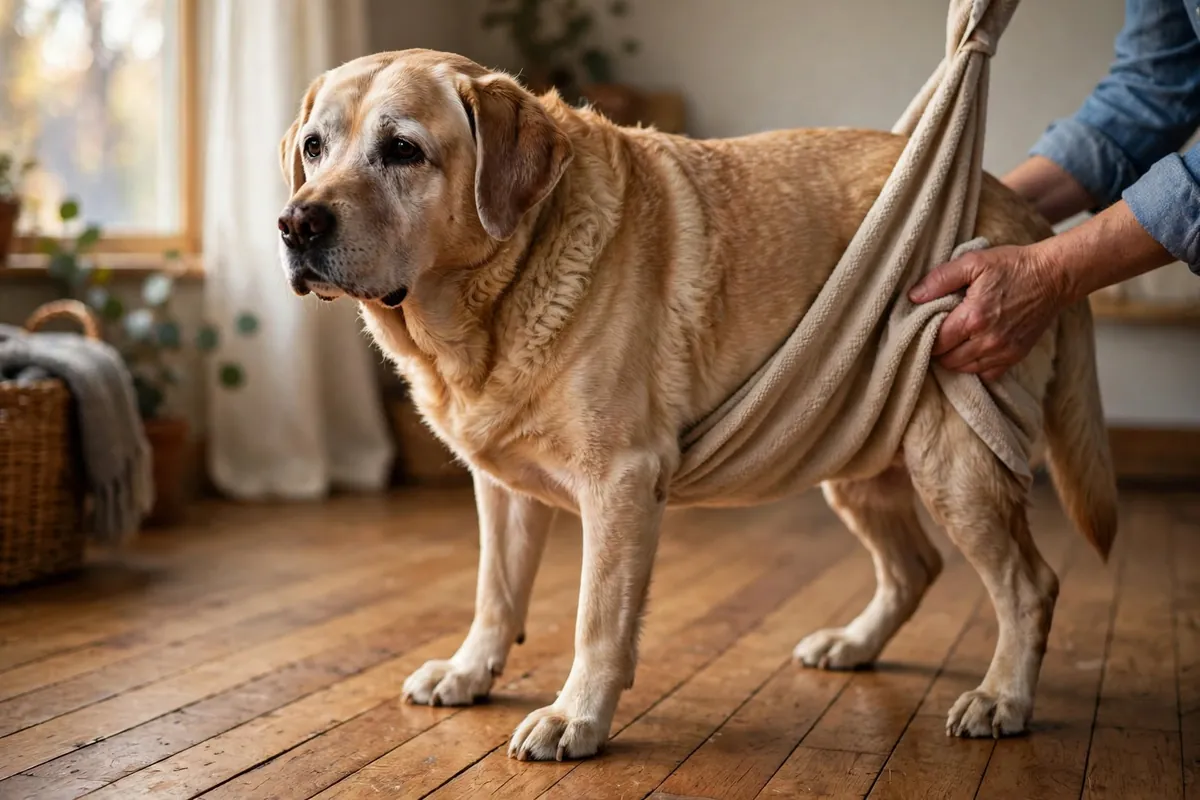
- Support the back end. If your dog needs to go outside, gently support the hindquarters with a towel or a sling under the belly.
- Don’t give human painkillers. Ibuprofen, naproxen and acetaminophen can be dangerous for dogs.
- Write down what you see. When did it start? Was it sudden? Is one leg worse? Any accidents, pain or other changes? A short video helps your vet a lot.
- Call your vet. If it’s sudden or severe, go straight to an emergency clinic.
What will the vet do?
Your vet will probably:
- Ask when it started and how it has changed
- Watch your dog stand and walk
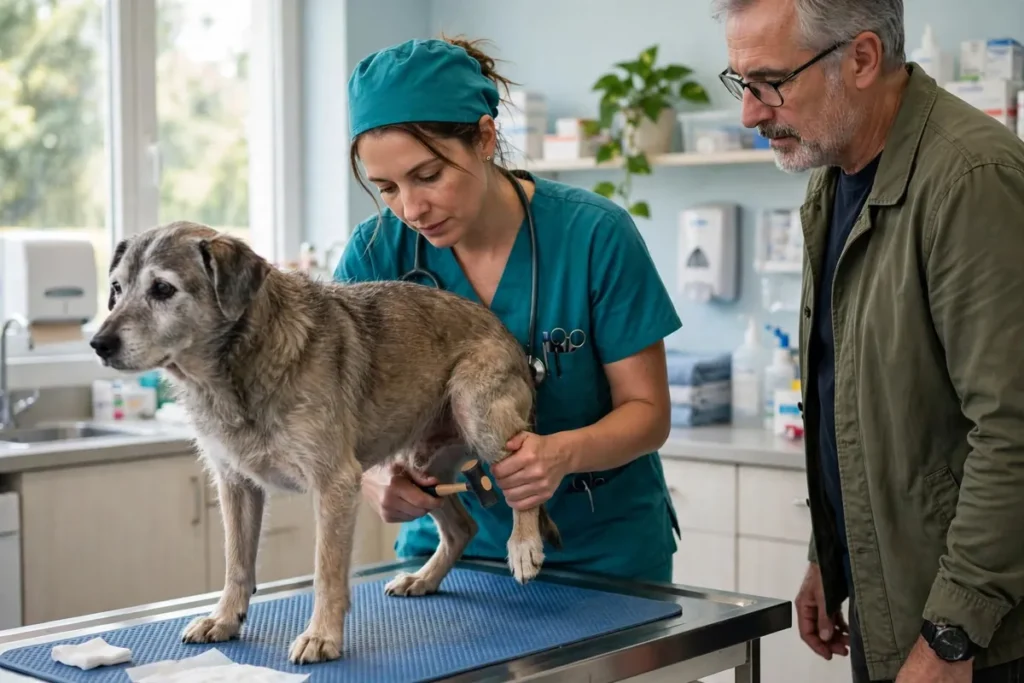
- Do a neurological exam, checking reflexes and how well your dog knows where their paws are
- Check the hips, knees and spine for pain
- Recommend bloodwork and X-rays
- Suggest an MRI or CT scan if a spinal problem is suspected
Treatment depends on the cause. It can range from pain relief, rest and physical therapy to surgery for some disc problems.
How to help your dog at home
Once your vet has found the cause, these steps can make life easier:
- Add grip. Put non-slip rugs on hard floors.
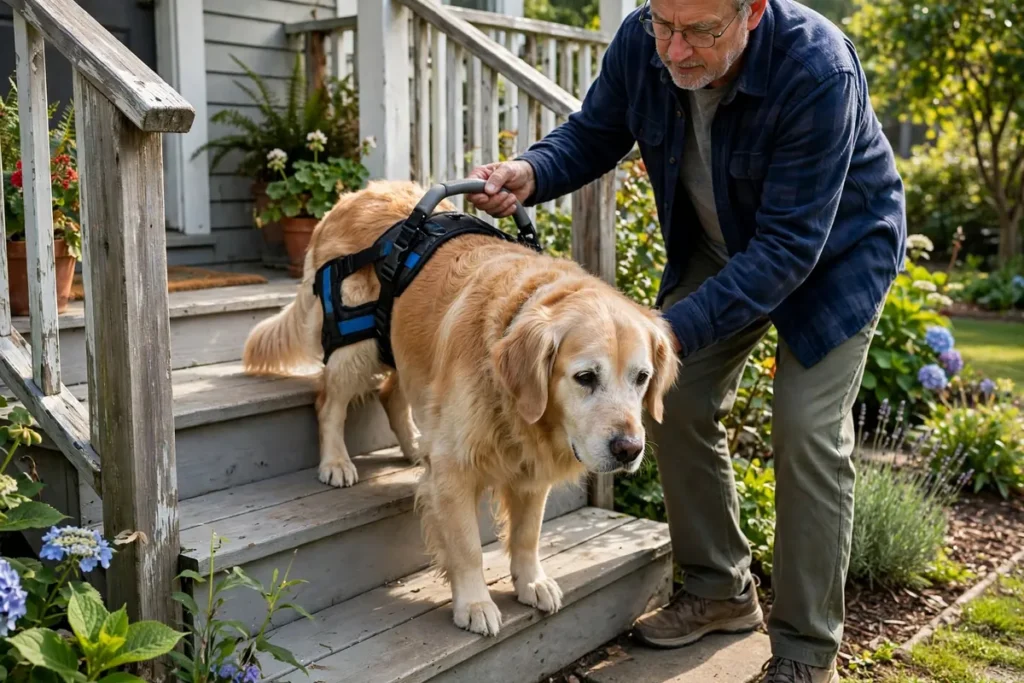
- Use a support harness or sling to help your dog stand and walk.
- Add ramps for the car and furniture, and gate off the stairs.
- Give a thick, supportive bed where your dog can rest without strain.
- Keep short, gentle walks. Movement helps keep muscles strong.
- Keep your dog at a healthy weight. Less weight means less strain on weak legs.
- Keep skin clean and dry if there are urine accidents, to avoid sores.
Our guide on how to help a dog with arthritis has more ideas, and our post on an old dog limping explains what to check if your dog favors one leg.
FAQ
Why are my old dog’s back legs weak?
The most common causes are arthritis and muscle loss. Spinal diseases like degenerative myelopathy and disc problems are also possible. A vet exam is the only way to tell.
Is it an emergency if my dog’s back legs give out?
If it’s sudden, your dog can’t stand or they seem to be in pain, yes. Go to an emergency clinic. If it’s gradual, book a vet visit soon.
Can dogs recover from weak back legs?
It depends on the cause. Some dogs recover well with treatment, rest and physical therapy. Others, like those with degenerative myelopathy, can be kept comfortable but may not recover fully.
What is degenerative myelopathy?
It’s a slow, progressive disease of the spinal cord that causes weakness and loss of coordination in the back legs. It usually isn’t painful, and your vet can talk through ways to keep your dog comfortable.
How can I help my dog walk with weak back legs?
Use a rear-support harness or a towel sling, add non-slip floors and ramps, keep walks short and ask your vet about physical therapy.
What should I do if my dog’s back legs stop working for good?
Talk to your vet about the cause, the outlook and your dog’s comfort. Many dogs can live well with support like harnesses or wheelchairs, and your vet can help you judge your dog’s quality of life.
The bottom line
Weak, shaky or failing back legs are never something to ignore in an older dog. Sometimes it’s arthritis and muscle loss that can be managed. Sometimes it’s a spinal problem that needs fast care. If it’s sudden, severe or painful, get to a vet right away. If it’s gradual, book a visit soon and make your home safer for your dog in the meantime.
This article is for general information and isn’t a substitute for veterinary advice. If your dog’s back legs suddenly stop working, call your vet or an emergency animal hospital immediately.