
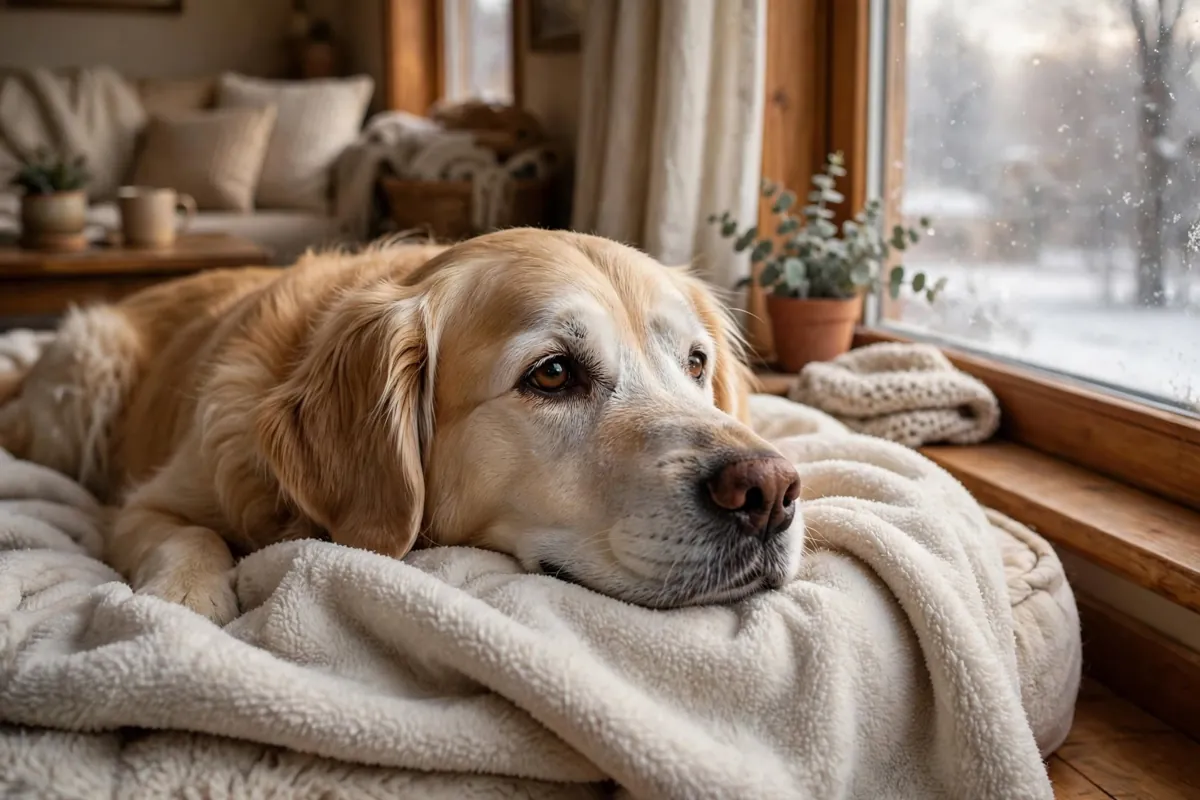
Senior Dog Winter Care: How to Keep an Older Dog Warm and Comfortable
Senior dog winter care is different from caring for a young, energetic dog. Older dogs lose body heat faster, their joints get stiff in the cold, and slippery floors and icy paths become real dangers. The good news is that a few simple changes at home can make the colder months much more comfortable for your dog.
This guide covers how to keep your older dog warm, how cold weather affects sore joints, how to protect paws, and the signs that mean it is time to call your vet.
Why Winter Is Harder on Older Dogs
As dogs age, their bodies change in ways that make cold weather harder to handle:
- They may have less muscle and body fat to keep them warm.
- They often move less, so they produce less body heat.
- Health problems such as arthritis, kidney disease or heart disease can make them more sensitive to cold.
- Small dogs and dogs with short or thin coats lose heat even faster.
Every dog is different, so watch your own dog. If your senior dog shivers, slows down, or does not want to go outside, the cold is probably bothering them.
Does Cold Weather Make Arthritis Worse in Dogs?
Many owners notice that arthritis in dogs seems worse in cold weather. Vets say the exact link is not fully understood, but cold and damp weather may make joints and muscles feel tighter, so a dog with arthritis can look stiffer and more uncomfortable in winter.
Signs that the cold may be affecting your dog’s joints include:
- Taking longer to get up after a nap, especially in the morning
- Walking stiffly for the first few steps
- Not wanting to jump on the couch or climb stairs
- Limping or slipping more on smooth floors, snow or ice
- Being more tired or grumpy than usual
If you are not sure whether your dog has arthritis, read our guide on the signs of arthritis in dogs. If your dog already has it, our article on how to help a dog with arthritis at home has simple things you can do every day.
Please do not give your dog any human pain medicine. Many of them are dangerous for dogs. If your dog seems to be in pain, ask your vet about safe options.
Keep Your Senior Dog Warm Indoors
Most of your dog’s winter happens indoors, so start with the sleeping area.
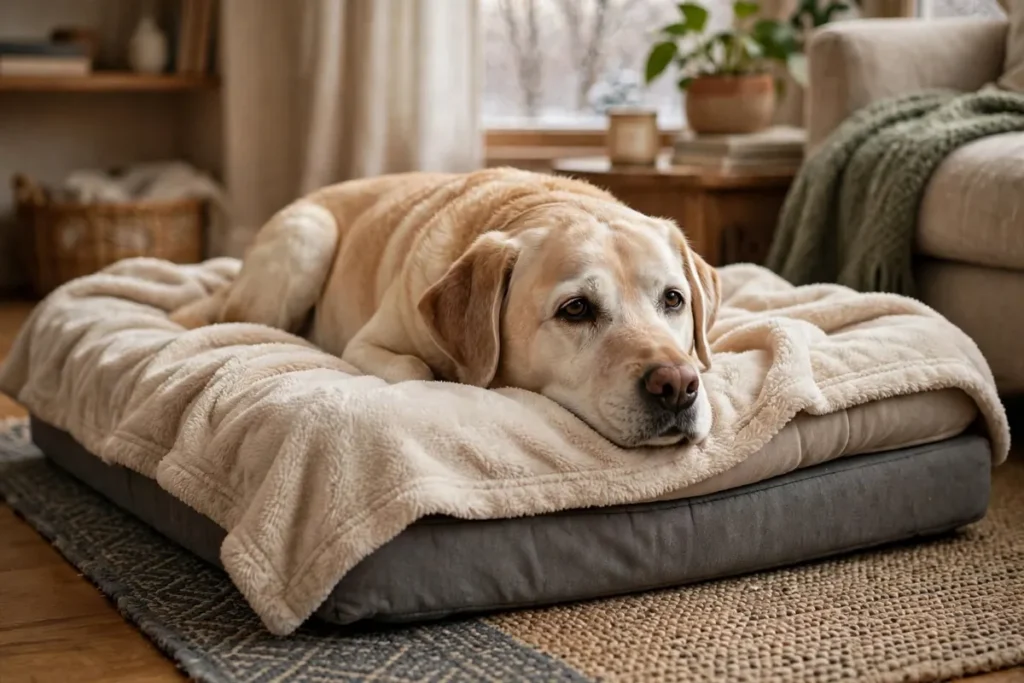
- Use a thick, supportive bed. An orthopedic or memory foam bed lifts your dog off the cold floor and cushions sore joints.
- Add blankets. A soft fleece blanket gives your dog something to curl up in. Wash it often.
- Move the bed away from drafts. Keep it away from doors, windows and air vents.
- Keep the house at a steady, comfortable temperature. If you feel comfortable, your dog likely does too.
- Keep dogs away from heaters. Space heaters, fireplaces and radiators can burn a dog or tip over.
Make Slippery Floors Safer
Hardwood and tile get very slippery for stiff, older paws. Put non-slip rugs or runners along the paths your dog uses most, such as from the bed to the water bowl and to the door. Dog socks with grips can also help some dogs.
Winter Walks for Older Dogs
Your senior dog still needs movement in winter, because gentle exercise keeps muscles and joints working. The key is to make walks shorter and more frequent.
- Choose the warmest part of the day, usually midday.
- Try two or three short walks instead of one long one.
- Avoid icy paths, deep snow and frozen ponds.
- Head home if your dog starts shivering, lifting paws or slowing down.
- Never leave your dog in a cold car.
On very cold, wet or icy days, play gentle indoor games instead, such as sniffing games, puzzle feeders or short training sessions.
Protect Paws From Ice, Salt and Antifreeze
Winter walks bring paws into contact with things that can hurt your dog.
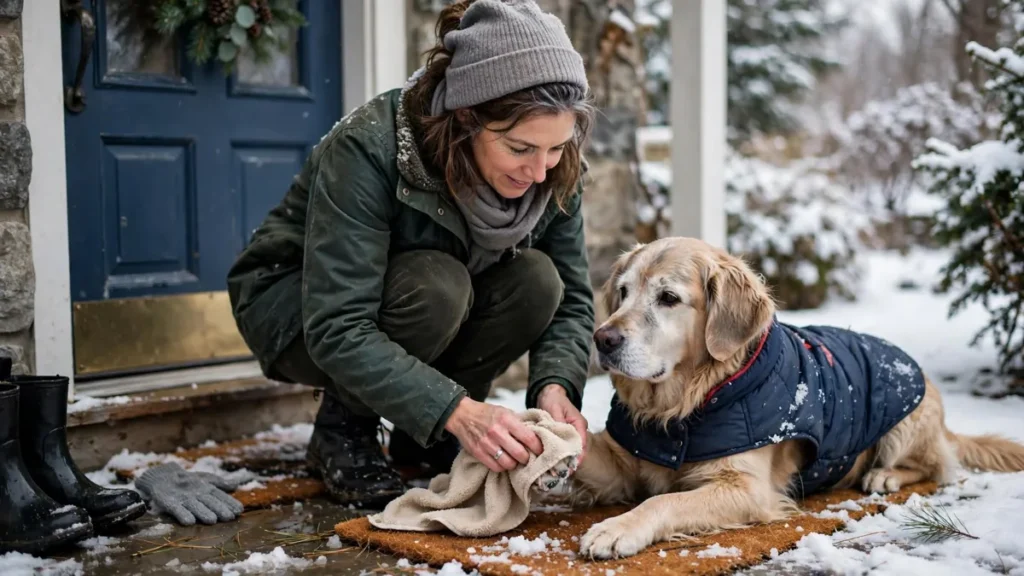
- Wipe paws after every walk. Use a warm, damp towel to remove snow, ice and de-icing salt. Some salts irritate the skin or upset the stomach if licked.
- Check between the toes. Ice balls and small cuts can hide there.
- Use a pet-safe paw balm. It can help prevent dry, cracked pads.
- Keep antifreeze away from your dog. It has a sweet taste but is extremely poisonous. If you think your dog has licked or swallowed any, call your vet or an emergency clinic right away.
Should an Older Dog Wear a Coat?
It depends on the dog. Small dogs, short-haired dogs, thin dogs and dogs with arthritis often feel better in a well-fitted coat or sweater on cold walks. Thick-coated breeds may not need one.
Choose a coat that covers the back and chest, is easy to put on, and does not rub under the legs. Take it off indoors, so your dog does not overheat.
Food, Water and Weight in Winter
Some dogs eat less and move less in winter, and some gain weight because they are less active. Extra weight puts more strain on aging joints, so keep an eye on your dog’s body shape.
- Feed your normal senior diet, and do not change food suddenly.
- If your dog is gaining or losing weight, talk to your vet before changing portions.
- Keep fresh water available, since dogs can drink less when it is cold.
Signs Your Senior Dog Is Too Cold
Watch for these signs, indoors and out:
- Shivering or shaking
- Tucked tail and hunched body
- Lifting paws off the ground or refusing to walk
- Seeking out warm spots or burrowing under blankets
- Being unusually sleepy or slow
If your dog shows any of these outside, take them in right away and warm them up gently with dry blankets.
When to Call the Vet
Call your vet if you notice any of these:
- Strong shivering that does not stop after warming up
- Pale, gray or very cold ears, tail or paws after being outside
- A sudden increase in limping, stiffness or reluctance to move
- Cracked, bleeding or very sore paw pads
- Extreme tiredness, weakness or collapse
Any chance your dog has swallowed antifreeze or de-icing chemicals is an emergency. Call your vet or an emergency clinic immediately.
Frequently Asked Questions
How cold is too cold for a senior dog?
There is no single number. As a rough guide, many small, thin-coated or older dogs start to feel uncomfortable once temperatures drop close to freezing, and wind and wet weather make it feel colder. Shorten walks and watch your dog’s behavior rather than relying only on the temperature.
Is it safe to use a heating pad for a senior dog?
Only a pet-safe heated pad, used carefully. Older dogs may not notice when something gets too hot, so choose a low setting, cover the pad with a blanket, never leave your dog alone with it, and make sure your dog can move away. Never use a human heating pad. If your dog has skin problems or health conditions, ask your vet first.
Should I still walk my senior dog in the snow?
Short walks are usually fine if your dog is healthy and not shivering. Avoid deep snow and ice, which are hard on stiff joints, and wipe paws when you get home.
Final Thoughts
Good senior dog winter care comes down to a few habits: a warm, supportive bed, safe floors, short walks, clean paws and close attention to how your dog moves. These small steps can make winter much easier for an older dog, especially one with stiff joints.
This article is for general information only and is not a substitute for professional veterinary advice. Always talk to your vet about your dog’s specific health needs.

One thought on “Senior Dog Winter Care: How to Keep an Older Dog Warm and Comfortable”