

Best Heated Dog Beds for Senior Dogs: What to Look For
A heated dog bed can make a big difference for an older dog in cold weather. Stiff joints, thinner coats and less body fat mean senior dogs feel the cold more, and a warm place to sleep can help them rest more comfortably. But not every heated bed is a good choice, and safety matters a lot with older dogs.
This guide explains the types of warming beds, what to look for before you buy, and how to use one safely.
Why Senior Dogs Like Warm Beds
Older dogs often seek out warm spots. Gentle warmth can feel soothing on stiff joints and helps a dog stay comfortable on cold nights. A warm bed is not a treatment for arthritis or any other condition, but it can make life more comfortable. If you are not sure whether your dog has joint pain, read our guide on the signs of arthritis in dogs.
Types of Warming Dog Beds
- Electric heated beds: These plug in and have a low-level heating element built into the bed.
- Self-warming beds: These use reflective or insulating layers to hold in your dog’s own body heat. They need no electricity, so there is no cord to chew.
- Microwavable or pet-safe warming pads: These are placed under a blanket or inside a bed and give gentle warmth for a few hours.
- Bed warmers or heated inserts: A pad that goes under or inside a bed you already own.
For many senior dogs, a self-warming bed is the simplest and safest place to start. If your dog needs more warmth, a pet-safe electric bed with the right safety features is an option.
What to Look For in a Heated Dog Bed
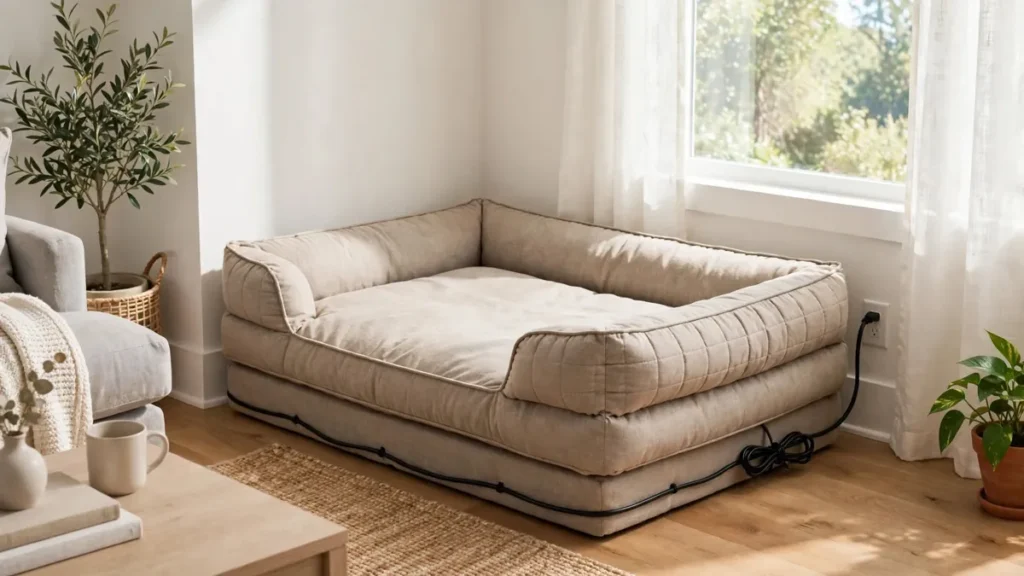
- Low, safe heat: Choose a bed made for pets, with a low heat setting, not a human heating pad.
- Thermostat or automatic shut-off: This helps prevent overheating.
- Chew-resistant cord: A cord that is wrapped or protected is safer, especially if your dog chews.
- A supportive base: Orthopedic or memory foam under the heated layer protects sore joints.
- Washable cover: Older dogs may have accidents, so a removable, washable cover is important.
- Non-slip bottom: The bed should not slide when your dog gets on and off.
- Low edge: Stiff dogs find it easier to step onto a bed that is not too high.
- A recognized safety certification: Check the product page for safety testing information.
Choosing the Right Size
Pick a size that lets your dog stretch out fully. A bed that is too small forces your dog to curl up, which can strain stiff joints. Large and giant breeds need a large bed with strong support. Small dogs can use a smaller bed, but still need a soft, warm surface that is easy to step onto.
Are Warm Beds Good for Dogs That Sleep Outside?
Some beds are made for outdoor use, but senior dogs should not sleep outside in cold weather. Older dogs cannot handle extreme cold well. If your dog spends time outdoors, use a weather-resistant bed in a sheltered spot, limit the time outside, and bring your dog inside to sleep. Our senior dog winter care guide has more cold-weather tips.
How to Use a Warm Bed Safely

- Always leave enough floor space so your dog can move away from the heat.
- Put a thin blanket or cover over the heated area instead of letting your dog lie directly on it.
- Follow the maker’s instructions and use the lowest setting that keeps your dog comfortable.
- Check the cord and bed regularly for chewing, damage or wear, and stop using it if anything looks damaged.
- Keep the bed dry, and unplug it when it is not in use.
- Watch for heavy panting, restlessness, or red or irritated skin, and move your dog off the bed if you see them.
Older dogs, dogs with diabetes, nerve problems or reduced feeling in their skin may not notice when something gets too hot. Ask your vet before using any heated product for these dogs. For more ways to support a stiff dog, see our guide on how to help a dog with arthritis at home.
Frequently Asked Questions
Can I leave a warm dog bed on all night?
Some pet beds are designed for long use at a low temperature, but you should always follow the manufacturer’s instructions. When you first use a new bed, watch how your dog reacts, and check on them during the night.
Are self-warming beds good for senior dogs?
Yes, they are a safe choice for many older dogs because there is no cord or heating element. They work best for dogs with enough body heat to warm the bed, so very thin or small dogs may still need extra blankets.
Is a heated bed better than a heating pad?
A bed gives support and warmth in one product, which is better for sore joints. A pet-safe pad is useful if your dog already loves a bed you own. Never use a human heating pad.
Final Thoughts
The best heated dog bed for a senior dog is one that is safe, supportive and easy to clean. Choose a pet-made bed with low heat and good safety features, give your dog room to move away from the warmth, and ask your vet if your dog has any health conditions. A warm, comfortable bed can make winter much easier for an older dog.
This article is for general information only and is not a substitute for professional veterinary advice. Always talk to your vet about your dog’s specific health needs.