Cataracts in Dogs: Signs, Causes, Treatment and What to Expect
If you have just spotted a milky patch in your dog’s eye, you are probably wondering one thing: is this serious? Cataracts in dogs are common, and they sound scarier than they often are. But they are also not something to ignore, because a cataract can slowly steal your dog’s sight, and sometimes it brings a painful complication with it.
This guide covers what a cataract actually is, what it looks like, what causes it, whether your dog can still see, and what your options are. If you are not sure whether you are looking at a cataract or just normal aging, our guide to cloudy eyes in dogs will help you tell the difference.
What are cataracts in dogs?
A cataract is a cloudy area in the lens of the eye. The lens sits right behind the pupil and works like a camera lens, focusing light onto the retina at the back of the eye. When the proteins or the water balance inside the lens change, parts of the lens turn cloudy and light can’t pass through properly.
A small cataract may barely affect vision. A fully mature cataract looks like a white disk behind the iris and blocks light from reaching the retina, which means the eye can no longer see.
So yes, dogs do get cataracts, and they can happen at almost any age, not just in old dogs.
What do cataracts look like in dogs?
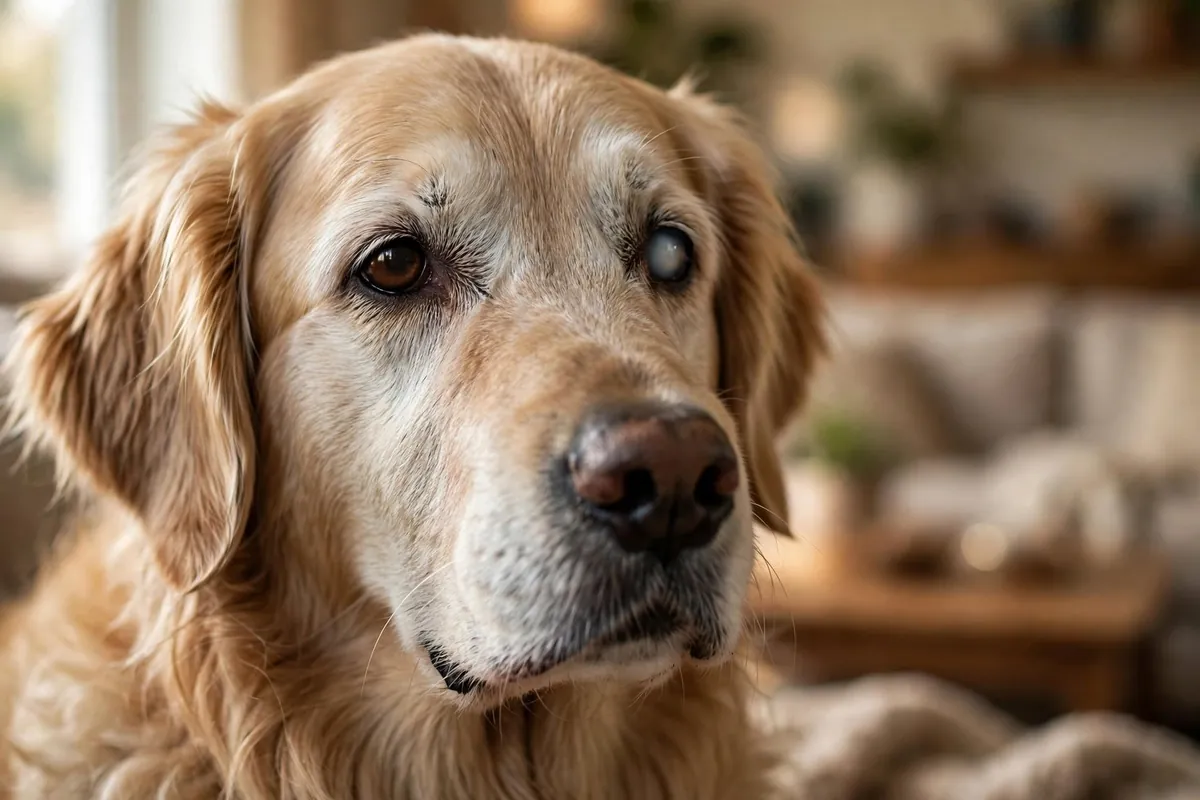
Cataracts usually show up as a change in the pupil, the dark center of the eye. Look for:
- A milky white, gray or bluish cloudiness in the pupil
- A pupil that no longer looks clear and black
- Eyes that don’t reflect light the way they used to in night-time photos
- A small cloudy spot at first that grows over weeks or months
Early cataracts are easy to miss, because your dog may look completely normal and act normal too. Dogs lean heavily on smell and hearing, so they hide vision loss better than you would expect.
Signs your dog is losing vision
Often it is the behavior that tips owners off before the eye itself does. A dog with cataracts may:
- Bump into furniture, walls or doors
- Hesitate on stairs or miss a step
- Struggle to find the food or water bowl
- Seem more nervous or clingy, especially in dim light
- Get startled when you touch them, because they didn’t see you coming
If you see squinting, redness, watering or your dog rubbing their face, that points to pain or inflammation, not just a cataract. Skip ahead to the “When to see a vet right away” section below.
Cataracts vs. nuclear sclerosis: not the same thing
This is where many owners get confused. Almost every older dog develops a bluish-gray haze in the lens as they age. That is called nuclear sclerosis, and it is a normal hardening of the lens.
| Difference | Cataract | Nuclear sclerosis |
|---|---|---|
| What it is | Cloudy lens, light is blocked | Normal age-related lens hardening |
| Color | Milky white, gray, sometimes bluish | Blue-gray haze |
| Effect on sight | Can reduce or end vision | Light still passes through, so dogs usually keep decent sight |
| Needs treatment? | Needs a vet exam, surgery is the only fix | Usually just monitored |
| Typical age | Any age | Mostly seniors |
You can’t reliably tell them apart by looking. Only a vet can, using a bright light and magnification, so book an exam instead of guessing. For the full breakdown, read our guide on cloudy eyes in dogs and whether it is normal aging or a problem.
What causes cataracts in dogs?
Genetics
This is a big one. Many breeds carry gene mutations that raise cataract risk, and over 100 breeds have some incidence. Golden Retrievers, Labradors and Miniature Schnauzers are among the breeds with a higher inherited risk. Not every dog with the gene will develop cataracts, though.
Diabetes
High blood sugar changes the fluid balance inside the lens and makes it swell and cloud. Diabetic cataracts can appear fast, sometimes within days of the first signs, and most diabetic dogs develop them within about a year of diagnosis. If your dog is drinking a lot, peeing a lot and a cloudy eye shows up, get blood sugar checked. Our post on an old dog drinking a lot of water explains why.
Old age
The proteins in the lens change over time, so seniors are more likely to get cataracts.
Eye injury
Even a minor injury to the eye can trigger a cataract later.
Other eye diseases
Conditions like glaucoma, uveitis (inflammation inside the eye), lens luxation and progressive retinal atrophy can all be linked to cataracts.
Can dogs see with cataracts?
It depends on how far along the cataract is.
- Early or small cataract: your dog can usually still see well, just with a bit of blur.
- Immature cataract: vision is partly blocked. Dogs often struggle more in dim light.
- Mature cataract: light can’t get through, and the eye is effectively blind.
Here is the part that gives many owners hope: dogs adapt remarkably well. Gradual vision loss is much easier for them than sudden loss, and plenty of dogs with cataracts live happy, full lives.
How vets diagnose cataracts
Your regular vet can spot a cataract with a bright light and a magnifying lens, and they will check for related problems at the same time. Expect some of these:
- Eye exam with an ophthalmoscope to look inside the eye
- Eye pressure check (a tonometer) to rule out glaucoma
- Blood and urine tests if diabetes or another illness is suspected
- Blood pressure check, since high blood pressure can affect the eyes
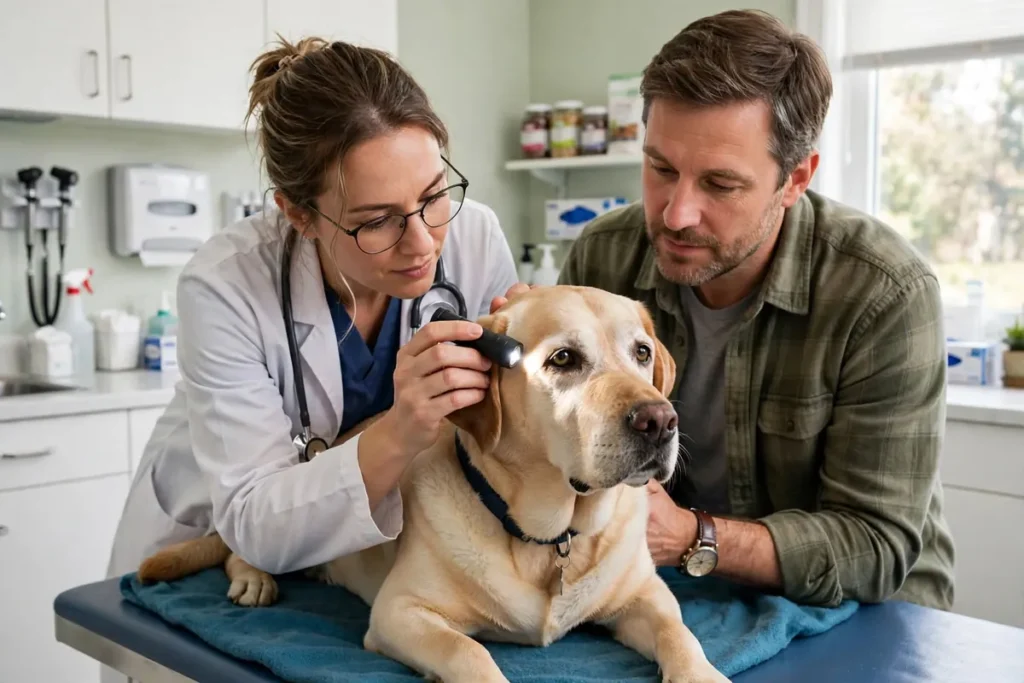
If surgery is on the table, you will be referred to a veterinary eye specialist (an ophthalmologist), who decides whether your dog is a good candidate.
Cataracts in dogs: treatment options
Surgery
Surgery is the only way to actually remove a cataract and restore sight. The usual method is phacoemulsification: the surgeon uses ultrasound to break up the cloudy lens, suctions out the pieces and often places an artificial lens. It needs a specialist and general anesthesia.
Good candidates are dogs that are otherwise healthy, have no serious eye problems like glaucoma or a damaged retina, and will tolerate eye drops at home. Dogs with heart or kidney disease may be too risky for anesthesia. Earlier surgery generally means easier surgery and lower risk, so don’t wait until the cataract is fully mature.
Surgery has risks, including pain and vision loss, and in severe cases the eye may need to be removed. Aftercare means regular eye drops, careful nursing at home and frequent recheck visits. Ask the specialist about the full cost, including checkups, before you decide. Prices vary a lot by location and by dog.
Eye drops and medication
Anti-inflammatory eye drops can help control inflammation inside the eye and may lower the risk of lens-induced glaucoma. But they do not remove or cure the cataract, and they won’t bring sight back.
No surgery
Many owners choose not to operate, and that is a valid choice, especially for senior dogs or those with other health problems. With regular checkups to watch for glaucoma and uveitis, a dog with cataracts can live comfortably.
When to see a vet right away
A cataract on its own isn’t painful. But it can trigger lens-induced glaucoma, where lens proteins leak into the eye, cause inflammation and block fluid drainage. Pressure builds and it hurts. Call your vet the same day if you notice:
- Squinting or holding one eye shut
- A red or bloodshot eye
- A bulging or enlarged-looking eye
- Heavy watering or discharge
- Pawing or rubbing at the eye
- Sudden change in behavior, hiding or not wanting to be touched
Glaucoma can cause permanent vision loss quickly, so don’t wait it out.
How to prevent cataracts in dogs
Honestly, you can’t prevent most cataracts, especially the inherited kind. But you can improve the odds:
- Keep diabetes under control. If your dog is diabetic, follow the vet’s plan closely and ask about eye health.
- Protect the eyes from injury during rough play, brush and long grass.
- Ask about genetic testing if you are buying a puppy from a breed known for cataracts. It helps, but isn’t a guarantee.
- Ask your vet about antioxidant supplements. They might delay diabetic cataracts, but talk to your vet first.
- Book regular eye checks for seniors. Catching changes early gives you more options. Our list of signs of aging in dogs covers what else to watch for.
Living with a dog with cataracts
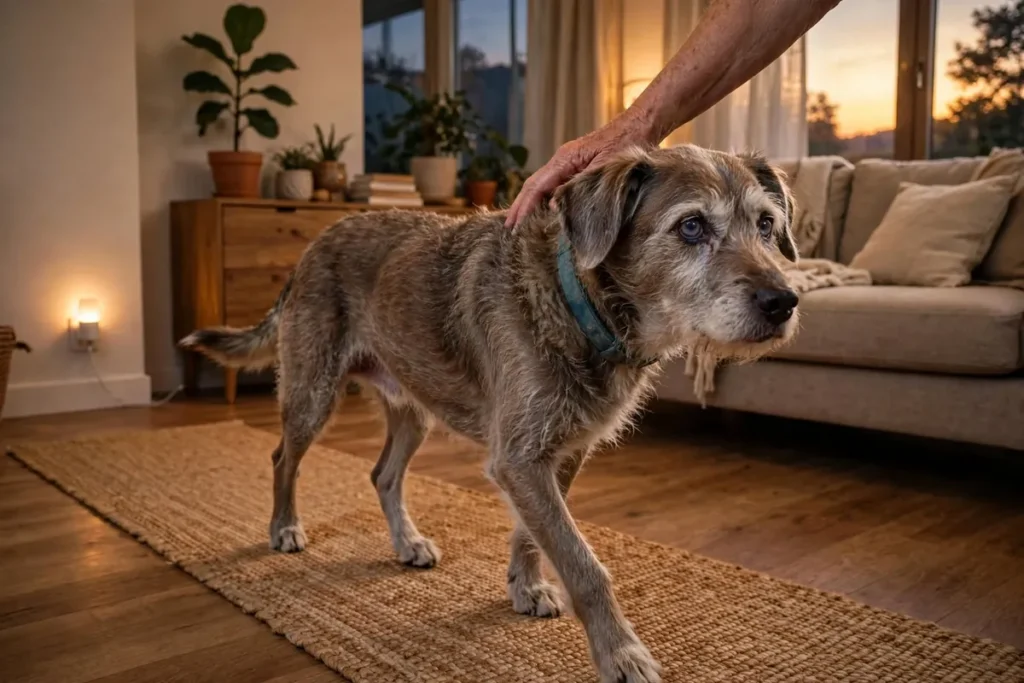
If your dog is losing sight, small changes at home make a huge difference:
- Don’t move furniture. A dog remembers the layout. Keep it the same.
- Keep food and water bowls in the same spot.
- Use scent and sound cues. A bell on your shoes or a dab of pet-safe scent near stairs can help.
- Block stairs and pool edges with gates.
- Use a harness and leash outdoors and speak before you touch them.
- Keep nightlights on. Dogs with cataracts often struggle most in the dark.
FAQ
Do dogs get cataracts?
Yes. Cataracts are one of the most common eye problems in dogs, and they can happen at any age, though they are more common in seniors and certain breeds.
How do I tell if my dog has cataracts?
Look for a cloudy pupil, bumping into things and trouble in dim light. Only a vet exam can confirm it and rule out nuclear sclerosis.
Can cataracts in dogs be treated without surgery?
Eye drops can control inflammation, but only surgery removes a cataract.
How much does cataract surgery for dogs cost?
It varies widely by location, the surgeon and your dog’s health, and aftercare adds to it. Ask a veterinary ophthalmologist for a written estimate.
Do cataracts in dogs go away on their own?
No. They don’t clear up by themselves, and they usually get worse over time.
Can I prevent cataracts in dogs?
Not entirely, especially inherited ones. Controlling diabetes, protecting the eyes and regular vet checks give you the best chance of catching problems early.
The bottom line
Cataracts in dogs are common, they are manageable, and a dog with cataracts can still have a great life. The important thing is to get the eye checked, confirm it is a cataract and not something more urgent, and watch for signs of pain. Then decide with your vet whether surgery makes sense.
This article is for general information and isn’t a substitute for veterinary advice. If you notice any change in your dog’s eyes, see your vet.