
Cloudy Eyes in Dogs: Is It Normal Aging or a Problem?
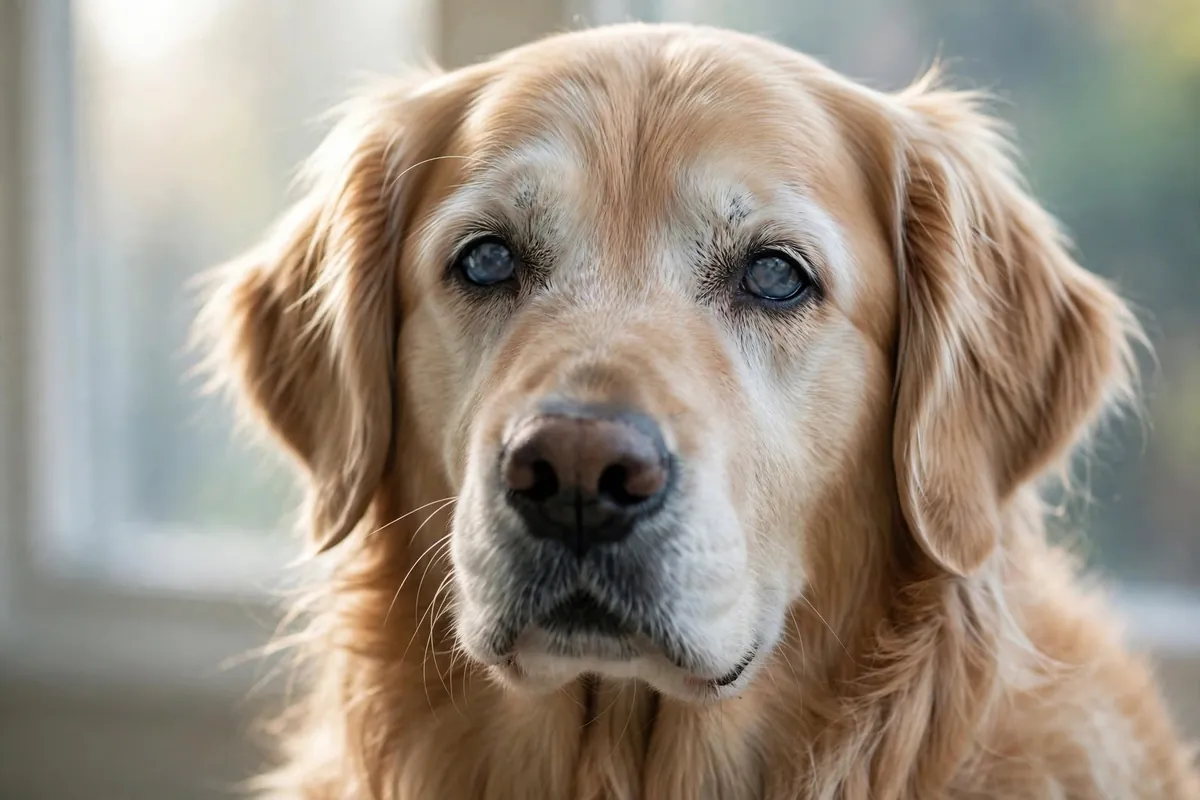
You’re petting your dog and notice their eyes look different. There’s a bluish, milky or foggy haze that wasn’t there before. Cloudy eyes in dogs are very common in older dogs, and in many cases they’re a normal part of aging. But sometimes cloudy eyes point to a problem that needs a vet right away.
This guide explains the most common reasons for cloudy eyes in older dogs, how to tell normal aging from cataracts, and which signs mean it’s time to call your vet.
Why are my dog’s eyes cloudy?
The cloudiness can come from different parts of the eye, and the cause makes a big difference. The most common reasons are:
- Nuclear sclerosis: a normal, age-related change in the lens
- Cataracts: a cloudy lens that can affect vision
- Dry eye: not enough tears to keep the surface of the eye healthy
- Corneal problems: such as ulcers, scars or inherited conditions
- Glaucoma: too much pressure inside the eye
- Uveitis: inflammation inside the eye
Only a vet can tell which one your dog has, because several of them look similar from the outside.
Nuclear sclerosis: the normal cloudy eyes of older dogs
The most common cause of cloudy eyes in older dogs is nuclear sclerosis, also known as lenticular sclerosis. Throughout life, the lens keeps adding new layers. Over time the older center gets squeezed and hardens, which gives the eye a bluish-gray haze.
Here’s what to know about it:
- It usually shows up in both eyes.
- It’s very common in dogs older than about 7 years.
- It usually doesn’t cause real vision loss, though some dogs may see fine details a little less clearly.
- It doesn’t hurt, and it usually doesn’t need treatment.
If your older dog’s eyes have a smooth blue-gray haze but they’re comfortable and moving around normally, this is the likely cause. Still, have your vet confirm it, because it looks a lot like cataracts.
Cataracts: when the lens clouds and blocks light
A cataract forms when proteins in the lens clump together and turn it white or milky. Unlike nuclear sclerosis, a cataract blocks light from reaching the back of the eye, so it can cause vision loss and, in some cases, blindness.
Cataracts can happen at any age. Common causes include genetics, diabetes, injury and other diseases. In diabetic dogs they can develop quickly, and untreated cataracts can lead to inflammation or glaucoma.
The good news is that cataracts can often be treated with surgery, especially when they’re caught early.
Nuclear sclerosis vs cataracts in dogs
| Difference | Nuclear sclerosis | Cataracts |
|---|---|---|
| What it is | Normal age-related hardening of the lens | Cloudy or white lens from clumped proteins |
| Look | Bluish-gray haze | White, milky or opaque patches |
| Eyes affected | Usually both | One or both |
| Age | Older dogs | Any age |
| Vision | Usually little or no loss | Can reduce vision or cause blindness |
| Treatment | Usually none | Surgery may help |
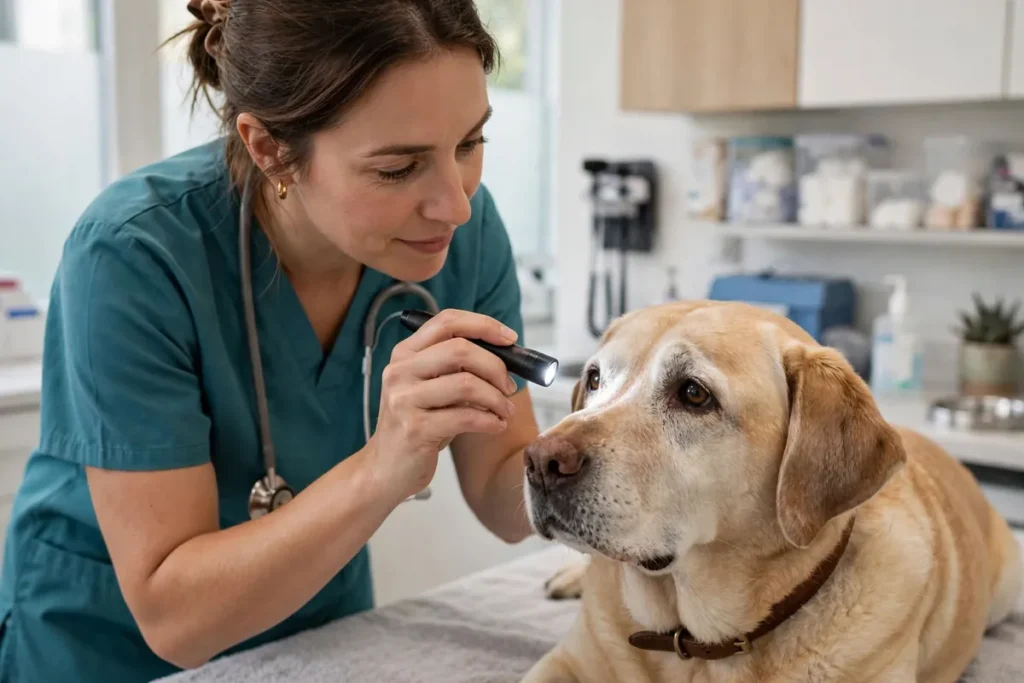
You can’t reliably tell the two apart just by looking. Your vet checks the lens with a special light, and sometimes dilating drops, to see how light passes through.
Other causes of cloudy eyes in dogs
Not every cloudy eye is the lens. Some other causes can be painful or serious:
- Glaucoma: pressure builds up inside the eye. It’s painful and can permanently damage vision. Very high pressure is an emergency.
- Corneal ulcers: sores on the clear front surface of the eye. They need prompt veterinary care and often come with squinting or pawing at the eye.
- Dry eye: when the eye doesn’t make enough tears, the surface gets irritated and can look dull or cloudy. It’s usually managed long term with eye drops.
- Anterior uveitis: inflammation inside the eye. It’s painful and can cause vision loss if it isn’t treated.
- Corneal dystrophy or degeneration: changes in the cornea caused by genetics or aging that can make it look cloudy.
Do cloudy eyes mean my dog is going blind?
Not usually. Many dogs with nuclear sclerosis see well. But cataracts, glaucoma and other eye problems can cause vision loss, so it’s important to know which one you’re dealing with.
Watch for signs that your dog may not see well:
- Bumping into furniture or walls
- Hesitating on stairs or in dim light
- Missing treats or toys you toss
- Seeming startled when you touch them
When to call the vet
Cloudy eyes in older dogs are not always an emergency, but these signs mean you should call your vet, and in some cases go to an emergency clinic:
- The cloudiness came on suddenly
- Redness, swelling or a bulging eye
- Squinting, blinking a lot or pawing at the eye
- Thick or colored discharge
- Signs of pain, or your dog holds the eye shut
- Sudden vision changes, such as bumping into things
If the haze came on slowly, there’s no pain and your dog is acting normally, book a regular visit. At the next senior checkup, ask the vet to look at the eyes. You can also read about the other signs of aging in dogs.
How to help a dog with cloudy eyes
You can’t treat cloudy eyes at home, but you can keep your dog safe and comfortable:
- Get a proper diagnosis. Don’t use over-the-counter eye drops unless your vet recommends them.
- Keep the layout the same. Dogs with weaker vision learn the home by memory, so moving furniture can confuse them.
- Add light. A night light in hallways and near the stairs helps.
- Go gently on walks. Stay on familiar routes and use a leash in new places.
- Keep up with senior checkups. Eye problems often show up at routine exams. See your vet at least twice a year, and check when a dog is considered a senior if you’re not sure where your dog stands.
- Manage other health problems. If your dog has diabetes, good control matters for eye health too.
FAQ
Are cloudy eyes normal in older dogs?
Often, yes. A smooth, bluish-gray haze in both eyes is usually nuclear sclerosis, a normal age change. But because cataracts and other problems can look similar, have your vet check the eyes.
What causes cloudy eyes in dogs?
Nuclear sclerosis and cataracts are the two most common causes. Others include dry eye, corneal ulcers, glaucoma and uveitis.
What is the difference between nuclear sclerosis and cataracts?
Nuclear sclerosis is a normal hardening of the lens that rarely affects sight. Cataracts are cloudy patches that block light and can cause vision loss.
Can dogs see with cloudy eyes?
Dogs with nuclear sclerosis usually see well. Dogs with cataracts can see less, and dense cataracts can cause blindness.
Do cloudy eyes in dogs go away?
Nuclear sclerosis doesn’t go away, but it usually doesn’t need treatment. Other causes, like infections or ulcers, can get better with treatment.
When are cloudy eyes a sign of trouble?
If the cloudiness appears suddenly, or comes with redness, pain, squinting, pawing at the eye or a swollen eye, call your vet or an emergency clinic right away.
Can cloudy eyes in dogs be treated?
It depends on the cause. Nuclear sclerosis usually needs no treatment, cataracts may be treated with surgery, and ulcers, dry eye and glaucoma are treated with medicine.
Why are my old dog’s eyes cloudy all of a sudden?
Sudden cloudiness is not typical of normal aging. It can be a sign of glaucoma, an ulcer or another eye problem, so see a vet as soon as possible.
Final thoughts
Cloudy eyes in older dogs are often just a sign of a long, well-lived life. But it’s worth seeing a vet, because some causes can hurt your dog or take away their sight. Keep up your regular checkups and pay attention to any sudden changes, such as pain, redness or swelling. Most dogs with cloudy eyes can still enjoy their senior years comfortably.
Read next: How to Calculate Dog Years: Chart by Size and Formula
This article is general information, not veterinary advice. Always ask your own veterinarian about your dog’s health.

One thought on “Cloudy Eyes in Dogs: Is It Normal Aging or a Problem?”