

When Is a Dog Considered a Senior?
When is a dog considered a senior? The majority of dogs experience it between the ages of six and twelve, and size plays a major role. A Chihuahua might not be a senior until 11 or 12. A Great Dane can get there at 6.
It’s possible that you’ve noticed your dog sleeping more or using the stairs more slowly this year. Usually, it starts like that. Getting older isn’t a switch that flips on one birthday. It’s a slow shift, and the sooner you spot it, the more you can do to keep your dog comfortable.
Below you’ll find the senior age for every size, a few popular breeds, the signs to watch for, and simple changes you can make at home.
Senior dog age by size (quick answer)
Many vets consider a senior dog to be one that is in the last quarter of its expected lifespan. Smaller dogs live longer, so they reach that stage later. Here’s a simple guide:
| Dog size | Average weight | Older age | Typical breeds |
|---|---|---|---|
| Small | Under 20 lb | 9 to 12 years | Chihuahua, Yorkshire Terrier, Dachshund, Pug |
| Medium | 21 to 50 lb | 8 to 10 years | Beagle, Cocker Spaniel, Bulldog |
| Large | 51 to 90 lb | 7 to 9 years | Labrador Retriever, Golden Retriever, German Shepherd |
| Giant | Over 90 lb | 6 to 7 years | Great Dane, Mastiff, Newfoundland |
Treat these numbers as a starting point. Different vets draw the line a year or two apart, and your own vet can fine-tune it for your dog’s breed and health.
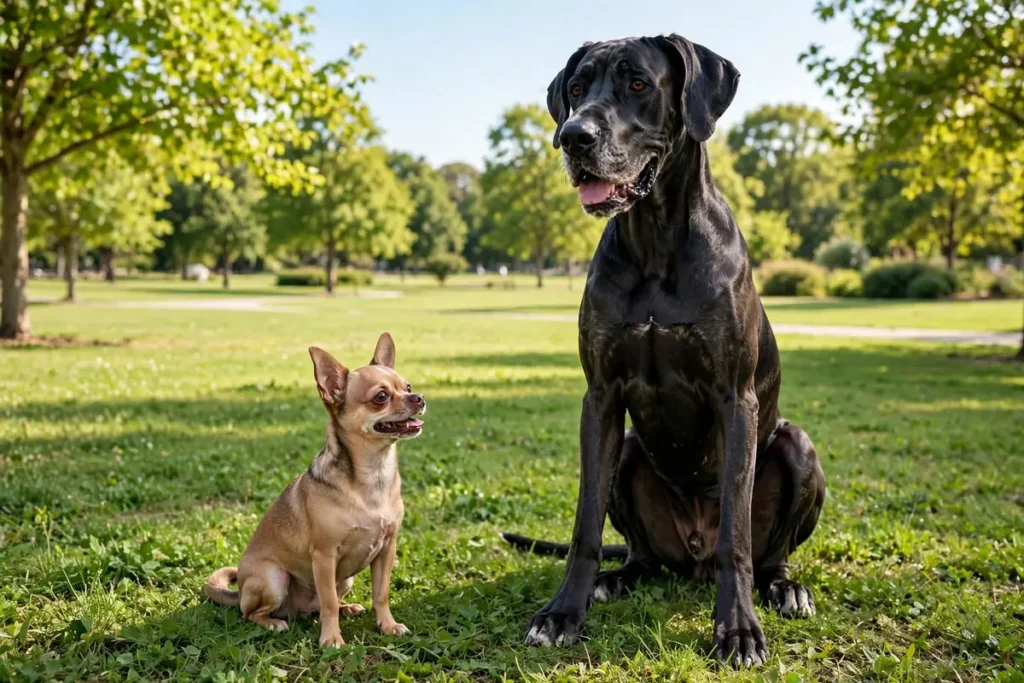
Why is the difference in size so significant?
Bigger dogs typically live shorter lives and age more quickly. Nobody knows exactly why, but one idea is that a small body puts less strain on the heart over the years. The difference can be substantial: a Great Dane may reach senior status at age 6, while a Dachshund may not until age 10.
Is one dog year really seven human years?
No. That old rule is just a rough shortcut. Dogs grow up fast in their first two years, then age at a pace that depends on their size. That’s why a 9-year-old Great Dane is much further along than a 9-year-old Chihuahua, even though both have had nine birthdays.
What makes a senior and a geriatric different?
Think of “senior” as the stage when extra care begins, and “geriatric” as the later stage. Some vets start talking about senior care as early as 5 to 7 years old, before the ages in the chart above, because that’s when regular checkups begin to matter. Owners usually guess a little later.
So if your vet calls your dog a senior, don’t take it personally. It just means it’s time to focus on prevention.
As for the geriatric stage, vets generally put it around 11 for small and medium dogs, about 9 for large dogs, and around 7 for giant breeds.
When do well-known breeds become senior?
- Labrador Retriever, Golden Retriever, German Shepherd: these are large dogs, so roughly 7 to 9 years.
- Yorkshire Terrier and Chihuahua: small dogs that typically do not reach senior status until they are 10 to 12 years old.
- Dachshund: about 10 to 12.
- Great Dane: about 6 to 7.
Signs that your dog is getting older
The number on the calendar is only part of the story. Here’s what to look for in your own dog.
Gray hair
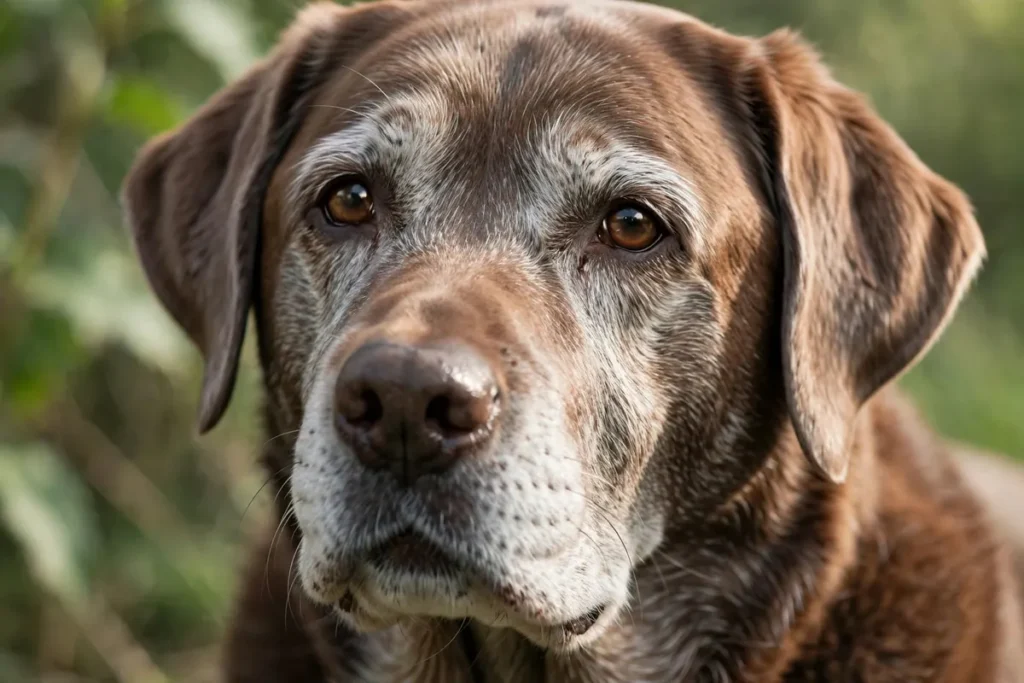
A gray muzzle is the most obvious sign. It’s perfectly normal and doesn’t hurt your dog. Some dogs just go gray earlier than others.
Cloudy eyes
Many older dogs get a bluish haze on the lens of the eye. It usually doesn’t affect their sight much, but cataracts can look similar and do cause vision loss. Ask your vet to tell the two apart.
Slower, stiffer movement
Watch how your dog gets up from the floor, takes the stairs and walks. Arthritis is one of the most common problems in older dogs, especially large ones.
More rest, less activity
Senior dogs play less and nap longer. That’s normal. But if your dog suddenly slows down a lot, get it checked.
Weight and muscle changes
Older dogs tend to lose muscle and gain fat, and extra weight is hard on sore joints. Big or sudden changes can point to an illness, so tell your vet.
Dental problems
Worn teeth, gum disease and bad breath are very common in older dogs.
Hearing changes
If your dog sleeps through things or jumps when you walk up from behind, their hearing may be fading.
Confusion and memory changes
Some older dogs develop something similar to dementia in people. Watch for wandering at night, getting stuck in corners, barking at nothing, or forgetting where the water bowl is.
Don’t write everything off as just old age. A change in appetite or thirst, vomiting or diarrhea can point to a health problem, so call your vet.
What to do when your dog becomes a senior
- See the vet every six months. Ask for a full checkup with blood and urine tests, so problems are caught early.
- Talk to your vet about food. “Senior” on a bag doesn’t have a strict meaning, so ask what suits your dog’s weight and health.
- Watch the waistline. Extra weight makes joint pain worse.
- Make your home easier. Put rugs or runners on slippery floors, get an orthopedic bed, and add a ramp for the couch or car.
- Go for daily, gentle walks. Short, slow walks still help, and puzzle toys keep their mind busy.
- Look after their teeth. Brush them and book dental checkups.
- Keep a simple log. Write down the date when you notice something new, like limping or accidents in the house. Your vet will find it useful.

FAQ
When is my dog considered a senior?
Your dog is a senior once they reach the last quarter of their expected lifespan, and that depends on size. Check the table above: 9 to 12 years for small dogs, 8 to 10 for medium, 7 to 9 for large and 6 to 7 for giant breeds. If your dog also shows signs like stiffness, more sleep or a gray muzzle, your vet can confirm where they are.
When is a small dog considered a senior?
Small dogs under about 20 pounds, like Chihuahuas, Yorkies and Dachshunds, are usually seniors at 9 to 12 years old. They live longer, so they reach this stage later than bigger breeds.
When is a large dog considered a senior?
Labradors, Golden Retrievers and German Shepherds, large dogs weighing 51 to 90 pounds, typically reach senior status at 7 to 9 years old. Giant breeds that weigh more than 90 pounds get there even sooner, at about 6 to 7.
What is old for a dog?
It depends on size. Vets generally call a dog geriatric, meaning very old, at around 11 for small and medium dogs, about 9 for large dogs and around 7 for giant breeds.
Is a 7-year-old dog a senior?
It depends on size. For a giant breed, yes. A large dog is close, and a small dog is usually still an adult at 7.
Is a 10-year-old dog old?
For most dogs, yes. A 10-year-old Chihuahua has just reached senior age, while a 10-year-old Lab or Great Dane is well into it.
When should I switch to senior dog food?
There’s no fixed age. Ask your vet, who can look at your dog’s weight, health and activity level.
Can a senior dog stay active and healthy?
Yes. Senior is a stage of life, not an illness. With regular checkups and a few changes at home, many older dogs stay playful and comfortable for years.
How often should a senior dog see the vet?
At least twice a year.
Final thoughts
A dog’s senior age depends on size, from about 6 for giants to 12 for the smallest breeds. But what you do with it is more important than the number. Notice the early changes, keep up with checkups, and adjust daily life a little. Your dog has given you years of loyalty, and small changes like these help their golden years stay comfortable.
This article is general information, not veterinary advice. Always ask your own veterinarian about your dog’s health.



3 thoughts on “When Is a Dog Considered a Senior?”