Best Wet Food for Senior Dogs: What to Look For in the Best Wet Food for Senior Dogs
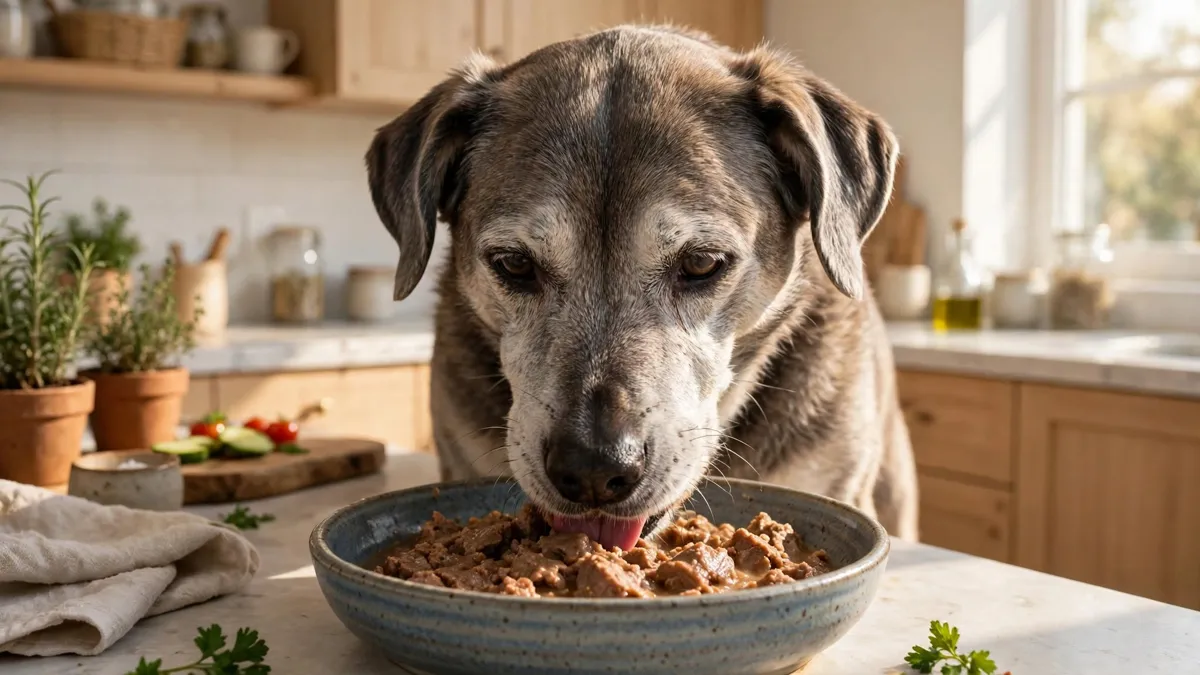
As dogs get older, dinner can get complicated. Teeth get sore, appetite fades, and a bowl of hard kibble that used to vanish in seconds may sit untouched. For many owners, the answer is wet food. Choosing the best wet food for senior dogs is not about finding a famous label, though. It is about matching the food to your dog’s teeth, weight, and health.
This guide explains when wet food helps, what to look for on the label, the different textures, how much to feed, and how to store it. We will not tell you to buy a particular brand, because the right pick depends on your dog.
Why Wet Food Can Suit Older Dogs
- Easier to chew. Soft food is kinder to sore gums and missing teeth.
- Stronger smell and taste. Older dogs often lose some sense of smell, and wet food smells more tempting.
- More water. Wet food is mostly water, which helps dogs who do not drink much.
- Easy to mix. A spoonful on top of dry food can wake up a bored appetite.
There are downsides too. Wet food usually costs more per day, goes off quickly once opened, and can leave a smellier bowl. It also does not clean teeth, so dental care still matters. For a wider look at diets, see our guide to senior dog food.
What to Look For on the Label
“Complete and Balanced”
This is the most important line. It means the food is meant to be your dog’s main meal and has the nutrients a dog needs. Some wet foods are only labeled as toppers or for “intermittent or supplemental feeding.” Those are fine as extras, but they should not be the whole diet.
A Named Protein First
Look for a clearly named meat or fish near the top of the ingredient list, such as chicken, turkey, beef, lamb, or salmon. Good protein supports muscle, which older dogs tend to lose.
Sensible Calories
Calories per can differ a lot. A rich, high-calorie food can help a thin dog but may add weight to one who is already round. If your dog has been losing weight, check with your vet first, because it can be a sign of illness. See dog losing weight but eating.
Not Too Much Filler
Some wet foods are thickened with gums and starches. In small amounts that is normal. But if the label is mostly water and thickener with little real meat, your dog may not get much nutrition per can.
Be Careful With Salt and Rich Gravy
Dogs with heart or kidney problems often need less salt or a controlled diet. Very rich gravy can also upset sensitive stomachs. If your dog has a health condition, ask your vet to choose the food, since special needs are best handled with their advice.
Skip Anything With Harmful Ingredients
Avoid foods or toppers that contain onion, garlic, grapes, raisins, chocolate, or the sweetener xylitol. These are not safe for dogs.
Pâté, Chunks, or Stew?
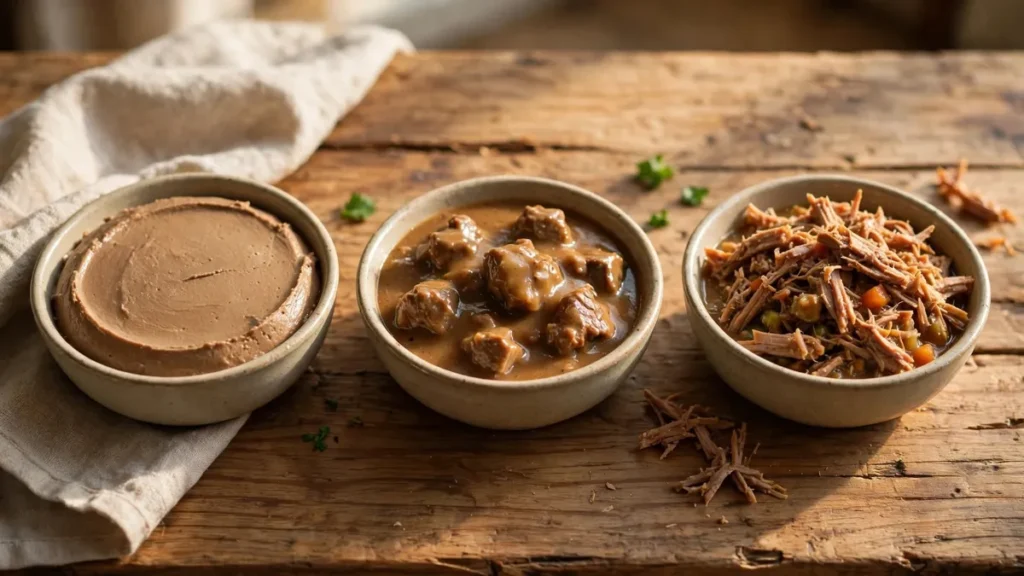
Texture matters more than most people expect, especially for older dogs.
- Pâté or loaf: smooth and soft. Easy for dogs with very sore mouths or no teeth. Can be mashed with a fork or thinned with warm water.
- Chunks in gravy: more varied and often more appealing, but harder for dogs who struggle to chew. Gravy adds calories.
- Shredded or stew style: soft pieces that are easy to swallow, good for dogs who like texture but cannot chew hard food.
It can help to buy small cans or pouches of two or three textures and see what your dog prefers before you commit to a case.
Wet Food Only, or Mixed With Dry?
Both work. A mix is a popular middle path: a spoonful or two of wet food over dry kibble boosts appeal without a big cost. Feeding wet food alone is fine too, as long as it is complete and balanced and you feed the right amount. Some dogs on all-wet diets build up more tartar, so ask your vet about dental care, and keep up with teeth brushing if your dog allows it.
How Much Wet Food to Feed
The can will have a feeding guide based on your dog’s weight. Use it as a starting point, then adjust based on your dog’s body condition. You should be able to feel the ribs easily without seeing them sticking out. If you mix wet and dry, reduce the dry portion so you are not overfeeding. For example, if a spoonful of wet food replaces part of the kibble, the total calories should still match what your dog needs. Your vet can help you work out the right amount.
How to Store Wet Dog Food Safely
- Keep unopened cans and pouches in a cool, dry place.
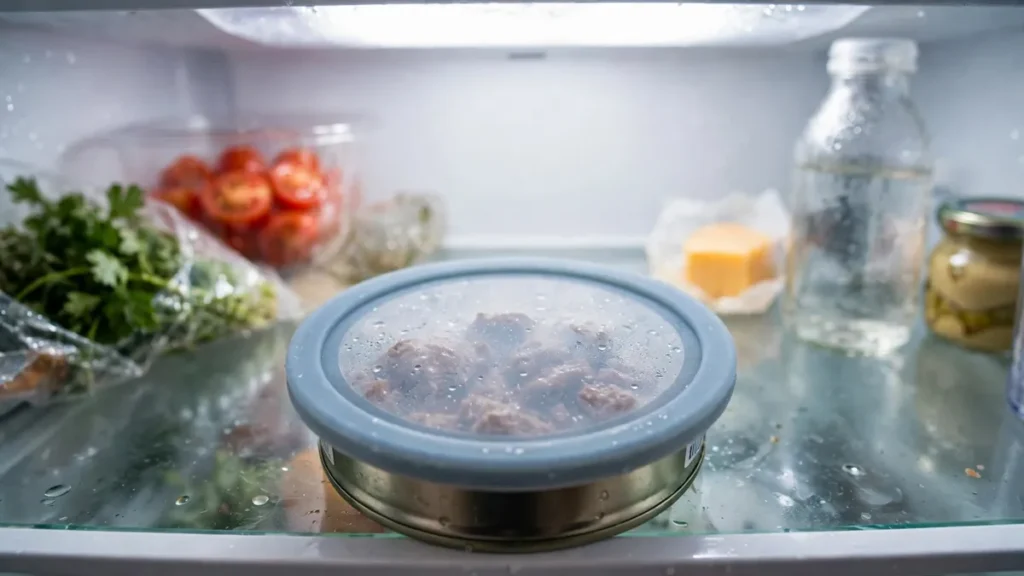
- Once opened, cover and refrigerate leftovers right away, and use them within a few days.
- Do not leave wet food sitting out for hours, especially in warm weather.
- Let cold food come toward room temperature or warm it slightly, since many dogs prefer it that way.
- Wash the bowl after every meal.
How to Switch Without Upsetting the Stomach
Older stomachs can be sensitive, so make the change slowly over about a week to ten days. Start by replacing about a quarter of the old food, and increase the new food every few days. Stop and call your vet if you see vomiting, diarrhea that does not settle, or if your dog refuses to eat. If your dog is skipping meals altogether, read senior dog not eating or drinking, because loss of appetite is something to check with a vet, not just fix with a tastier food.
Tips to Make Wet Food Go Further
- Buy larger cans for big dogs and small cans for small dogs to reduce waste.
- Use wet food as a topper on a good dry food if budget is tight.
- Freeze leftover portions in small containers and thaw as needed.
- Check the price per serving, not just the price per can.
Frequently Asked Questions
Is wet food better than dry for older dogs?
It depends on the dog. Wet food suits dogs with dental problems or poor appetite, while many seniors do well on dry or a mix. The best food is complete, balanced, and eaten happily.
Can I feed my senior dog wet food every day?
Yes, if it is a complete and balanced food and you feed the right amount. Ask your vet if your dog has a health condition.
Does wet food cause diarrhea in older dogs?
It can if the switch is too fast or the food is very rich. Introduce it slowly and call your vet if loose stools continue.
Final Thoughts
The best wet food for senior dogs is the one your dog enjoys, can chew comfortably, and that meets their nutritional needs. Check for “complete and balanced,” look for a named protein, pick a texture your dog likes, and change foods gradually. When in doubt, especially if your dog has a health condition, ask your vet to guide the choice.
This article is for general information only and is not a substitute for veterinary advice. Always talk to your vet about your dog’s health and care.