Kidney Disease in Dogs Symptoms: Early Signs and Care for Seniors
Your older dog is drinking more than usual, leaving puddles in the house and eating a little less each week. It is easy to blame age. But these quiet changes can be early kidney disease in dogs symptoms, and catching them early gives your vet far more options to help your dog feel well for longer.
This guide explains what kidney disease is, the signs to watch for, what can cause it, how vets test for it and what you can do at home to support your senior dog.
What Does the Kidney Do?
The kidneys filter waste from the blood, balance water and minerals, help control blood pressure and support red blood cell production. When they stop working well, waste builds up in the body and your dog starts to feel unwell.
Vets describe two main forms. Acute kidney injury happens suddenly, often after a toxin or severe illness, and is an emergency. Chronic kidney disease develops slowly over months or years and is far more common in older dogs.
Early Kidney Disease in Dogs Symptoms
In the early stages, signs are mild and easy to miss. Watch for:
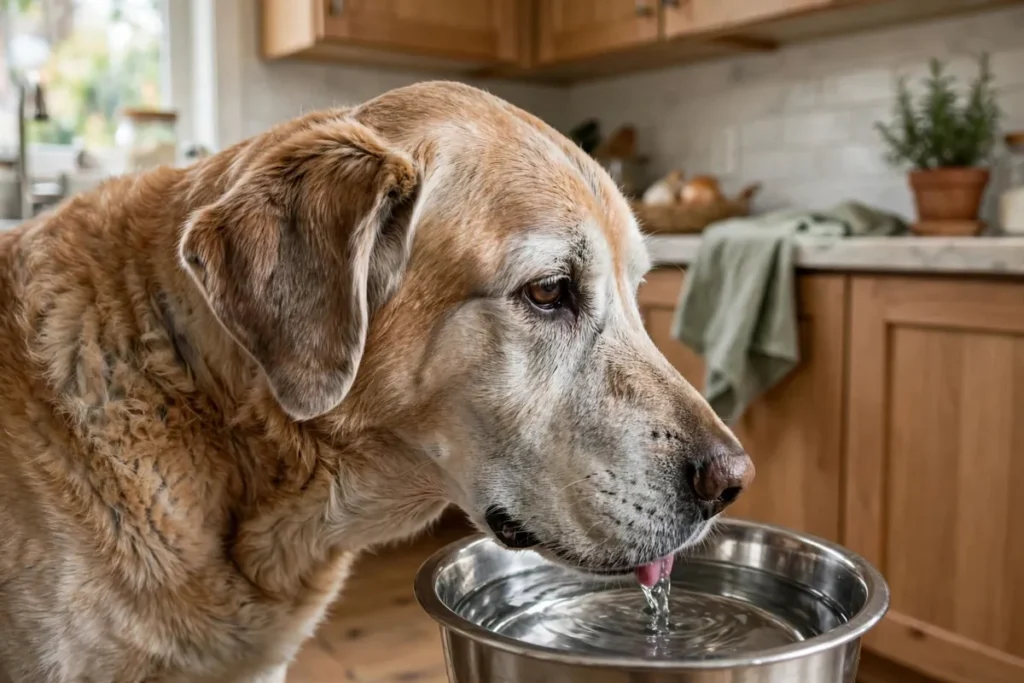
- Drinking more water than normal
- Passing more urine, or accidents in a house-trained dog
- Waking at night to drink or go outside
- Pale or very dilute urine
- A slight drop in energy or interest in play
Increased thirst has many causes, including diabetes and other hormone problems. Our guides on excessive thirst in dogs and an old dog drinking a lot of water explain what else to consider.
Later Signs of Kidney Trouble
As the disease advances and waste builds up in the blood, signs become more obvious:
- Poor appetite or refusing food
- Weight loss and loss of muscle
- Vomiting or nausea, sometimes with drooling
- Bad breath with a sharp, chemical smell
- Sores or ulcers in the mouth
- Dull coat, weakness and tiredness
- Pale gums, diarrhea or, in advanced cases, very little urine
If your dog is losing weight even though she is eating, read our article on a dog losing weight but eating. If she is refusing food and water, see senior dog not eating or drinking and call your vet.
What Causes Kidney Disease in Dogs?
Often the cause of chronic kidney disease is never found. It is usually linked to age-related wear in the kidneys. Other possible causes and risk factors include:
- Long-term or repeated infections in the urinary tract or kidneys
- High blood pressure
- Dental disease with long-lasting infection
- Inherited kidney problems in some breeds
- Past kidney injury from toxins or severe dehydration
Urinary infections can sometimes travel up toward the kidneys. Our guide on UTI in dogs explains the signs to watch for.
Sudden Kidney Injury: An Emergency
Some substances are dangerous to a dog’s kidneys. Grapes and raisins, antifreeze, and human pain medicines are well-known examples. If your dog may have swallowed any of them, or if she suddenly vomits repeatedly, becomes very weak, or stops passing urine, go to a vet straight away. Do not wait to see if she improves.
How Vets Diagnose Kidney Disease
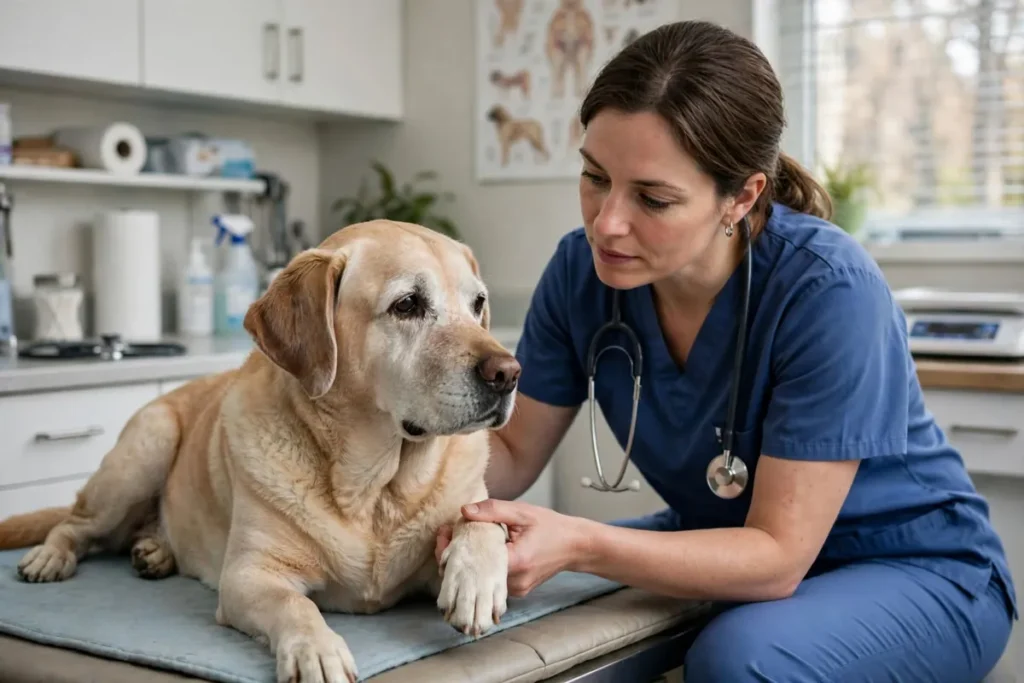
Your vet will examine your dog and ask about thirst, appetite and bathroom habits. The key tests are blood work and a urine test. Blood tests measure waste products and other markers that rise when kidneys are not filtering well, and the urine test shows how well the kidneys concentrate urine.
Your vet may also check blood pressure and suggest an ultrasound or X-rays to look at the size and shape of the kidneys. Vets often stage the disease from mild to severe, which helps them plan treatment and monitoring.
Treatment Is Decided by Your Vet
Chronic kidney disease cannot usually be cured, but it can often be managed well. Your vet may recommend a special kidney-friendly diet, fluids to prevent dehydration, medicines for nausea or blood pressure, and regular re-testing. The plan changes over time as your dog’s needs change.
Please do not change your dog’s food, start supplements or give any medicine without asking your vet first. Never give human medicines, because many are harmful to a dog’s kidneys.
How to Support Your Dog at Home
Your daily care makes a real difference:
- Keep fresh, clean water available everywhere your dog rests, and never limit water.
- Offer frequent bathroom breaks so your dog is not holding urine.
- Follow your vet’s diet advice. Our guide on senior dog food explains how needs change with age.
- Warm food slightly and offer small, frequent meals if appetite is low.
- Keep dental care up to date, since mouth infection can add strain to the body.
- Keep every re-test appointment and write down changes in thirst, appetite and weight.
What Is the Outlook?
Many dogs with chronic kidney disease live comfortably for months or years with the right care. The outlook depends on the stage when it is found, how your dog responds and other health problems. Early detection really matters, which is why regular senior check-ups with blood and urine tests are so useful. Your vet can give the most reliable guidance for your own dog.
Frequently Asked Questions
Can dogs recover from kidney disease?
Sudden injury caught quickly may improve. Chronic kidney disease is usually managed rather than cured.
Should I restrict water if my dog drinks a lot?
No. Dogs with kidney problems need plenty of water to stay hydrated. Always let your dog drink freely.
Is bad breath a sign of kidney problems?
It can be, but dental disease is a far more common cause. A vet exam will find out which it is.
How often should an older dog be tested?
Many vets suggest blood and urine tests at least once a year for seniors. Your vet can set a schedule that suits your dog.
Final Thoughts
Kidney disease in dogs symptoms often start as small changes, like more water and more trips outside. Do not put them down to age alone. Early tests, a clear plan from your vet and steady care at home can keep your senior dog comfortable and active for as long as possible.
Disclaimer: This article is for general information only and is not a substitute for professional veterinary advice, diagnosis or treatment. Always consult a qualified veterinarian about your dog’s health, and never give your dog human medicines.