Senior Dog Not Eating or Drinking: Causes and When to Worry
Few things worry a dog owner more than a full bowl that stays full. When a senior dog is not eating or drinking, you naturally start to wonder how serious it is and how long you can wait. The honest answer is that older dogs have less in reserve than younger ones, so it pays to take it seriously and move quickly.
This guide covers why it happens, how long is too long, what you can safely try at home, and which signs mean you should call the vet right away.
Do Senior Dogs Eat Less Naturally?
A little, yes. Older dogs are often less active and burn fewer calories, so their appetite may dip slightly. Their sense of smell and taste can also fade, which makes food less exciting. That kind of slow, mild change is normal.
What is not normal is a dog who suddenly stops eating, eats far less than usual for more than a day or two, or refuses water. That is a change worth acting on.
How Long Can a Senior Dog Go Without Eating?
There is no safe number that fits every dog. A healthy adult dog may cope with missing a meal or two. A senior dog, especially one with an existing health problem, can get into trouble faster. As a simple rule:
- If your senior dog skips a meal but is otherwise bright and drinking, watch closely.
- If your dog refuses all food for about a day, call your vet.
- If your dog is also not drinking, or seems unwell in any other way, call the same day.
Not drinking is more urgent than not eating, because dehydration can set in quickly, especially in small or frail dogs.
Common Reasons a Senior Dog Stops Eating or Drinking
Dental Pain
Sore gums or a cracked or infected tooth can make eating painful. Your dog may seem hungry, go to the bowl, then walk away. Bad breath, drooling, or chewing on one side are clues.
Nausea and Stomach Upset
A dog who feels sick will often refuse food. Lip licking, drooling, swallowing a lot, or eating grass can all point to nausea. Causes range from a minor stomach upset to pancreatitis or something they swallowed.
Kidney and Liver Disease
These organs clear waste from the body. When they struggle, dogs often feel sick and lose their appetite. You may also notice weight loss, vomiting, or changes in drinking and peeing. See our guide on an old dog drinking a lot of water.
Pain
Dogs in pain often go off their food. If your dog is also stiff, limping, or reluctant to move, joint pain may be involved. See the signs of arthritis in dogs.
Infection or Fever
Illness of almost any kind can take away a dog’s appetite. A warm nose is not a reliable fever test, so call your vet rather than guess.
Medicine Side Effects
Some medicines upset the stomach or dull the appetite. If the change started soon after a new medicine, tell your vet. Do not stop a prescribed medicine on your own.
Confusion and Stress
Some dogs with cognitive decline forget to eat or forget where their bowl is. Changes at home, a new pet, or travel can also put a dog off food. Read about the signs of dementia in dogs if this sounds familiar.
Serious Illness
Loss of appetite can also appear with heart disease, cancer, and other serious conditions, which is why a vet check matters rather than waiting it out. If your dog is very old and seems to be fading, our article on the signs a dog is dying of old age may help you understand what you are seeing.
Signs That Mean See a Vet Now
Do not wait if your dog is not eating or drinking and also has any of these:
- Repeated vomiting or diarrhea
- Extreme tiredness or weakness, or trouble standing
- A swollen or painful belly
- Pale, gray, yellow, or very dry gums
- Heavy breathing or coughing
- Blood in vomit or stool
- Any sign your dog may have eaten something harmful
Dry, tacky gums and skin that stays tented when you gently lift it can be signs of dehydration, and your vet needs to see your dog.
What You Can Try at Home
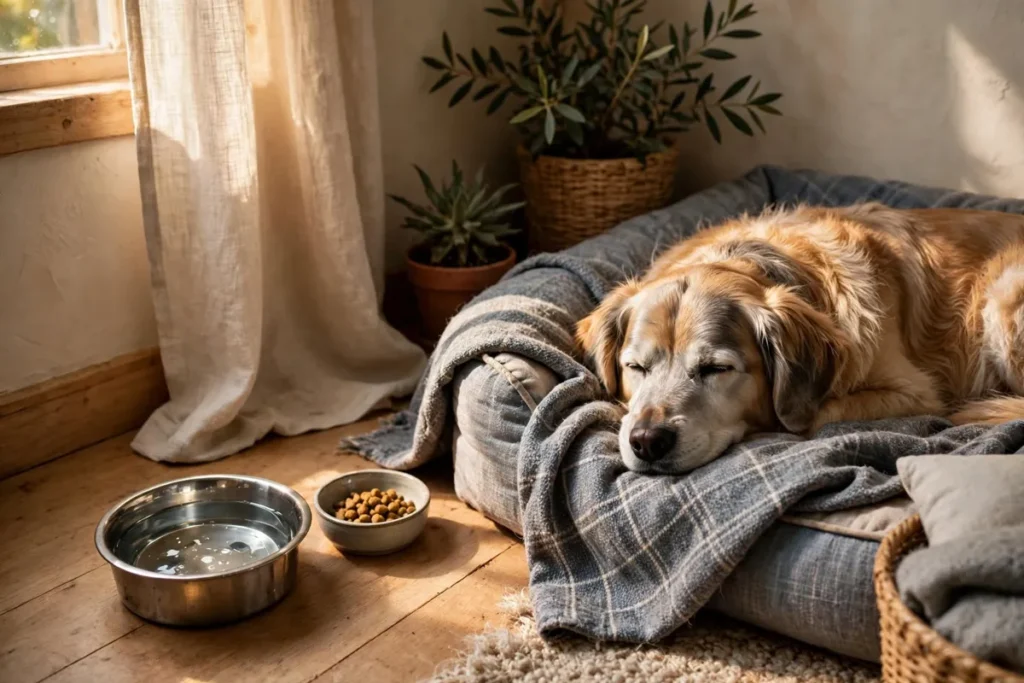
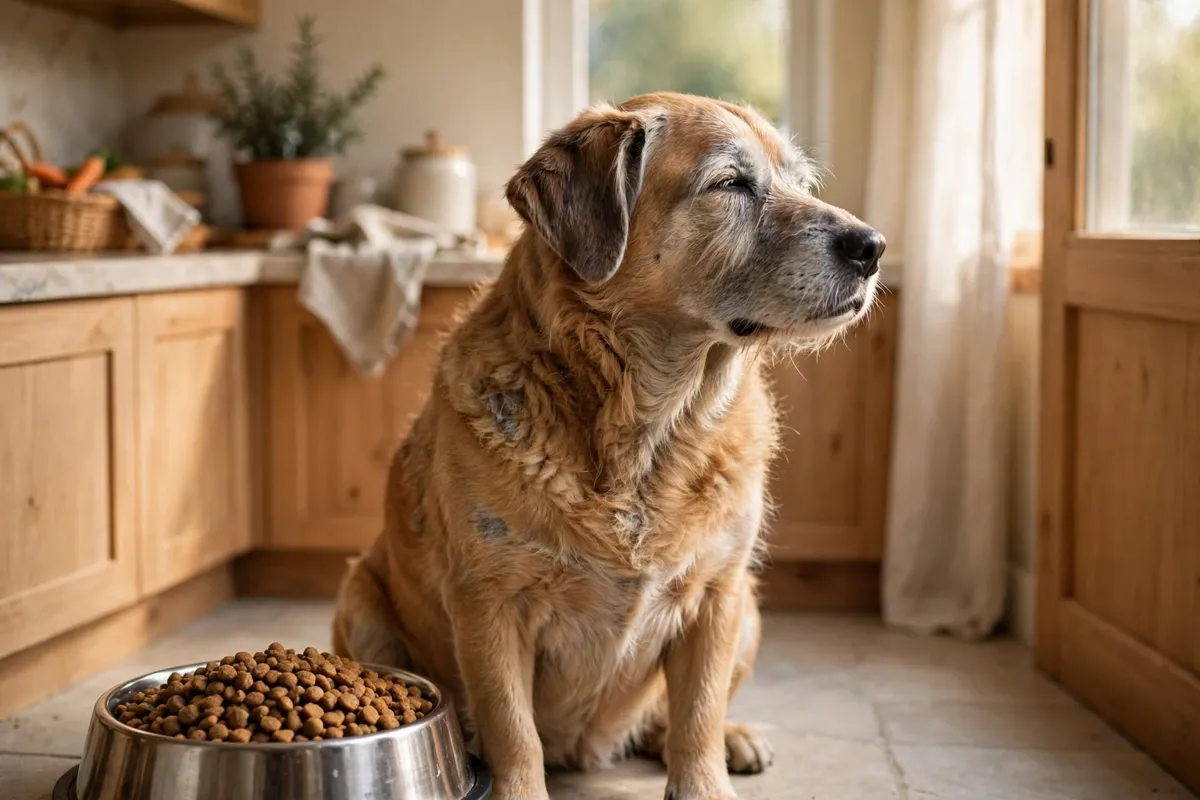
If your dog is otherwise bright and alert and you are waiting for a vet appointment, these gentle steps are usually safe.
- Warm the food. A few seconds of warmth releases the smell, which helps older noses.
- Offer small portions. A big bowl can feel overwhelming. Try a little at a time.
- Try the food they usually love. Ask your vet before offering anything new or adding toppings, as some foods upset the stomach.
- Keep water fresh and close by. Use a shallow bowl, and have more than one in the house.
- Make the spot calm. Feed in a quiet place, away from other pets and noise.
- Help with comfort. A raised bowl or a non-slip mat helps dogs with sore necks and joints.
- Write things down. Note what your dog ate, when, and any vomiting or stool changes.
Please do not force food or water into your dog’s mouth unless your vet shows you how. Do not give any human medicine, and never offer foods that are toxic to dogs, such as grapes, raisins, onions, garlic, chocolate, or anything with xylitol.
What Happens at the Vet
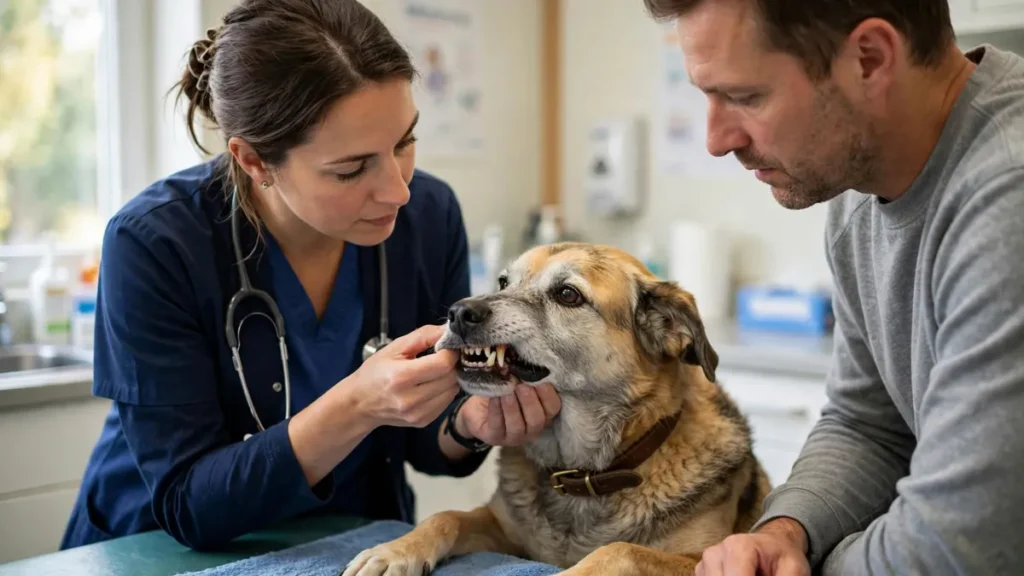
Your vet will examine your dog, check the mouth and belly, and may suggest blood tests, urine tests, or scans. Treatment depends on the cause. It can include fluids, anti-nausea medicine, dental care, or help with a longer-term condition. In many cases, appetite returns once the underlying problem is dealt with. If weight is already dropping, read our guide on a dog losing weight but eating, and see senior dog behavior changes for other signs to report.
Frequently Asked Questions
Is it normal for an old dog to lose interest in food?
A mild dip can be normal, but a clear loss of appetite is not. It is usually a sign of discomfort or illness, so it is worth a vet check.
My dog will only eat treats. Is that okay?
It is common for a dog who feels unwell to refuse meals but accept treats. Treats do not replace a balanced diet, so it is still a reason to see the vet.
Can I wait a few days to see if my dog starts eating?
For a senior dog, it is safer not to. If your dog has refused food for about a day, or is not drinking, call your vet.
Final Thoughts
A senior dog not eating or drinking is not something to wait out. Many causes, like a sore tooth or an upset stomach, can be treated, but older dogs go downhill faster, so speed matters. Keep your dog comfortable, offer small, tempting meals, watch for the warning signs above, and pick up the phone if you are worried. Calling too early is never a mistake.
This article is for general information only and is not a substitute for veterinary advice. Always talk to your vet about your dog’s health and care.