Cushing’s Disease in Dogs: Symptoms, Causes and Care
Your older dog is drinking more, asking to go out more often, begging for food all day and her belly looks rounder than before. Many owners put this down to normal aging. Sometimes, though, these changes point to Cushing’s disease. Knowing the Cushing’s disease in dogs symptoms helps you spot it early and talk to your vet before it affects your dog’s comfort.
This guide explains what Cushing’s disease is, the signs to watch for, what causes it, how vets test for it and how you can support your senior dog at home.
What Is Cushing’s Disease in Dogs?
Cushing’s disease, also called hyperadrenocorticism, happens when the body makes too much cortisol. Cortisol is a natural stress hormone made by the adrenal glands, which sit near the kidneys. In small amounts it is essential. Too much of it for a long time affects the skin, muscles, appetite, thirst and the immune system.
It is most often seen in middle-aged and older dogs. Some breeds, including poodles, dachshunds and many terriers, are seen with it more often, but any dog can be affected.
Common Cushing’s Disease in Dogs Symptoms
The signs usually build slowly over months, which is why they are easy to miss or blame on age. Watch for these:
- Drinking much more water than usual
- Urinating more often, or accidents in the house
- A big increase in appetite, with constant begging for food
- A round, hanging “pot belly”
- Thinning hair, bald patches or a coat that does not regrow after clipping
- Thin, fragile skin, or dark patches on the skin
- Heavy panting, even when resting in a cool room
- Muscle weakness, less energy and trouble climbing stairs or jumping
- Skin infections or repeated urinary infections
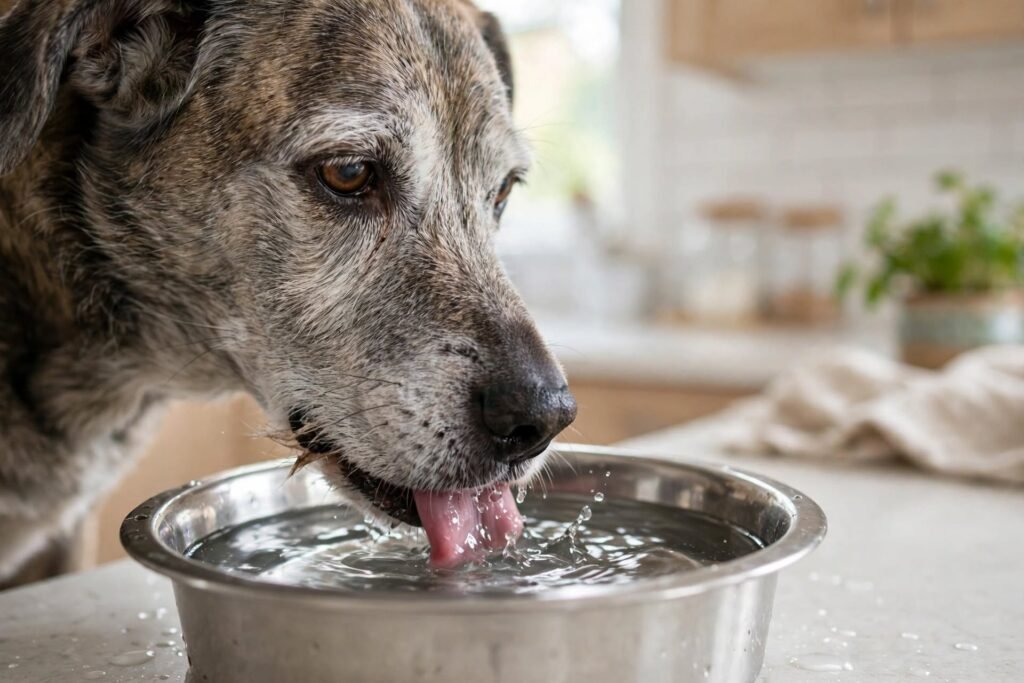
One sign alone does not prove Cushing’s disease. Many other conditions cause increased thirst, such as diabetes or kidney problems. Read our guide on excessive thirst in dogs and our article about an old dog drinking a lot of water to see what else can be behind it.
Why Owners Miss the Early Signs
Cushing’s disease can look like normal aging. A senior dog who pants more, sleeps more, gains a rounder belly and loses some muscle can seem like she is simply getting older. Our article on the signs of aging in dogs shows what is common with age, but a combination of increased thirst, appetite and a pot belly deserves a vet check rather than a wait-and-see approach.
What Causes Cushing’s Disease?
A Pituitary Gland Growth
In most dogs, the cause is a small growth on the pituitary gland, a pea-sized gland at the base of the brain. It tells the adrenal glands to make too much cortisol. These growths are often slow-growing.
An Adrenal Gland Tumor
Less often, a growth on one of the adrenal glands makes the extra cortisol directly. Your vet may use imaging to tell which type your dog has, because it affects the treatment plan.
Long-Term Steroid Medicine
A dog given steroid medicines for a long time under veterinary direction can develop similar signs. This is why you should never change or stop a prescribed medicine on your own. Always speak with your vet first.
When to See a Vet
Book a check-up if you notice more than one of the signs above, especially increased thirst together with a big appetite and a rounder belly. See a vet quickly if your dog has:
- Sudden weakness, collapse or trouble standing
- Heavy breathing that does not settle
- Straining to urinate, blood in the urine or signs of pain
- Vomiting, refusing food or a sudden change in behavior
Repeated bladder trouble is common with this condition. Our guide on UTI in dogs explains the signs of urinary infections.
How Vets Diagnose Cushing’s Disease
There is no single quick test. Your vet will usually begin with a physical exam and basic blood and urine tests, which often show changes that raise suspicion. If Cushing’s disease is possible, special hormone tests are used to measure how your dog’s body handles cortisol. These tests need careful timing, so follow your vet’s instructions exactly.
An ultrasound of the belly may be suggested to look at the adrenal glands. Sometimes more advanced imaging is advised. Your vet will also check for other diseases that can look similar, since diabetes, kidney problems and other illnesses can exist alongside Cushing’s disease.
Treatment Is Decided by Your Vet
Not every dog with Cushing’s disease needs treatment right away. If signs are mild, your vet may choose to monitor your dog. When the signs affect quality of life, a veterinary prescribed medicine that lowers cortisol production is often used. Some adrenal tumors may be treated with surgery in suitable dogs.
Treatment needs regular follow-up tests, because the dose has to be adjusted carefully. Give every dose exactly as directed and report any change in appetite, energy, vomiting or drinking. Never give human medicines, supplements or herbal products without asking your vet.
How to Support Your Dog at Home
Daily habits help your dog feel more comfortable alongside the medical plan:
- Keep fresh water available at all times and never limit water, even if your dog drinks a lot.
- Offer frequent bathroom breaks, including late at night and early morning.
- Feed measured meals at set times and follow your vet’s advice on portions to manage weight.
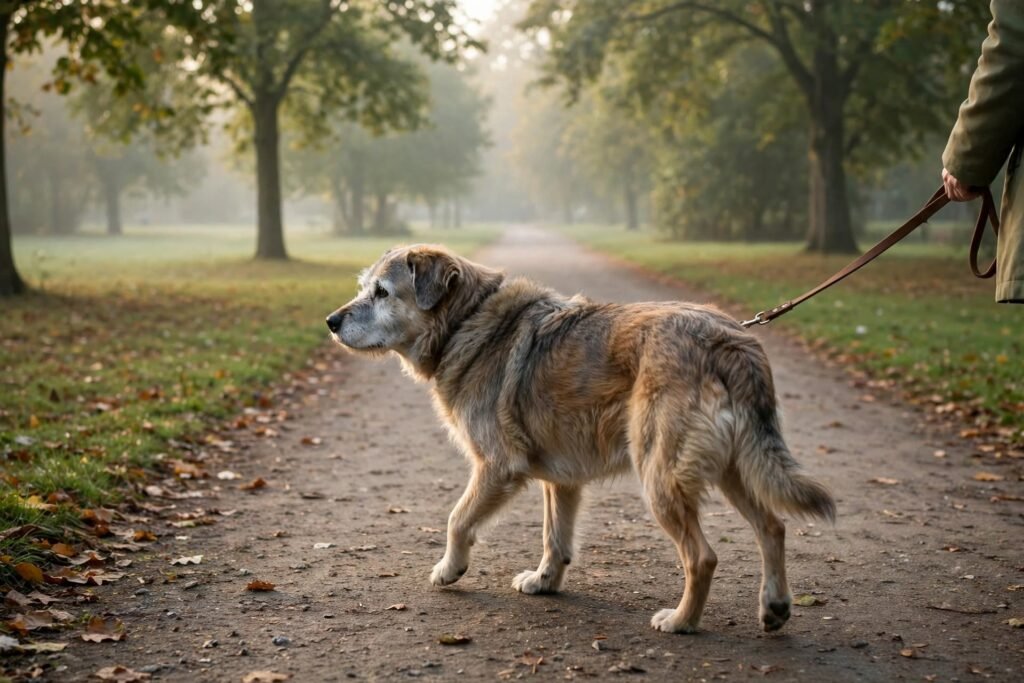
- Choose short, gentle walks to build muscle without tiring your dog.
- Check the skin regularly for redness, sores or hot spots, and keep bedding clean and dry.
- Keep every follow-up appointment and write down changes to share with your vet.
Weight can change in either direction as the disease and treatment progress. If your dog starts to lose weight while still eating, see our article on a dog losing weight but eating and tell your vet.
What Is the Outlook?
Cushing’s disease is usually a long-term condition, but it is manageable. Many dogs live comfortably for years with proper monitoring. The outlook depends on the cause, your dog’s age, other health problems and how well the plan is followed. Your vet is the best person to explain what to expect for your dog.
Frequently Asked Questions
Is Cushing’s disease painful for dogs?
The disease itself is not usually painful, but its effects, such as skin problems, infections and muscle weakness, can be uncomfortable.
Can Cushing’s disease be cured?
Most cases are managed rather than cured. Surgery may help in some dogs with an adrenal tumor, depending on the case.
Why is my dog panting so much?
Panting can come from pain, heat, heart problems or Cushing’s disease. Our post on excessive panting in older dogs explains more.
Does it change behavior?
Restlessness, night-time waking and lower energy are common. See senior dog behavior changes for other possible causes.
Final Thoughts
The Cushing’s disease in dogs symptoms often arrive quietly and look like normal aging. If your senior dog is drinking more, eating more and developing a round belly or thin skin, do not wait. Early testing gives your vet more options, and steady care at home helps your dog stay comfortable for longer.
Disclaimer: This article is for general information only and is not a substitute for professional veterinary advice, diagnosis or treatment. Always consult a qualified veterinarian about your dog’s health, and never give your dog human medicines.