Anxiety in Older Dogs: Signs, Causes and How to Help Your Senior Dog Feel Safe
Your dog has always been calm, and now they follow you from room to room, shake during a storm, or cry when you leave. Anxiety in older dogs is far more common than most people realize. It can show up suddenly, even in dogs who were relaxed all their lives, and it is often a sign of something changing in their body or senses.
This guide explains the signs, the usual causes, and what you can do to help your senior dog feel safe again. It will not replace your vet, but it will help you know what to try and what to ask.
Signs of Anxiety in Older Dogs
Anxiety does not always look like fear. In older dogs it can be quiet and easy to mistake for “just getting old.” Watch for:
- Panting, trembling, or shaking without heat or exercise
- Pacing or being unable to settle
- Following you everywhere, or becoming very clingy
- Whining, barking, or howling, especially when alone or at night
- Hiding, or trying to escape to small spaces
- Destructive chewing or scratching at doors
- Accidents in the house when left alone
- Loss of appetite or turning down treats
- Licking lips, yawning a lot, or showing the whites of the eyes
A few of these on their own can have other causes, so look at the whole picture. Our guides on old dog pacing and excessive panting in older dogs cover two of the most common signs in detail.
Why Do Older Dogs Become Anxious?
Fading Eyesight and Hearing
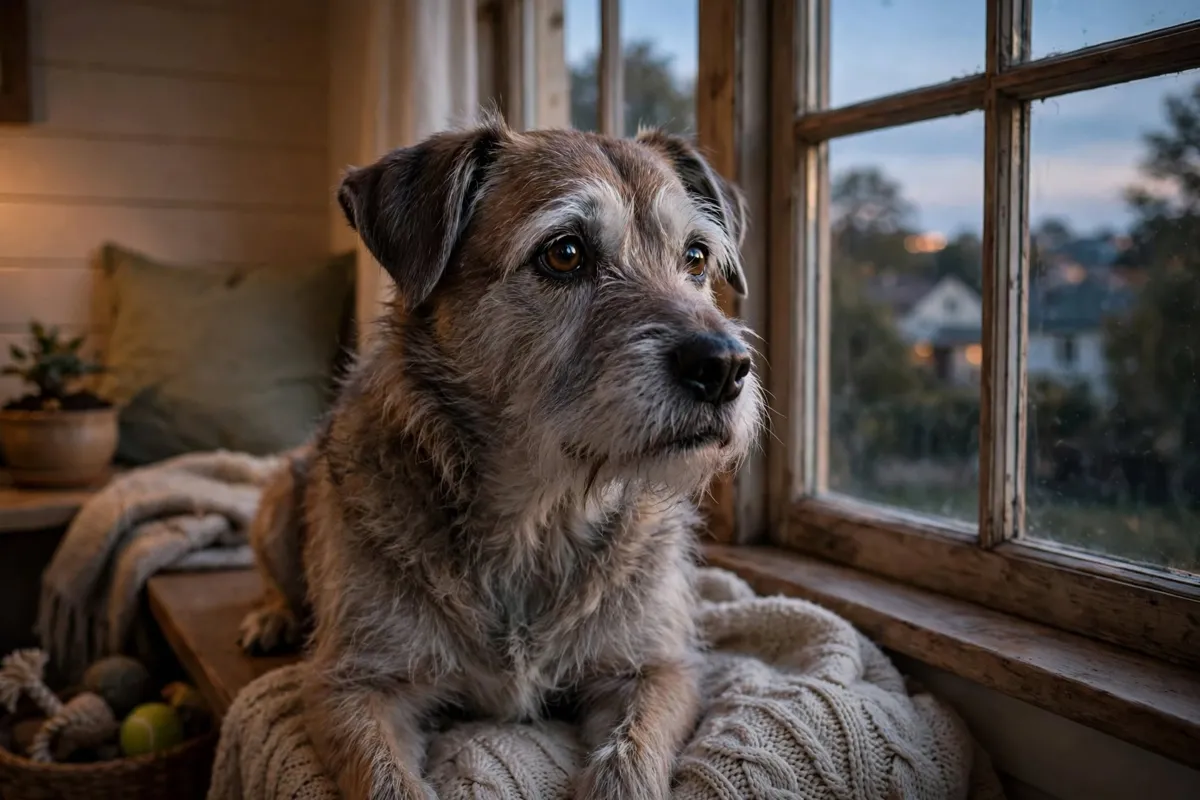
When a dog cannot see or hear as well, the world becomes less predictable. Shadows look strange, people appear suddenly, and sounds seem to come from nowhere. Many senior dogs become more nervous, startle easily, or feel safer staying close to you.
Pain
Pain is a very common hidden cause. A dog who hurts may feel vulnerable, pant, pace, or snap when touched. If your dog also moves stiffly, see our guide on the signs of arthritis in dogs.
Cognitive Changes
Confusion can make a dog feel anxious, especially at night. They may forget where they are, or seem lost in their own home. Read about the signs of dementia in dogs if your dog is also staring, wandering, or mixing up day and night.
New Separation Anxiety
Some dogs who were fine alone for years start to panic when left. A change in routine, a move, loss of a family member or another pet, or simply feeling less secure can trigger it.
Noise Fears
Thunder, fireworks, and loud traffic can scare older dogs more than they did when they were young. Fear of noises often gets worse with age, not better.
Medical Problems
Illnesses such as thyroid or hormone problems, heart disease, and some other conditions can cause anxious-looking behavior. Some medicines can too. This is why a vet check should come first.
See Your Vet First
When a senior dog becomes anxious, it is easy to assume it is behavior and try to fix it at home. But anxiety in older dogs is often a symptom of something else, such as pain, vision loss, or illness. A vet visit lets you rule these out and, if needed, discuss treatment options. Your vet may look at pain relief, sensory problems, or medicines for anxiety if they are appropriate for your dog.
Please do not give your dog human anxiety medicine, sleep aids, or painkillers. Many are dangerous for dogs, even in small amounts. Only use what your vet prescribes.
How to Help an Anxious Older Dog at Home
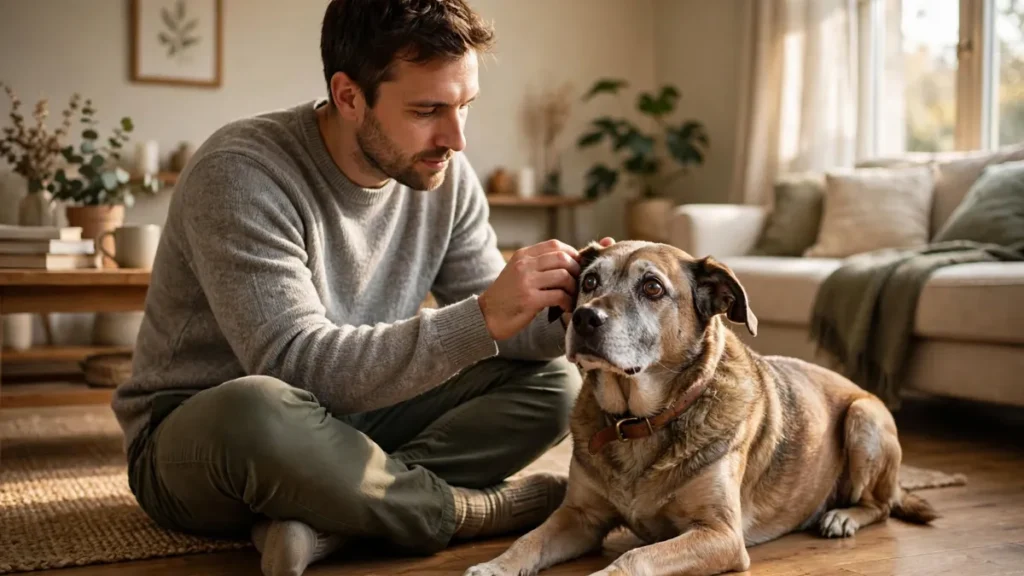
Keep a Steady Routine
Dogs of all ages like predictability, and older dogs need it even more. Feed, walk, and go to bed at about the same times each day. When changes are unavoidable, make them gradually.
Create a Safe Space
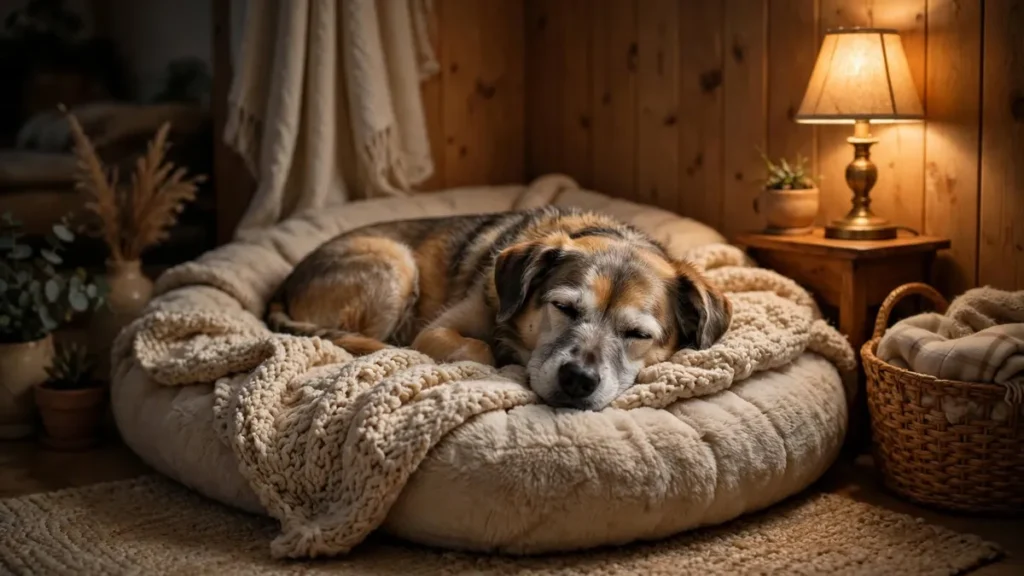
Give your dog a quiet, comfortable spot away from busy doors and loud noises, with a soft bed and a blanket that smells like home. Let your dog choose to go there, and never force them in. In cold weather, a warm bed can add comfort. See our guide to a heated dog bed for senior dogs.
Use Gentle Exercise
A short, easy walk can reduce restlessness. Let your dog sniff, since sniffing is calming and mentally tiring. Avoid anything too hard for sore joints.
Give Them Something to Do
Simple puzzle feeders, a lick mat, or a hidden treat game can keep a worried mind busy. Pick easy ones so your dog does not get frustrated.
Use Calming Aids Carefully
Some owners find that a snug-fitting anxiety wrap, a pheromone diffuser, or calm background music or white noise helps. Results vary from dog to dog. Ask your vet before trying supplements, because quality differs and some are not suitable for every dog.
Help With Night-Time Worry
A night light, a bed close to yours, and a late bathroom trip can make nights easier. If your dog is restless and awake at night, our article on why old dogs sleep so much also covers sleep changes.
Make Leaving Less Stressful
Keep departures and arrivals calm and low-key. Give your dog a chewy treat or a toy as you go. Start with very short absences and build up slowly. For a dog who panics badly when alone, ask your vet about a plan.
Prepare for Loud Events
If you know there will be fireworks or a storm, bring your dog inside, close the curtains, and play steady background sound. Stay calm and nearby. A safe den-like space helps many dogs.
What Not to Do
- Do not punish. Scolding an anxious dog makes the fear worse.
- Do not force your dog to face the fear. Pushing a scared dog toward the thing they fear can backfire.
- Do not ignore sudden changes. New anxiety is worth a vet check.
- Do not give human medicine or sedatives.
It is fine to comfort your dog. Gentle petting and a calm voice will not “reward” fear. They help your dog feel safe.
When to Call the Vet Urgently
Get help quickly if anxious behavior comes with collapse, trouble breathing, a swollen belly, repeated vomiting, seizures, or if your dog hurts themselves trying to escape. See also senior dog behavior changes for other signs worth reporting.
Frequently Asked Questions
Why is my old dog suddenly so clingy and nervous?
Sudden clinginess often comes from pain, fading senses, confusion, or a change at home. It is worth a vet visit to check for a medical cause.
Can anxiety in an older dog be cured?
Often it can be improved a lot, especially once the cause is found. Some dogs need ongoing support, and a mix of routine, comfort, and vet advice works best.
Is it normal for dogs to get more anxious as they age?
It is common, but not something to accept without checking. Anxiety can signal pain or illness that can be treated.
Final Thoughts
Anxiety in older dogs is rarely “just behavior.” Start with a vet visit, then build a calm routine, a safe space, and gentle activity around your dog’s needs. Be patient. Your senior dog has spent years trusting you, and a little extra reassurance now goes a long way.
This article is for general information only and is not a substitute for veterinary advice. Always talk to your vet about your dog’s health and care.