Nuclear Sclerosis in Dogs: Cloudy Eyes in Older Dogs Explained
One day you notice your dog’s eyes look a little hazy, with a soft blue-gray cloud when the light hits them. It can be alarming. The good news is that in many older dogs this is a harmless change called nuclear sclerosis. Nuclear sclerosis in dogs is a normal part of aging, and it is often confused with cataracts, which are more serious.
This guide explains what nuclear sclerosis is, how it differs from cataracts, which signs mean you should see a vet, and how to look after an older dog’s eyes.
What Is Nuclear Sclerosis in Dogs?
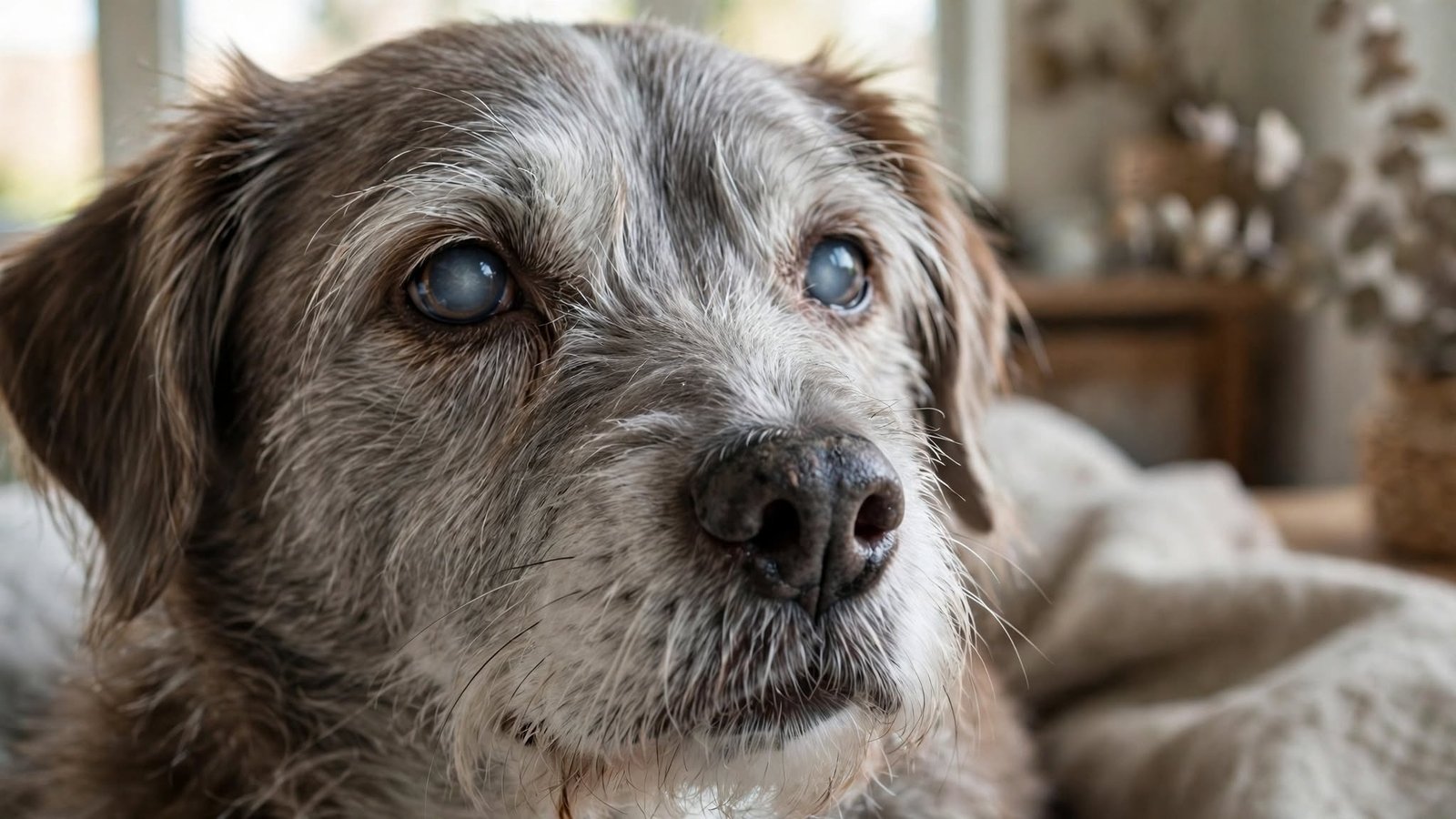
Inside your dog’s eye is a clear lens that focuses light. All through life, new fibers form around the outside of the lens, and the older ones are packed toward the center. Over time, the center becomes denser and harder. This makes the lens look cloudy or bluish-gray. Vets call this nuclear sclerosis, and sometimes lenticular sclerosis.
It is similar to the way human eyes change with age. It usually starts in middle to older age, often from around six to eight years, and affects both eyes. It tends to progress slowly.
What Does It Look Like?
- A bluish, gray, or smoky haze in the middle of the eye
- Usually in both eyes, often looking similar
- Gets a little more noticeable with age
- The eye itself is comfortable, not red, and not weeping
You may see it most clearly when you shine a light into your dog’s eye, or when your dog is outdoors in bright light.
Nuclear Sclerosis vs Cataracts
This is the big question for owners, because the two look alike at first glance. The difference is how much they affect your dog’s sight.
- Nuclear sclerosis: a bluish-gray haze. Light can still pass through the lens, so your dog can usually still see fairly well. It is a normal age change.
- Cataracts: a whiter, denser cloudiness that blocks light, so vision is reduced. They can lead to blindness, and sometimes need treatment.
You cannot reliably tell them apart by looking, and a dog can have both at the same time. Only a vet can tell for sure by examining the eye. If you want to read more about the second one, see our guide on cataracts in dogs.
Does Nuclear Sclerosis Affect a Dog’s Vision?
A little, but usually not much. Some vets say it can make close-up focus a bit worse, like reading glasses for people, but most dogs get along fine. Dogs rely heavily on smell and hearing, so mild changes in the lens often go unnoticed. If your dog seems to be struggling to see, it may be due to something else, so do not assume the haze explains everything.
Does It Need Treatment?
Usually not. There is no standard treatment for nuclear sclerosis, and it does not normally need one. Your vet will probably recommend monitoring the eyes over time, especially to make sure cataracts or other problems are not developing. There is no eye drop that reverses it, so be careful with products that claim to.
Signs It Might Be Something Else
Not every cloudy eye is nuclear sclerosis. Some conditions need prompt care. See your vet if you notice:
- Sudden cloudiness, or a change that happens quickly
- One eye much more cloudy than the other
- Redness, swelling, squinting, or pawing at the eye
- Discharge, tearing, or a bulging eye
- A white, opaque look rather than a bluish haze
- Bumping into furniture, missing stairs, or hesitating in the dark
- A change in the shape or color of the pupil
Painful or sudden eye problems, such as glaucoma, can threaten sight quickly, so do not wait. Call your vet the same day if your dog’s eye looks painful or changes suddenly.
Other Causes of Cloudy Eyes in Older Dogs
Besides nuclear sclerosis and cataracts, cloudiness can come from dry eye, corneal problems, inflammation inside the eye, or high pressure in the eye. Some illnesses, such as diabetes, can speed up cataract formation. For a wider look, read our guide on cloudy eyes in dogs.
How Your Vet Checks the Eyes
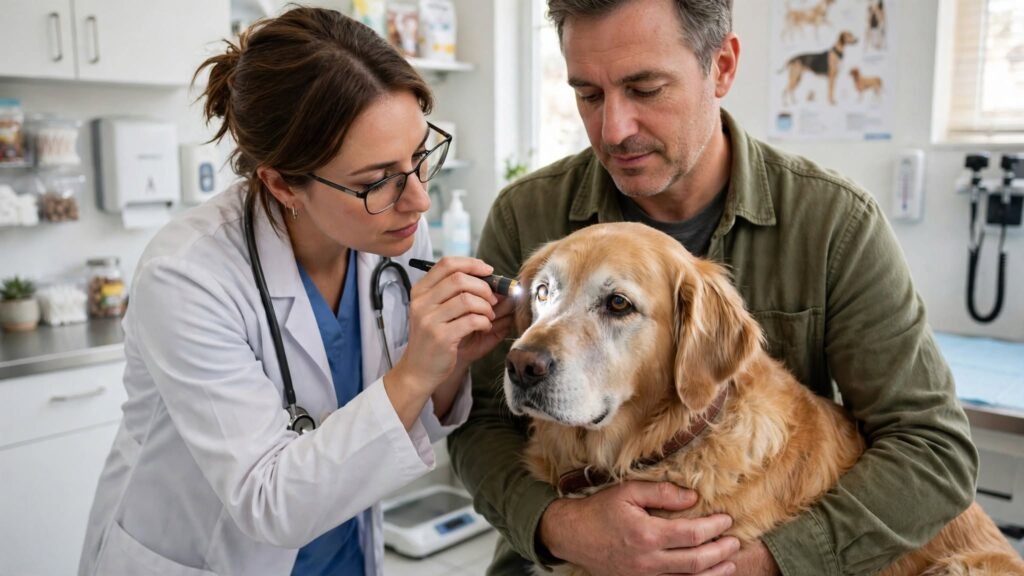
An eye exam is quick and painless. Your vet will shine a light, look at the lens and the back of the eye, and may check eye pressure and tear production. If something looks unusual, they may refer you to a veterinary eye specialist. Mention any changes in behavior, such as hesitation on stairs, and any other health problems, such as increased thirst.
How to Look After an Older Dog’s Eyes
- Book regular check-ups. Ask your vet to look at the eyes at every senior visit.
- Keep the area around the eyes clean. Gently wipe away crust with a clean, damp cloth.
- Do not use eye drops or home remedies unless your vet recommends them.
- Protect from injury. Keep your dog away from sharp branches and rough play.
- Keep a close eye on health. Conditions such as diabetes can affect the eyes, so get thirst and weight changes checked.
- Take photos now and then. They help you see how quickly the haze changes.
Helping a Dog With Reduced Vision
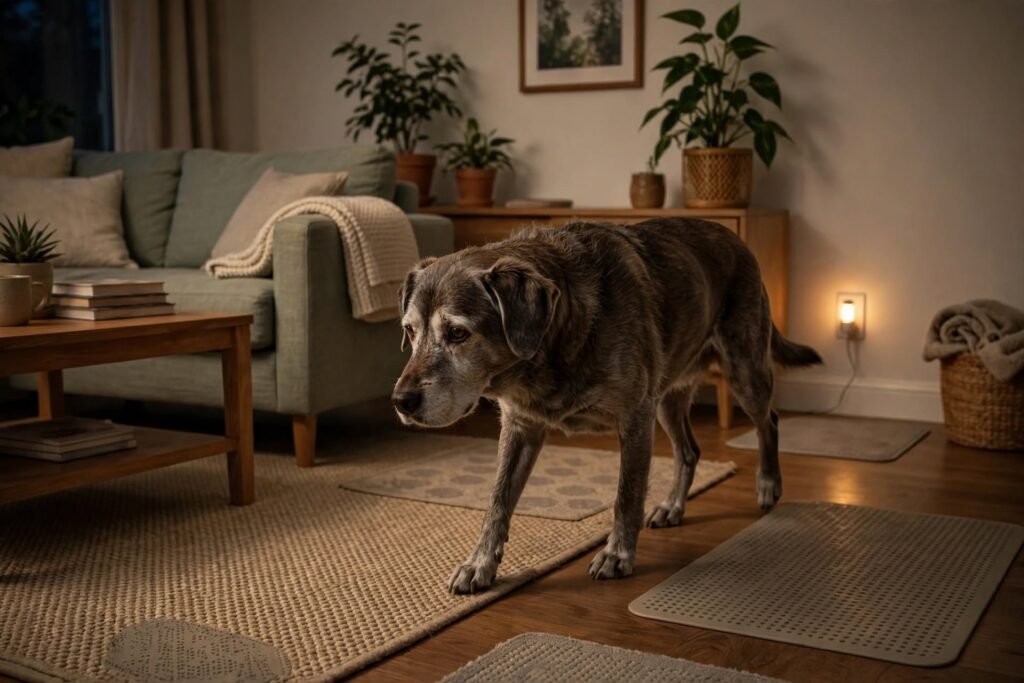
If your dog’s sight is getting weaker, a few small changes at home go a long way. Keep furniture in the same place, add a night light, put non-slip rugs on smooth floors, and use a calm voice so your dog is not startled. Let your dog sniff around outside, and avoid sudden changes to the layout of the house. More signs of getting older are listed in our guide to signs of aging in dogs, and changes in behavior are covered in senior dog behavior changes.
Frequently Asked Questions
Is nuclear sclerosis painful for dogs?
No. It is a painless change in the lens. If your dog’s eye looks sore, red, or squinty, something else may be going on, so see a vet.
Can nuclear sclerosis turn into cataracts?
It does not turn into cataracts, but dogs can have both. That is another reason regular eye checks are helpful.
At what age does it start?
Often from around six to eight years of age, and it becomes more obvious as dogs get older. Individual dogs vary.
Final Thoughts
Nuclear sclerosis in dogs is a normal sign of getting older, and most dogs live comfortably with it. Still, a cloudy eye is never worth guessing about. Let your vet confirm what it is, keep up with regular eye checks, and call right away if you see redness, pain, or sudden changes. A little attention now helps protect your dog’s eyes for the years ahead.
This article is for general information only and is not a substitute for veterinary advice. Always talk to your vet about your dog’s health and care.