Senior Dog Food: How to Choose the Best Food for Your Older Dog
Walk down the pet food aisle and you will see a whole shelf of senior dog food, each bag promising healthy joints, a shiny coat, and a long life. It is hard to know what actually matters. The truth is that there is no single best food for every older dog. The right choice depends on your dog’s size, weight, teeth, and health.
This guide explains what changes as dogs age, what to look for on the label, how wet and dry food compare, and how to switch foods without upsetting your dog’s stomach.
Does My Dog Need Senior Dog Food?
Not automatically. “Senior” on a bag is a marketing term, not a strict rule, and different brands use different recipes. Many dogs do well on a good adult food well into old age. Others benefit from a food made for seniors, especially if they are gaining or losing weight, have sore joints, or have trouble with their teeth.
If you are not sure whether your dog counts as a senior yet, read when a dog is considered a senior. The age depends a lot on size, so a giant breed may need a senior diet years before a small dog does.
What Changes in an Older Dog’s Diet Needs?
- Calories. Many older dogs are less active and gain weight easily. Others lose weight and need more calories. It depends on the dog.
- Protein. Dogs lose muscle as they age. Good-quality protein helps maintain it, unless your vet has advised otherwise for a health reason.
- Digestion. The gut can become more sensitive, so rich or sudden changes may cause upset.
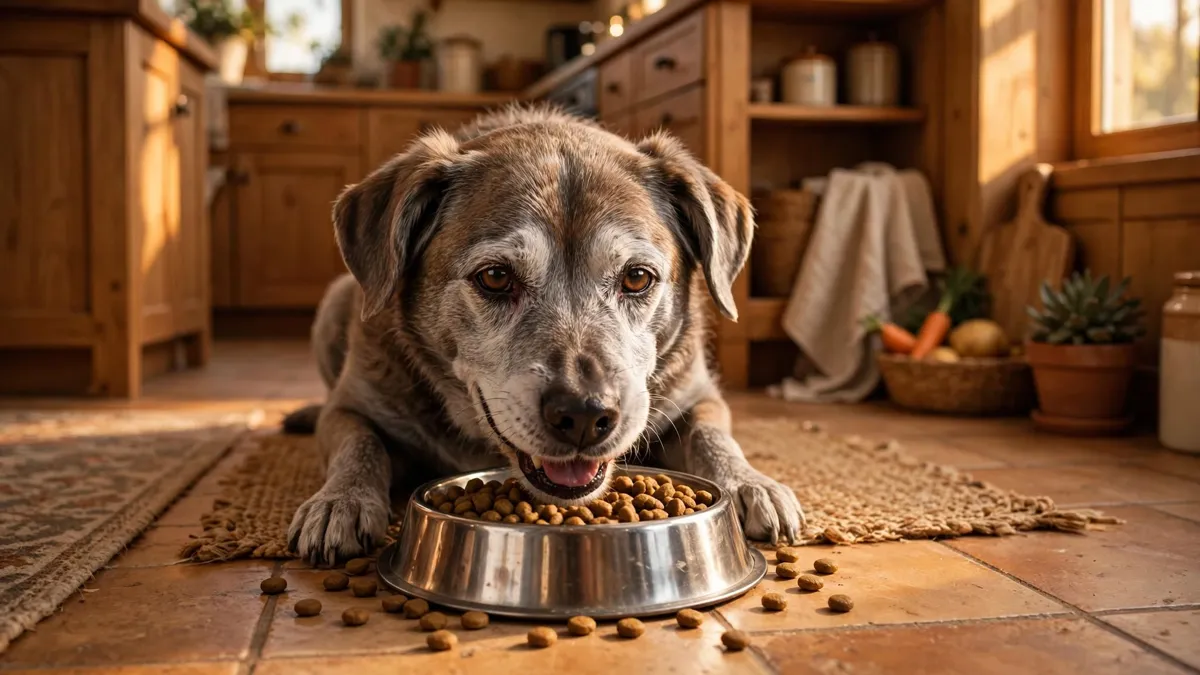
- Teeth and mouth. Sore or missing teeth make hard kibble harder to enjoy.
- Joints. Extra weight puts more strain on stiff joints, so staying lean really matters.
- Appetite. A weaker sense of smell can make food less tempting.
What to Look for on the Label

A “Complete and Balanced” Statement
Look for wording on the bag saying the food is complete and balanced for your dog’s life stage, or for adult maintenance. This tells you it is meant to be a dog’s main diet and not a snack or topper.
A Named Protein Near the Top
An ingredient list that begins with a clearly named protein, such as chicken, turkey, fish, or lamb, is a good sign. Vague terms are harder to judge.
Sensible Calories
The bag lists calories per cup or per can. If your dog is overweight, a lower-calorie food may help. If your dog is thin, a more energy-dense food may be better. Always ask your vet before aiming for weight loss or gain in a senior.
Joint and Skin Support
Some senior foods add ingredients meant to support joints, or fish-based fats for the coat and skin. These can be a helpful extra, but they do not replace vet care for arthritis. See our guide on how to help a dog with arthritis.
Fiber and Digestibility
Moderate fiber can help keep digestion regular. Highly digestible recipes are often easier on older stomachs.
Wet, Dry, or Mixed?
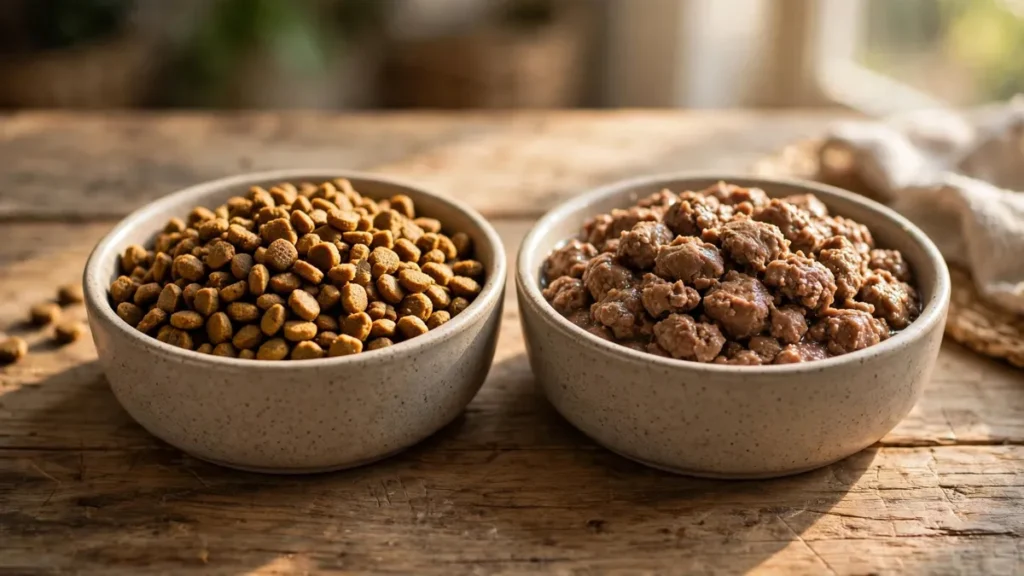
Each has its pros and cons, and many owners use a mix.
- Dry food: convenient, easier to store, and usually cheaper. It can be hard on sore teeth.
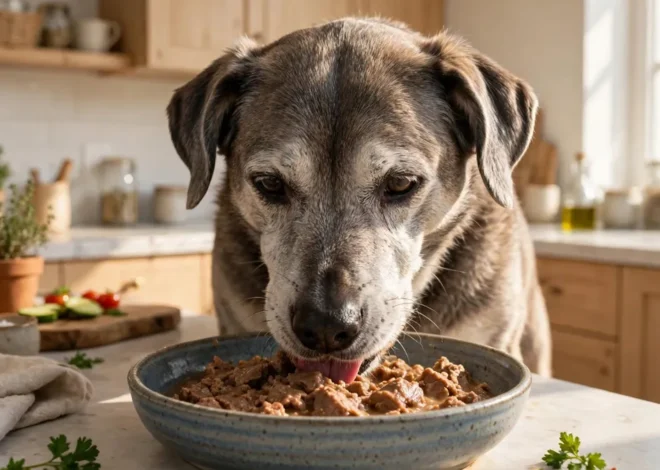
- Wet food: softer, stronger smelling, and good for dogs with weak appetite or dental trouble. It also adds water to the diet. It costs more and goes off quickly once opened.
- A mix: a spoonful of wet food over dry kibble can make mealtime more appealing without a big change.
If your dog has started to turn away from the bowl, see senior dog not eating or drinking, and do check with your vet before assuming it is only fussiness.
Special Situations
An Overweight Senior Dog
Measure portions, cut back on treats, and ask your vet for a target weight. Small changes add up.
A Senior Dog Losing Weight
Unplanned weight loss can signal an illness. Our guide on a dog losing weight but eating explains the common causes. Do not just switch to a richer food without a vet check.
Dogs With Health Conditions
Dogs with kidney disease, heart disease, diabetes, or digestive problems often need a specific diet. These should be chosen with your vet, not picked off the shelf.
How to Switch Your Dog’s Food Safely
- Days 1 to 3: about 25 percent new food and 75 percent old food.
- Days 4 to 6: about half and half.
- Days 7 to 9: about 75 percent new and 25 percent old.
- Day 10: fully on the new food.
Go slower if your dog has a sensitive stomach. Stop and call your vet if you see vomiting, diarrhea that does not settle, or refusal to eat.
Foods to Keep Away From Your Dog
No matter which food you choose, some human foods are dangerous for dogs, including grapes, raisins, onions, garlic, chocolate, and anything sweetened with xylitol. See our list of foods dogs cannot eat for more.
Frequently Asked Questions
Is wet food better than dry food for senior dogs?
Not always. Wet food is easier to chew and tastes stronger, which helps dogs with sore teeth or a weak appetite. Dry food is fine for many dogs. The best food is the one your dog eats well and stays healthy on.
How much should I feed my senior dog?
Start with the amount on the bag for your dog’s weight, then adjust based on body condition. Your vet can suggest a daily amount that fits your dog.
Should I feed my older dog homemade food?
Homemade diets can miss important nutrients. If you want to cook for your dog, ask your vet for a balanced plan first.
Final Thoughts
Choosing senior dog food does not need to be stressful. Pick a complete and balanced food that suits your dog’s size, weight, and teeth, change foods slowly, and keep an eye on body condition. Check in with your vet regularly, since your dog’s needs can change as they get older.
This article is for general information only and is not a substitute for veterinary advice. Always talk to your vet about your dog’s health and care.