
Excessive Thirst in Dogs: Causes, How Much Is Too Much, and When to Call the Vet
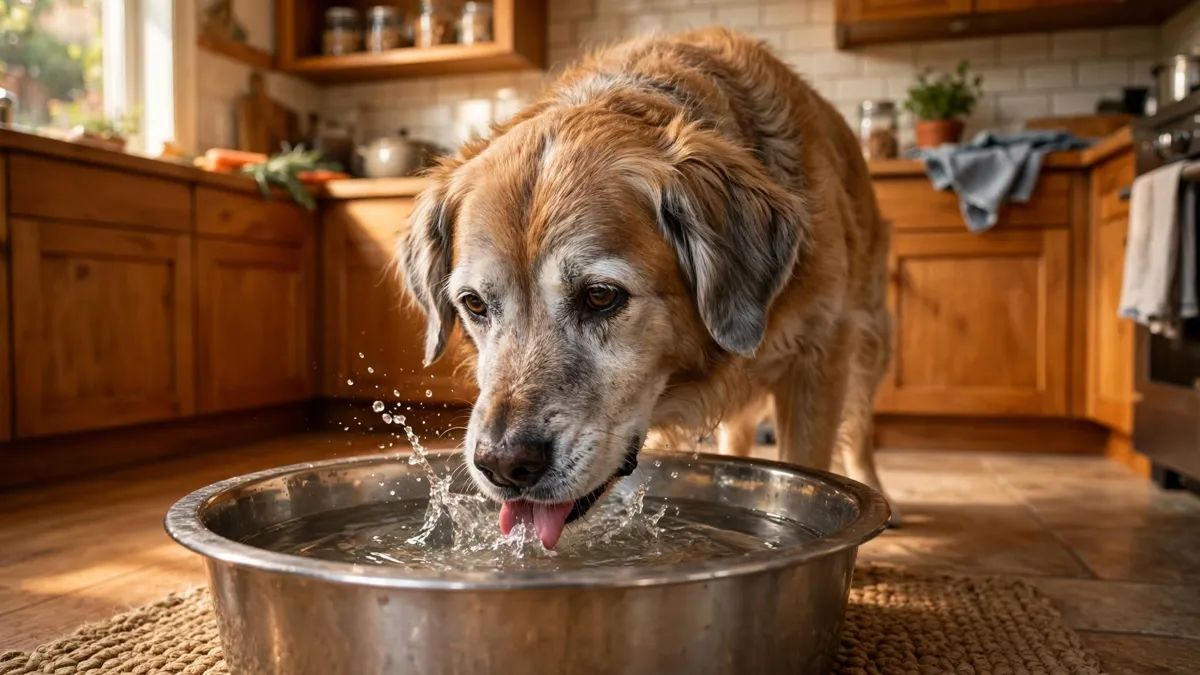
You fill the water bowl in the morning and it is empty by lunch. Then you fill it again. If your dog seems to be drinking far more than usual, you are not imagining it, and it is worth paying attention to. Excessive thirst in dogs is one of the earliest signs of several common health problems, especially in older dogs.
Vets have a name for it: polydipsia. This guide explains what it means, how much water is normal, the most common causes, and what to do next.
What Is Polydipsia in Dogs?
Polydipsia simply means drinking much more water than normal. It usually goes together with peeing more, which vets call polyuria. Sometimes the kidneys or hormones are making your dog pee a lot, so they drink more to keep up. Other times the thirst comes first. Either way, a clear change in drinking is a signal that something may be going on inside the body.
How Much Water Is Normal for a Dog?
A common rule of thumb is about 1 ounce of water per pound of body weight each day, or roughly 50 to 60 ml per kilogram. So a 50 pound dog might drink around 50 ounces, which is a little over a liter and a half. This changes with food type, weather, exercise, and age, so treat it as a rough guide, not a strict rule.
Many vets become concerned when a dog regularly drinks much more than that, for example about double the usual amount. If you are seeing numbers like that, it is time to call your vet.
How to Measure Your Dog’s Water Intake
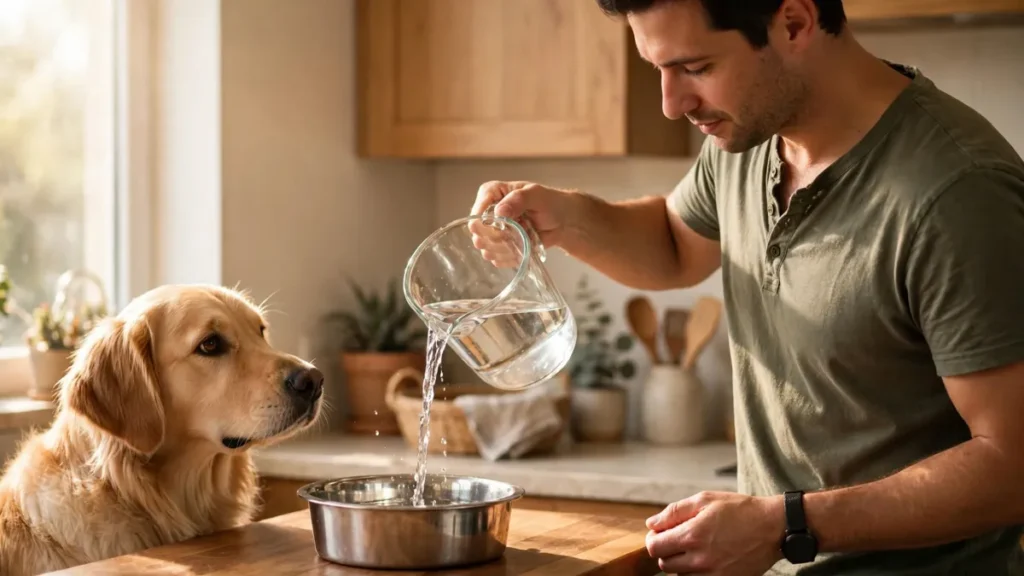
It sounds fussy, but a number is more useful than “a lot.” Your vet will appreciate it.
- In the morning, fill the bowl with a measured amount of water.
- Top it up through the day with measured amounts and write each one down.
- The next morning, measure what is left in the bowl.
- Subtract what is left from what you put in. That is roughly what your dog drank in 24 hours.
- Repeat for two or three days to see the pattern.
If you have more than one pet sharing a bowl, this will not be exact, but it can still show a trend. Also note how often your dog pees, whether there are accidents in the house, and whether your dog wakes at night to drink or go out.
Common Causes of Excessive Thirst in Dogs
Everyday and Harmless Causes
Not every increase in drinking is a medical problem. Hot weather, hard exercise, salty treats or table scraps, and a switch to dry food can all make a dog drink more for a while. If the cause is clear and your dog goes back to normal soon, there is usually nothing to worry about.
Diabetes
In diabetes, extra sugar in the blood spills into the urine and pulls water with it, so dogs pee more and drink more. Other signs can include weight loss despite a good appetite, and cloudy eyes. Our guide on a dog losing weight but eating covers this.
Kidney Disease
Healthy kidneys concentrate urine. When they begin to fail, they cannot hold on to water as well, so dogs pee large amounts and drink to make up for it. Older dogs are more at risk. Other signs include weight loss, poor appetite, and vomiting.
Cushing’s Disease
This hormone condition, which is more common in middle-aged and older dogs, can cause increased thirst, more peeing, a bigger appetite, panting, and a pot-bellied look. If your dog is also panting a lot, see excessive panting in older dogs.
Urinary Tract Infection
Infections of the bladder or urinary tract can make dogs pee often and drink more. You may notice accidents, straining, or blood in the urine.
Liver Disease
The liver does many jobs, and when it struggles, thirst can rise along with other signs like vomiting, a yellow tint to the eyes or gums, and low energy.
Womb Infection in Unspayed Females
A serious infection of the womb called pyometra can cause heavy thirst, lethargy, and sometimes discharge. It can become life-threatening quickly. If your unspayed female dog is drinking a lot and seems unwell, see a vet the same day.
Medicines
Some medicines, including steroids and some water tablets, make dogs thirstier. If the thirst started after a new medicine, tell your vet. Do not stop a medicine on your own.
Other Causes
Calcium problems, electrolyte imbalances, and some other illnesses can also change thirst. This is why a vet check with tests matters. You cannot tell the cause by watching alone.
When to Call the Vet
Book an appointment if your dog has been drinking much more than usual for more than a day or two with no obvious reason, or if you see more peeing, accidents, weight loss, low energy, or changes in appetite. Seek urgent care if heavy thirst comes with repeated vomiting, collapse, a swollen belly, very pale or yellow gums, trouble breathing, or if your unspayed female seems unwell.
For more on this in older dogs, read old dog drinking a lot of water. And if your dog is drinking much less instead, see senior dog not eating or drinking.
What the Vet Will Do
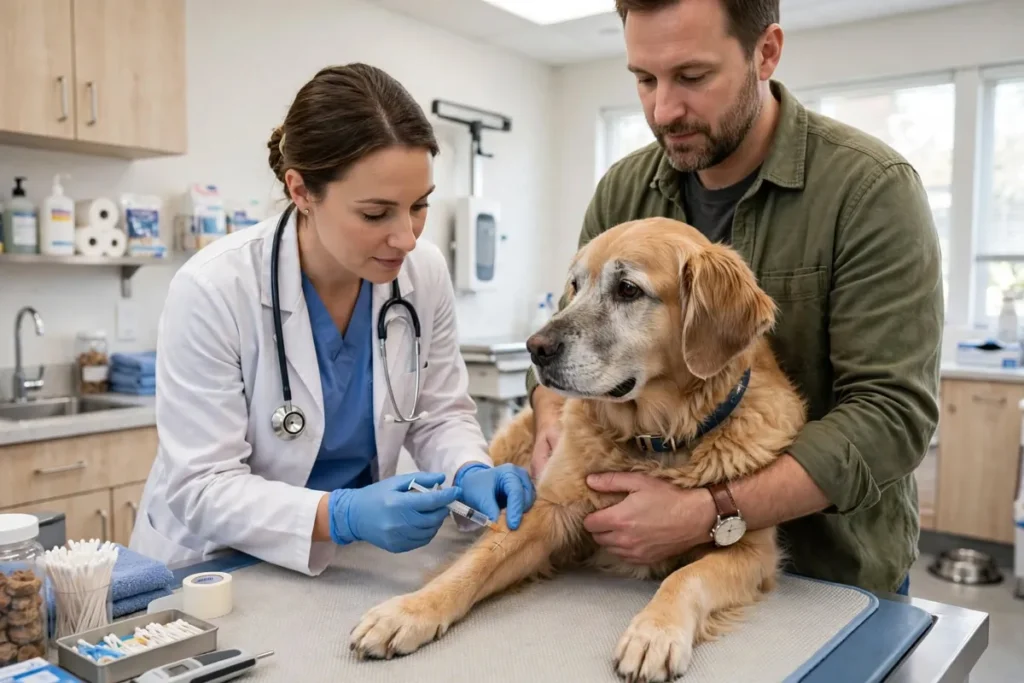
Your vet will ask about your dog’s drinking, peeing, eating, and energy, and then examine them. Most dogs need a urine test and blood tests, which give a lot of information quickly. Depending on the results, more tests such as scans may follow. Bring your water notes and, if you can, a fresh urine sample. Treatment then depends on the cause, and many causes can be managed well, especially when found early.
What Not to Do
- Do not take the water away. A thirsty dog needs access to fresh water all day, including at night. Cutting it back can make a sick dog worse.
- Do not scold for accidents. Your dog cannot help it. Offer more bathroom trips instead.
- Do not wait weeks. A clear change is worth checking early.
- Do not give human medicine or supplements without asking your vet.
Helping Your Dog Meanwhile
While you wait for the appointment, keep fresh water in several spots, clean the bowls daily, and let your dog out more often. Put waterproof covers on beds if accidents are happening, and keep a note of anything new. Small details, like when the drinking started, can point your vet in the right direction. You can also read about other changes to look out for in senior dog behavior changes.
Frequently Asked Questions
Why is my dog suddenly so thirsty?
It could be something simple like heat, exercise, or salty food. But if it lasts more than a day or two, or comes with other changes, it is worth a vet check.
Is it normal for older dogs to drink more?
A small change can be normal, but a clear increase is not something to just accept as old age. Several treatable conditions in senior dogs cause it.
Can I limit how much my dog drinks?
No, not unless your vet tells you to. Restricting water can be dangerous. Instead, find out why your dog is so thirsty.
Final Thoughts
Excessive thirst in dogs is easy to overlook because it looks like a harmless habit. But it is often the first clue to something that can be treated if caught early. Measure the water, note the other changes, keep the bowl full, and book a vet visit. You may be giving your dog extra healthy years by acting early.
This article is for general information only and is not a substitute for veterinary advice. Always talk to your vet about your dog’s health and care.


2 thoughts on “Excessive Thirst in Dogs: Causes, How Much Is Too Much, and When to Call the Vet”